
Category Technology/Electronics

The Power of Chaos: A Robust and Low-Cost Cryptosystem for the Post-Quantum Era

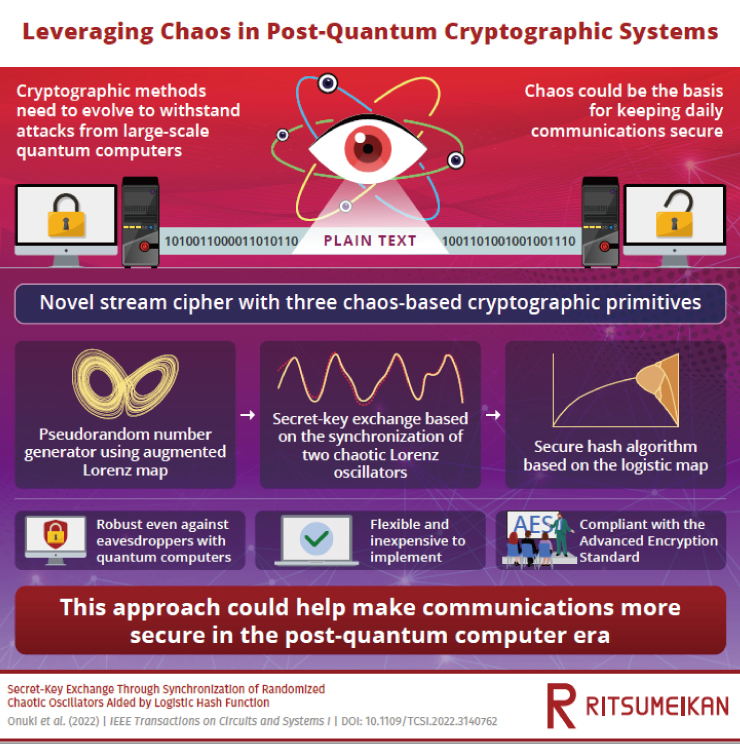
Scientists develop a chaos-based stream cipher that can withstand attacks from large-scale quantum computers. Fast algorithms on quantum computers could easily break many widely used cryptosystems, necessitating more innovative solutions for digital security. In a recent study, a team of scientists designed a stream cipher consisting of three cryptographic primitives based on independent mathematical models of chaos. The resulting cryptographic approach is robust to attacks from large-scale quantum computers and can be implemented on low-cost computers, paving the way to secure digital communications in the post-quantum era.

While for most of us cryptographic systems are things that just run “under the hood,” they are an essential element in the world of digital communications...

Read More
New Power Transfer Technology provides unprecedented Freedom for Wireless Charging

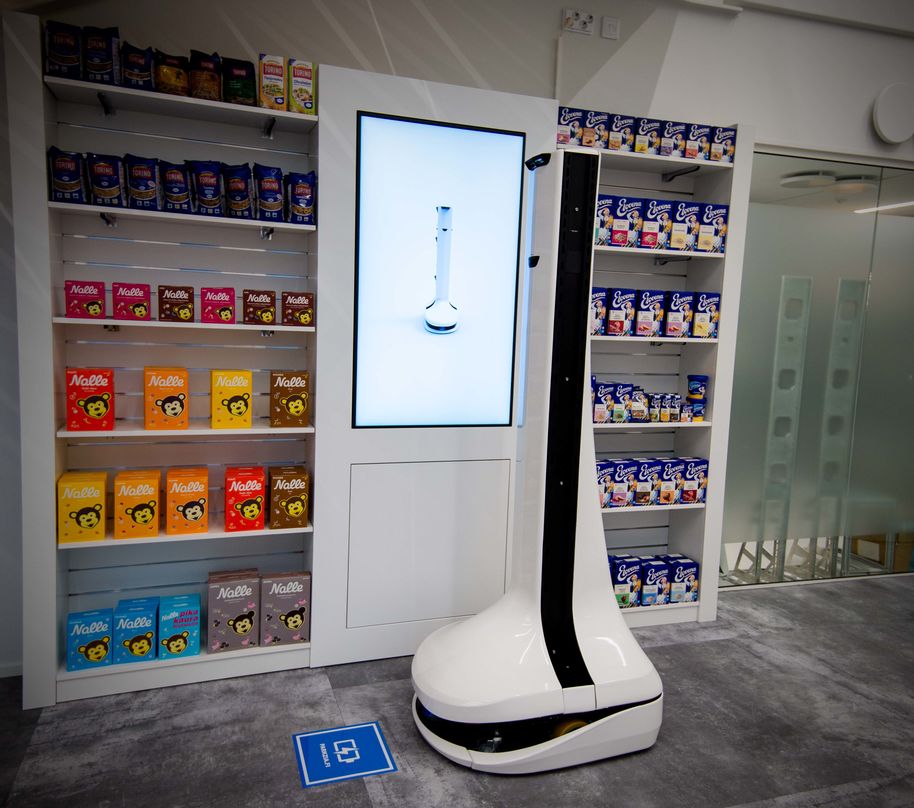
Wireless charging of a retail robot at a test site. Photo: Prasad Jayathurathnage / Aalto University

Devices can be charged regardless of their position or orientation and even on the go. A new power transfer technology makes it possible to conveniently charge devices without using any wires or plugs. Warehouse robots, kitchen appliances, and even phones or laptops can receive power anywhere over the charging area, and because the power transfer continues even while the device is in motion, this technology could one day power electric vehicles while they’re on the go.

The basics of wireless power transfer have been in place for some time, but existing systems are not able to charge devices placed anywhere within a large area...

Read More

2D Materials could be used to Simulate Brain Synapses in Computers

With the introduction of a new component material, researchers at KTH take another step toward computers that mimic the human brain.

Researchers from KTH Royal Institute of Technology in Stockholm and from Stanford University have fabricated a material for components that enable the commercial viability of computers which mimic the human brain.

Electrochemical random access (ECRAM) memory components made with 2D titanium carbide showed outstanding potential for complementing classical transistor technology, and contributing toward commercialization of powerful computers that are modeled after the brain’s neural network. Such neuromorphic computers can be thousands times more energy efficient than today’s computers.

These advances in computing are possible because of some ...

Read More

Eco-friendly Micro-supercapacitors using Fallen Leaves?

 Image: The schematic illustration of the production of femtosecond laser-induced graphene.

Femtosecond micro-supercapacitors on a single leaf could easily be applied to wearable electronics, smart houses, and IoTs. A KAIST research team has developed a graphene-inorganic-hybrid micro-supercapacitor made of leaves using femtosecond direct laser writing lithography. The advancement of wearable electronic devices is synonymous with innovations in flexible energy storage devices. Of the various energy storage devices, micro-supercapacitors have drawn a great deal of interest for their high electrical power density, long lifetimes, and short charging times.

However, there has been an increase in waste battery generation with the increases in the consumption and use of electronic equipme...

Read More