Category Technology/Electronics

How to make AI Trustworthy

Self-driving car/Photo credit: Grendelkhan
SELF-DRIVING CAR/PHOTO CREDIT: GRENDELKHAN

New tool might aid the adoption of technologies such as autonomous vehicles. One of the biggest impediments to adoption of new technologies is trust in AI.

Now, a new tool developed by USC Viterbi Engineering researchers generates automatic indicators if data and predictions generated by AI algorithms are trustworthy. Their research paper, “There Is Hope After All: Quantifying Opinion and Trustworthiness in Neural Networks” by Mingxi Cheng, Shahin Nazarian and Paul Bogdan of the USC Cyber Physical Systems Group, was featured in Frontiers in Artificial Intelligence.

Neural networks are a type of artificial intelligence that are modeled after the brain and generate predictions...

Read More

Google conducts Largest Chemical Simulation on a Quantum Computer to date

Google conducts largest chemical simulation on a quantum computer to date
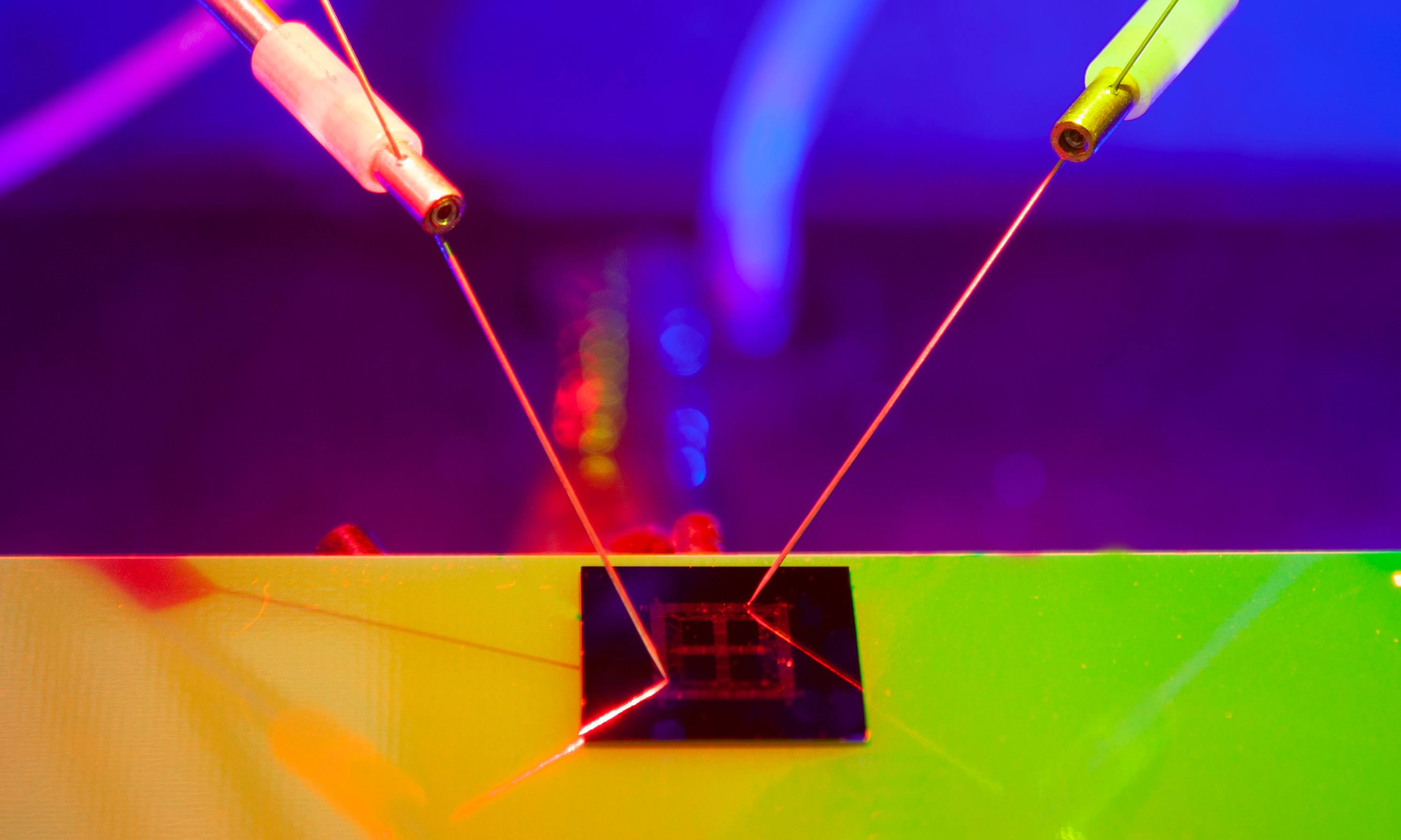
Google’s Sycamore processor mounted in a cryostat, recently used to demonstrate quantum supremacy and the largest quantum chemistry simulation on a quantum computer. Credit: Rocco Ceselin

A team of researchers with Google’s AI Quantum team (working with unspecified collaborators) has conducted the largest chemical simulation on a quantum computer to date. In their paper published in the journal Science, the group describes their work and why they believe it was a step forward in quantum computing. Xiao Yuan of Stanford University has written a Perspective piece outlining the potential benefits of quantum computer use to conduct chemical simulations and the work by the team at AI Quantum, published in the same journal issue.

Developing an ability to predict chemical processes by si...

Read More

Student Research Team develops Hybrid Rocket Engine

a) A pre-pandemic photo of some of the team members – left to right: Abhiraj Majumder (AE ‘21), Chris Nielsen (Purdue Graduate Student), Connor Latham (AE ‘20), Vignesh Sella (AE ‘21), Andrew Larkey (ME ‘21), Avery Moore (AE ‘21), Avinash Rao (AE ‘21). b) Computer-aided design shows cross section of the combustion chamber

In a year defined by obstacles, a University of Illinois at Urbana-Champaign student rocket team persevered. Working together across five time zones, they successfully designed a hybrid rocket engine that uses paraffin and a novel nitrous oxide-oxygen mixture called Nytrox. The team has its sights set on launching a rocket with the new engine at the 2021 Intercollegiate Rocketry and Engineering Competition.

“Hybrid propulsion powers Virgin Galactic’...

Read More

Locust Swarm could improve Collision Avoidance

Locust swarm could improve collision avoidance
A collision detector for vehicles mimics an avoidance neuron in locusts that allows them to fly in swarms. Credit: Jennifer M. McCann / Penn State

Plagues of locusts, containing millions of insects, fly across the sky to attack crops, but the individual insects do not collide with each other within these massive swarms. Now a team of engineers is creating a low-power collision detector that mimics the locust avoidance response and could help robots, drones and even self-driving cars avoid collisions.

“We are always looking for animals with unusual abilities, ones that do something better than humans,” said Saptarshi Das, assistant professor of engineering science and mechanics...

Read More