Category Technology/Electronics

Developing a Digital Twin of a Vehicle

Flight of the UAV estimations
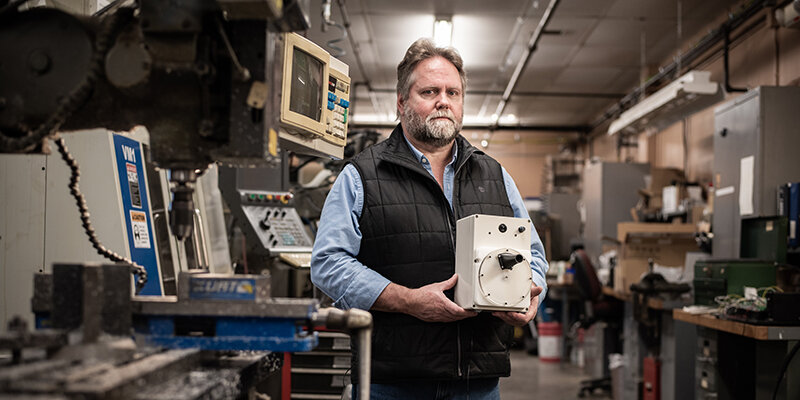
In the case of the digital twin UAV, Willcox’s system is able to capture and communicate the evolving changes in the health of the UAV. It can also explain what sensor readings are indicating declining health and driving the predictions.

Researchers create virtual UAVs that can predict vehicle health, enable autonomous decision-making. In the not too distant future, we can expect to see our skies filled with unmanned aerial vehicles (UAVs) delivering packages, maybe even people, from location to location.

In such a world, there will also be a digital twin for each UAV in the fleet: a virtual model that will follow the UAV through its existence, evolving with time...

Read More

Micro Implants could Restore Standing and Walking

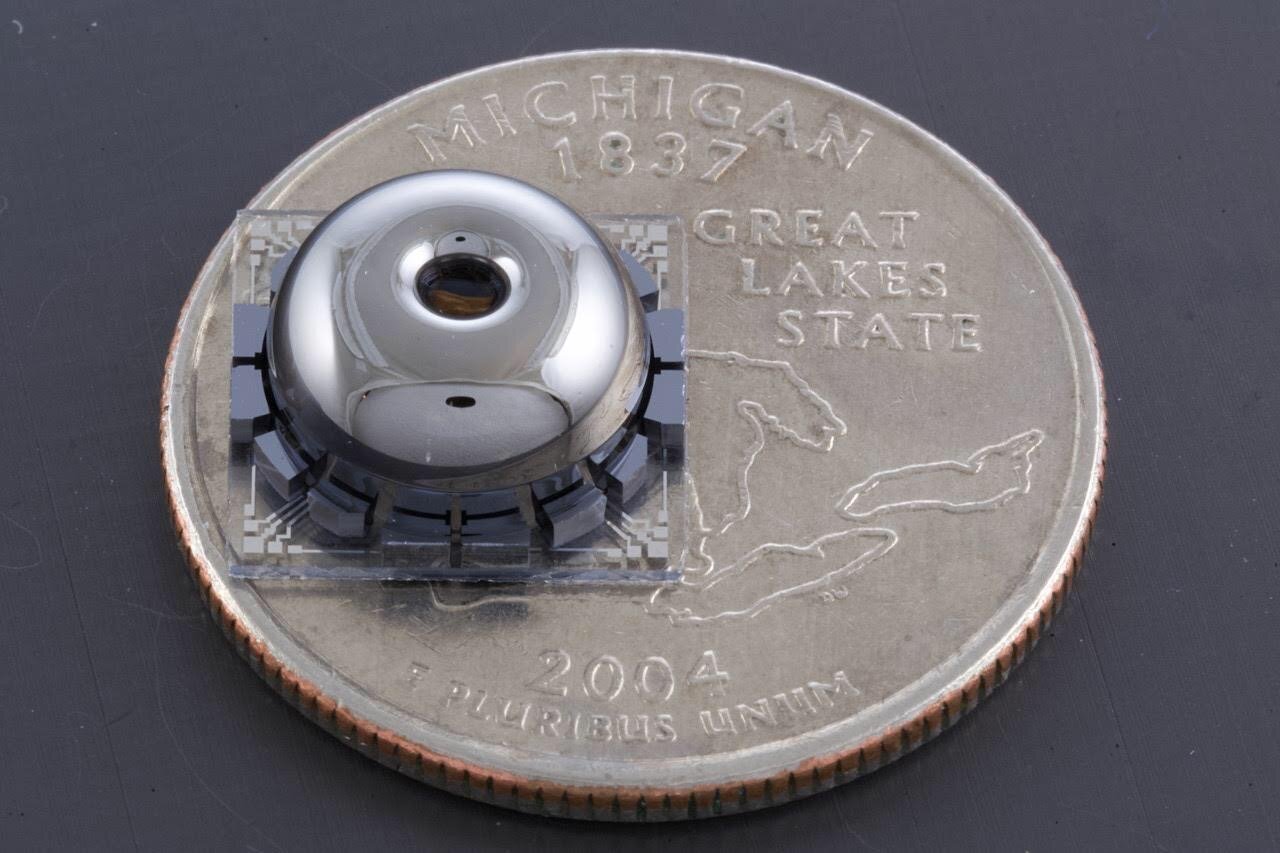
Biomedical engineering researcher Vivian Mushahwar is developing spinal implants that could one day restore the ability to stand and walk in patients with paralysis. (Photo: Ross Neitz)

When Vivian Mushahwar first applied to grad school, she wrote about her idea to fix paralysis by rewiring the spinal cord. It was only after she was accepted into a bioengineering program that the young electrical engineer learned her idea had actually prompted laughter. “I figured, hey I can fix it, it’s just wires,” Mushahwar said. “Yeah, well, it’s not just wires. So I had to learn the biology along the way.”

It’s taken Mushahwar a lot of work over two decades at the University of Alberta, but the Canada Research Chair in Functional Restoration is still fixated on the dream of helping people wal...

Read More

Bending an Organic Semiconductor can Boost Electrical Flow

Organic transistors based on single crystals of rubrene, a hydrocarbon, can roughly double the speed of electricity flowing through them when a crystal is slightly bent (strained). This useful behavior cannot be easily achieved with traditional semiconductors made, for example, of silicon. Molecules of rubrene are arranged in a herringbone pattern (upper left), forming highly ordered semiconducting molecular crystals that can be used to create rigid (upper right) or flexible (lower left) high-performance organic transistors, based on thick or ultra-thin single crystals, respectively. An example of a freestanding rubrene transistor is shown on a finger tip (lower right).
Image: Vitaly Podzorov/Rutgers University-New Brunswick

Slightly bending semiconductors made of organic materials ca...

Read More

Potential solution to Overheating Mobile Phones

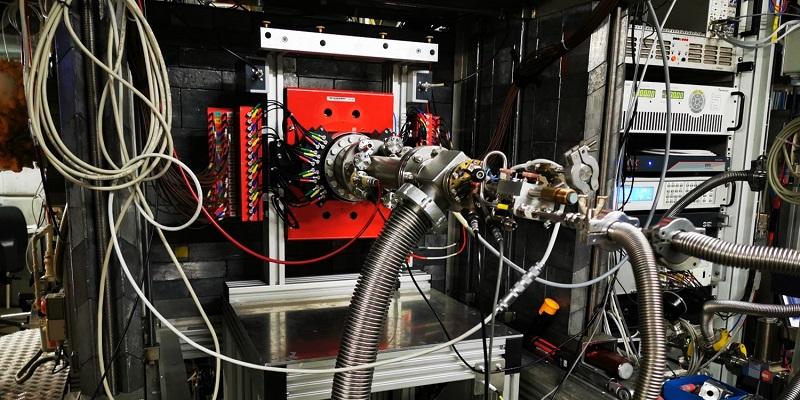
Future magnon torque based devices such as this could allow for faster electronic gadgets that require less power and do not overheat

Researchers have developed a revolutionary way to encode computational information without using electrical current. As a global first, this could lead to faster technological devices that could efficiently use energy without overheating.

Modern computer memory encodes information by switching magnetic bits within devices. Now, a ground-breaking study conducted by researchers from the Department of Electrical and Computer Engineering at the National University of Singapore has found a new efficient way of using ‘spin waves’ to switch magnetisation at room temperature for more energy-efficient spin memory and logic devices.

Traditional electronic chips s...

Read More