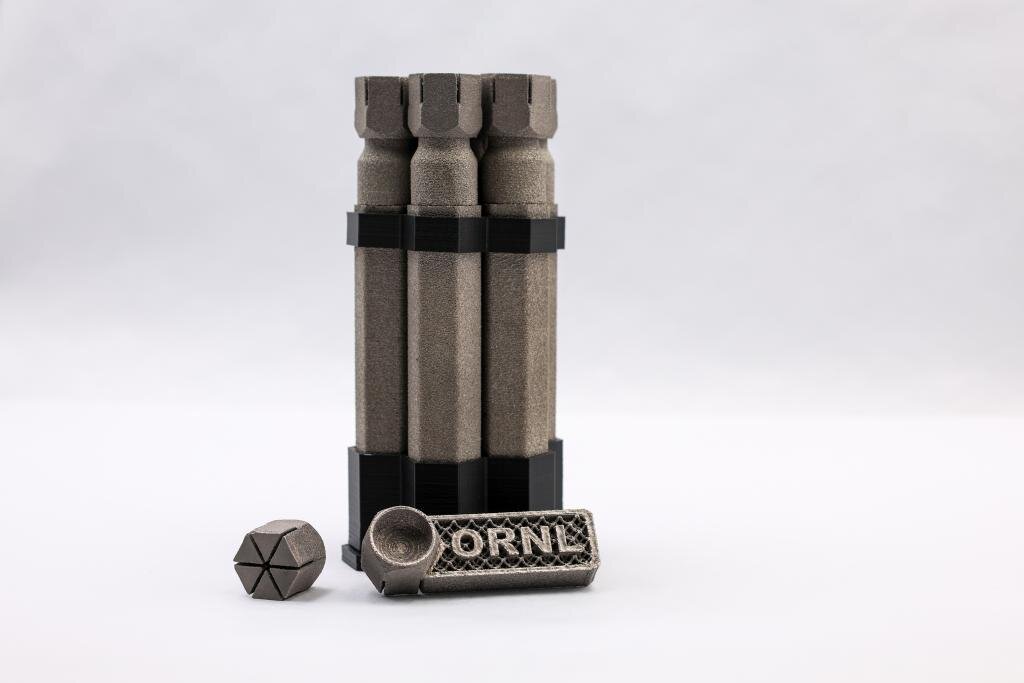
ORNL researchers used electron-beam additive manufacturing to 3D-print the first complex, defect-free tungsten parts with complex geometries. Research was performed at DOE’s Manufacturing Demonstration Facility at ORNL. The MDF, supported by DOE’s Advanced Materials and Manufacturing Technologies Office, is a nationwide consortium of collaborators working to innovate, inspire and catalyze the transformation of U.S. manufacturing. Credit: Michaela Bluedorn/ORNL, U.S. Dept. of Energy
Researchers at Oak Ridge National Laboratory used additive manufacturing to produce the first defect-free complex tungsten parts for use in extreme environments. The accomplishment could have positive implications for clean-energy technologies such as fusion energy.
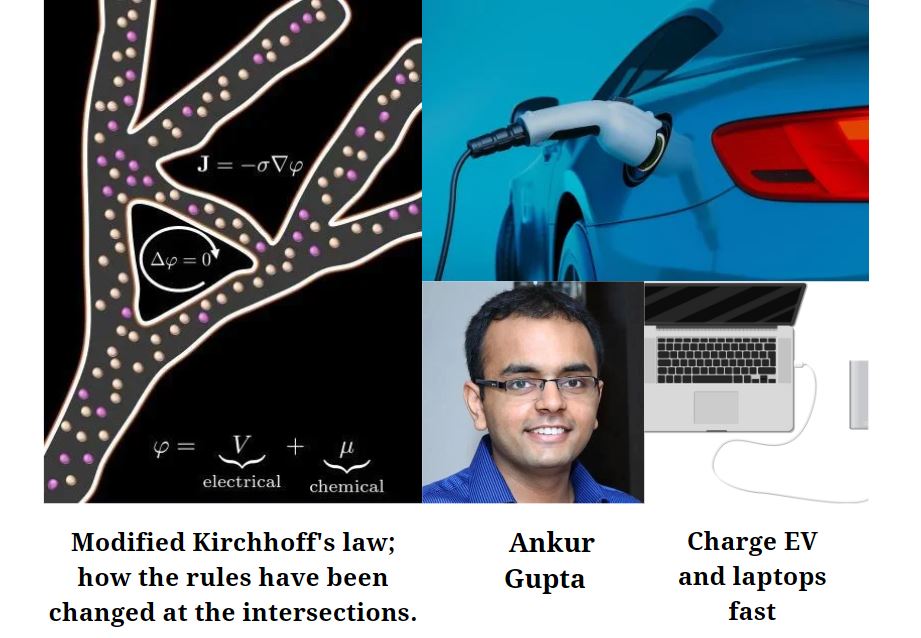
Imagine if your dead laptop or phone could charge in a minute or if an electric car could be fully powered in 10 minutes. While not possible yet, new research by a team of CU Boulder scientists could potentially lead to such advances.
Published today in the Proceedings of the National Academy of Sciences, researchers in Ankur Gupta’s lab discovered how ions, move within a complex network of minuscule pores. The breakthrough could lead to the development of more efficient energy storage devices, such as supercapacitors, said Gupta, an assistant professor of chemical and biological engineering.
“Given the critical role of energy in the future of the planet, I felt inspired to apply my chemical engineering knowledge to advancing energy storage devices,” Gupta said...
The silicon ePIC quantum chip, mounted on a printed circuit board for testing and similar to a motherboard inside a personal computer. Credit: University of Bristol
Researchers at the University of Bristol have made an important breakthrough in scaling quantum technology by integrating the world’s tiniest quantum light detector onto a silicon chip. The paper, “A Bi-CMOS electronic photonic integrated circuit quantum light detector,” was published in Science Advances.
A critical moment in unlocking the information age was when scientists and engineers were first able to miniaturize transistors onto cheap micro-chips in the 1960s.
Now, for the first time, University of Bristol academics have demonstrated the integration of a quantum light detector—smaller than a human hair—onto a s...
Next-generation sustainable electronics are doped with air.Thor Balkhed
Semiconductors are the foundation of all modern electronics. Now, researchers at Linköping University, Sweden, have developed a new method where organic semiconductors can become more conductive with the help of air as a dopant. The study, published in the journal Nature, is a significant step towards future cheap and sustainable organic semiconductors.
“We believe this method could significantly influence the way we dope organic semiconductors. All components are affordable, easily accessible, and potentially environmentally friendly, which is a prerequisite for future sustainable electronics,” says Simone Fabiano, associate professor at Linköping University.
Semiconductors based on conductive plastics ins...






Recent Comments