Small Galaxies likely played important Role in Evolution of the Universe

The University of Minnesota study shows that high-energy light from small galaxies, like the Pox 186 galaxy depicted above, may have played a key role in the reionization and evolution of the Universe. Credit: Podevin, J.f., 2006

Researchers find first-ever galaxy observed in a ‘blow-away’ state. A new study led by University of Minnesota astrophysicists shows that high-energy light from small galaxies may have played a key role in the early evolution of the Universe. The research gives insight into how the Universe became reionized, a problem that astronomers have been trying to solve for years.

The research is published in The Astrophysical Journal, a peer-reviewed scientific journal of astrophysics and astronomy.

After the Big Bang, when the Universe was formed billions of yea...

Read More

A Silver Lining for Extreme Electronics

A photograph shows the silver lines of circuit leads, which have been patterned to look like a Spartan helmet. Circuit design by MSU veterinarian Jane M. Manfredi.
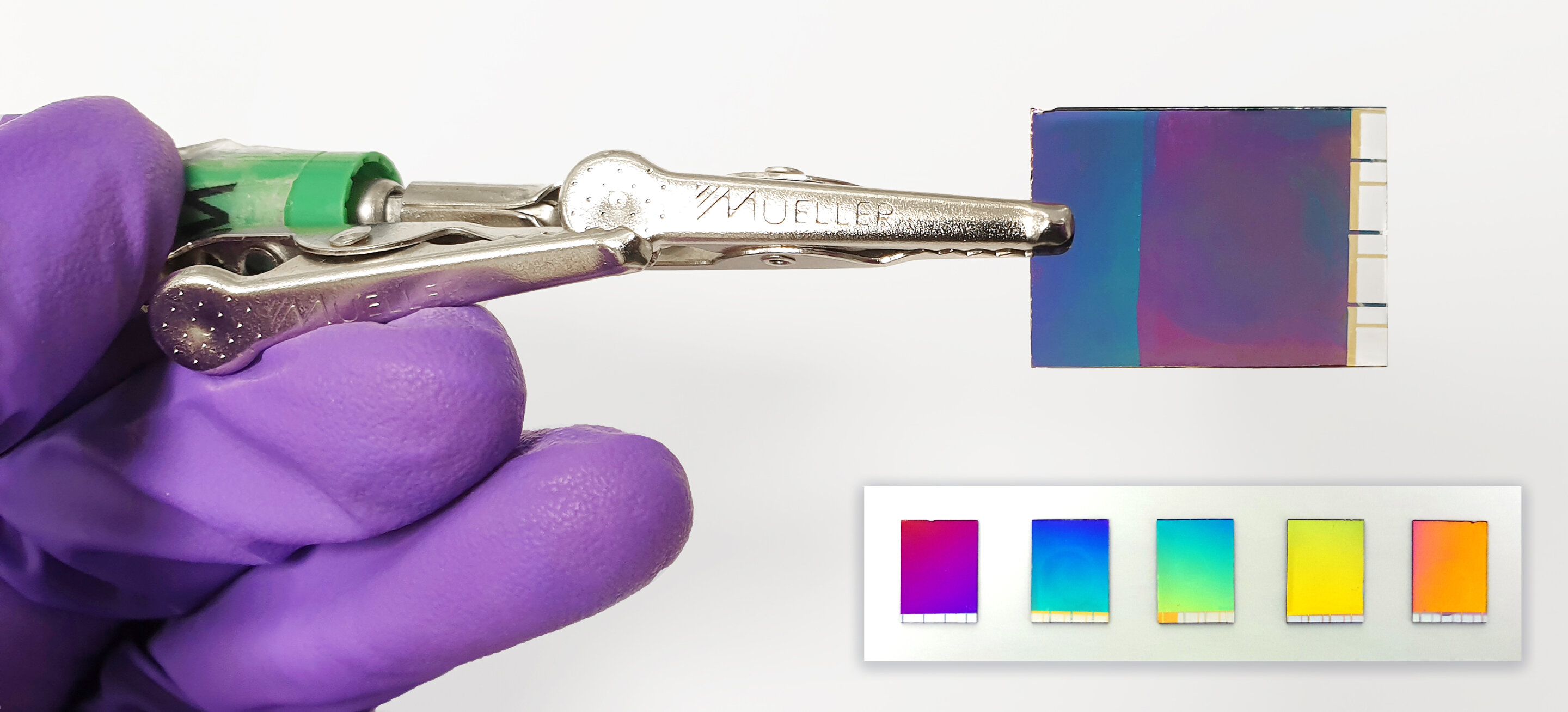
MSU researchers developed a process to create more resilient circuitry, which they demonstrated by creating a silver Spartan helmet. The circuit was designed by Jane Manfredi, an assistant professor in the College of Veterinary Medicine. Credit: Acta Materialia Inc./Elsevier

Michigan State researchers are building tougher circuits to help withstand the grueling demands of energy production, space exploration and more. Tomorrow’s cutting-edge technology will need electronics that can tolerate extreme conditions. That’s why a group of researchers led by Michigan State University’s Jason Nicholas is building stronger circuits today.

Nicholas and his team have developed more heat resilient silver circuitry with an assist from nickel...

Read More

Not just for finding planets: Exoplanet-hunter TESS telescope spots bright Gamma-ray Burst

Credits: NASA, ESA and M. Kornmesser

NASA has a long tradition of unexpected discoveries, and the space program’s TESS mission is no different. SMU astrophysicist and her team have discovered a particularly bright gamma-ray burst using a NASA telescope designed to find exoplanets — those occurring outside our solar system — particularly those that might be able to support life.

It’s the first time a gamma-ray burst has been found this way.

Gamma-ray bursts are the brightest explosions in the universe, typically associated with the collapse of a massive star and the birth of a black hole. They can produce as much radioactive energy as the sun will release during its entire 10-billion-year existence.

Krista Lynne Smith, an assistant professor of physics at Southern Methodist Uni...

Read More

Preclinical Discovery Triggers Wound Healing, Skin Regeneration

Difficult-to-treat, chronic wounds in preclinical models healed with normal scar-free skin after treatment with an acellular product discovered at Mayo Clinic. Derived from platelets, the purified exosomal product, known as PEP, was used to deliver healing messages into cells of preclinical animal models of ischemic wounds. The Mayo Clinic research team documented restoration of skin integrity, hair follicles, sweat glands, skin oils and normal hydration.

Ischemic wounds occur when arteries are clogged or blocked, preventing important nutrients and oxygen from reaching the skin to drive repair. This groundbreaking study titled, “TGF-β Donor Exosome Accelerates Ischemic Wound Healing,” is published in Theranostics.

“This paper documents that PEP, an off-the-shelf, room-temperatu...

Read More