To raise new questions, new possibilities, to regard old problems from a new angle, requires creative imagination and marks real advance in science.
~Albert Einstein
Read More
Old Newtonian physics claimed that things have an objective reality separate from our perception of them. Quantum physics, and particularly Heisenberg's Uncertainty Principle, reveal that, as our perception of an object changes, the object itself literally changes.
~Marianne Williamson
Read More
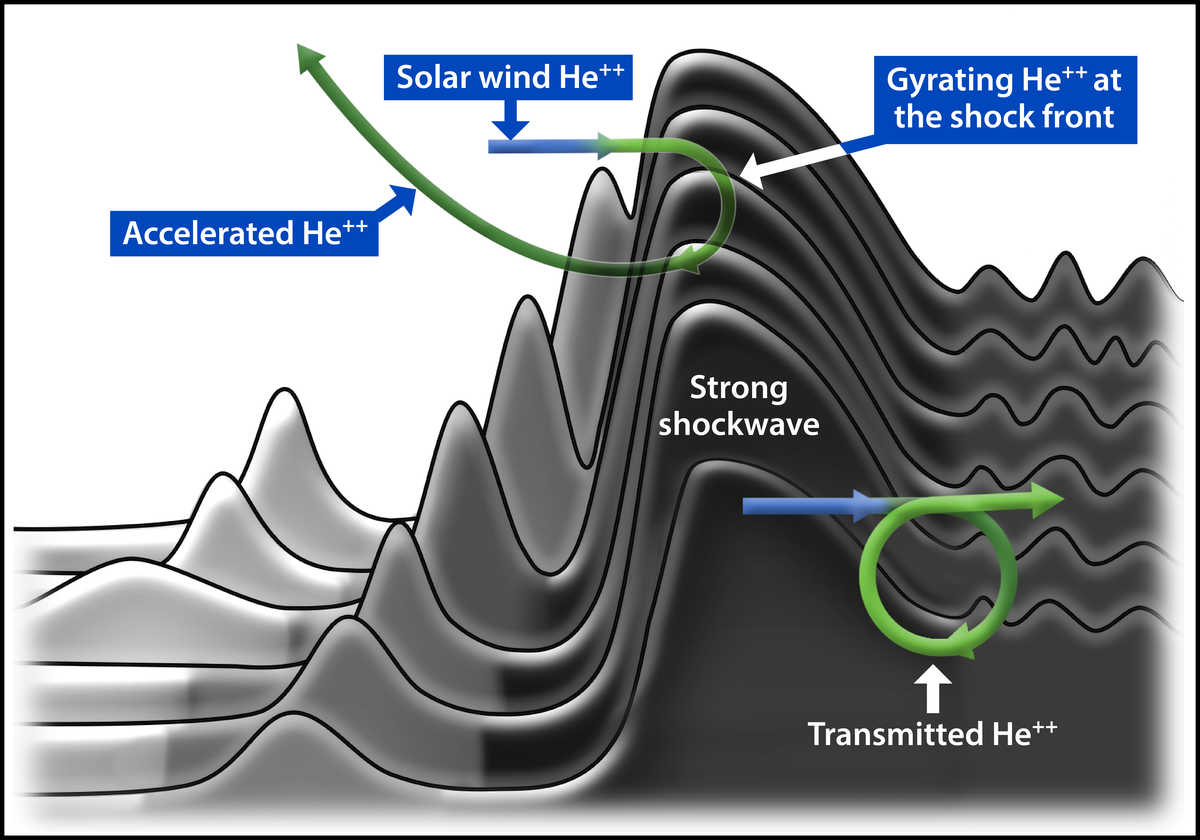
Scientists at SwRI developed this conceptual image of heavy ion dynamics based on MMS observations. The colored trajectory lines illustrate how alpha particles (He++) behave as they encounter an extreme shock. Strong magnetic fields effectively change their trajectory, placing them in the acceleration zones. This process explains how trace heavy elements could be accelerated into galactic cosmic rays by supernova events.
Mechanism for accelerating heavy ions revealed. Scientists have used data from the Southwest Research Institute-led Magnetospheric Multiscale (MMS) mission to explain the presence of energetic heavy elements in galactic cosmic rays (GCRs)...
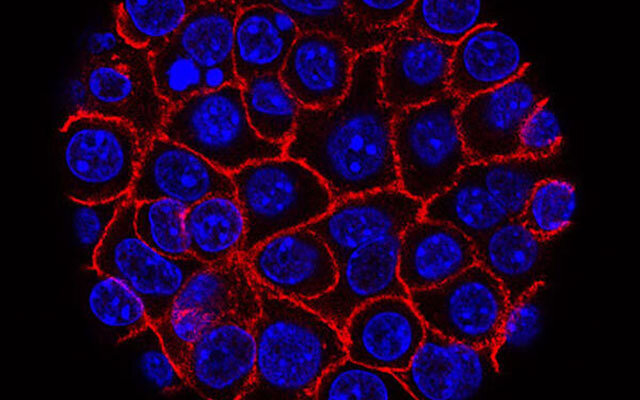
Researchers from Queen Mary University of London have identified a protein that could be used to aid in the diagnosis of pancreatic cancer.
Findings from the new study suggest that a protein called pentraxin 3 (PTX3) may be a specific diagnostic biomarker — or biological measure — for pancreatic cancer, with the ability to differentiate pancreatic cancer from other non-cancerous conditions of the pancreas.
The research was published today in npj Precision Oncology, and primarily funded by the Pancreatic Cancer Research Fund, Barts Charity and Cancer Research UK.
PTX3 levels elevated in patients with pancreatic cancer
In the study, researchers measured PTX3 levels in serum blood samples from patients with pancreatic ductal adenocarcinoma (PDAC) — the most common type of pan...
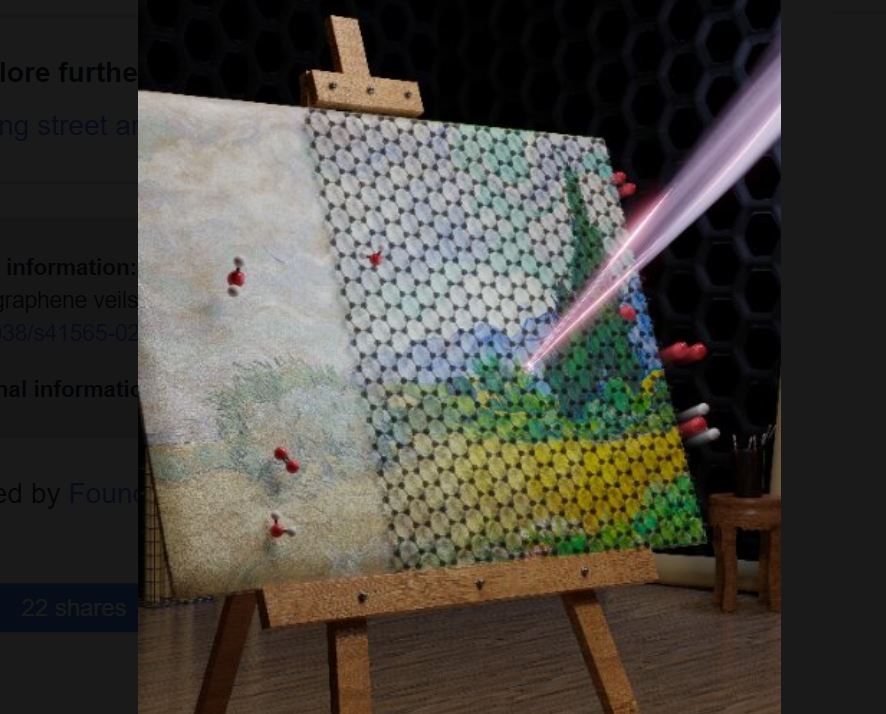
The exposure of colors used in artworks to ultraviolet (UV) and visible light in the presence of oxidizing agents triggers color degradation, fading and yellowing. These degradation mechanisms can lead to irreversible alteration of artworks. Protective varnishes and coatings currently used to protect art paintings are not acceptable solutions, since their removal requires the use of solvents, which can affect adversely the underlying work surface.
A team of researchers from the Institute of Chemical Engineering Sciences of the Foundation for Research and Technology-Hellas (FORTH/ ICE-HT), the Department of Chemical Engineering of the University of Patras, and the Center for Colloid and Surface Science (CSGI) of the University of Florence, led by Professor Costas Galiotis, had the i...
Above is a all sky view in galactic coordinates. The number of stars is higher in brighter regions. Most of the image, where the Milky Way plane is visible (b = 0 degrees), is produced using Gaia eDR3 data. The small patch in the top-centre shows a region where deeper DESI Legacy Imaging Survey (DECaLS) data is available, which allows for Palomar 5 and its tidal tails to be seen. Image: M. Gieles et al./Gaia eDR3/DESI DECaLS
Palomar 5 is a unique star cluster. This is firstly because it is one of the “fluffiest” clusters in the halo of our Galaxy, with the average distance between the stars being a few light-years, comparable to the distance from the Sun to the nearest star. Secondly, it has a specular stellar stream associated with it that spans more than 20 degrees across the sky...












Recent Comments