To raise new questions, new possibilities, to regard old problems from a new angle, requires creative imagination and marks real advance in science.
~Albert Einstein
Read More
Old Newtonian physics claimed that things have an objective reality separate from our perception of them. Quantum physics, and particularly Heisenberg's Uncertainty Principle, reveal that, as our perception of an object changes, the object itself literally changes.
~Marianne Williamson
Read More
This illustration highlights a newfound small white dwarf that is somewhat largerthan earth’s moon. the two bodies are shown next to each other for sizecomparison. the hot, young white dwarf is the most massive white dwarf known, weighing 1.35 times as much as our sun. Credit: Giuseppe Parisi
Astronomers have identified an extremely magnetized and rapidly rotating ultra-massive white dwarf. Several telescopes characterized the dead star. Maunakea and Haleakala, Hawai’i — Astronomers have discovered the smallest and most massive white dwarf ever seen...
According to the Centers for Disease Control, diabetes affects 34.2 million Americans. An additional 88 million people over the age of 18 are prediabetic, or at risk of developing diabetes.
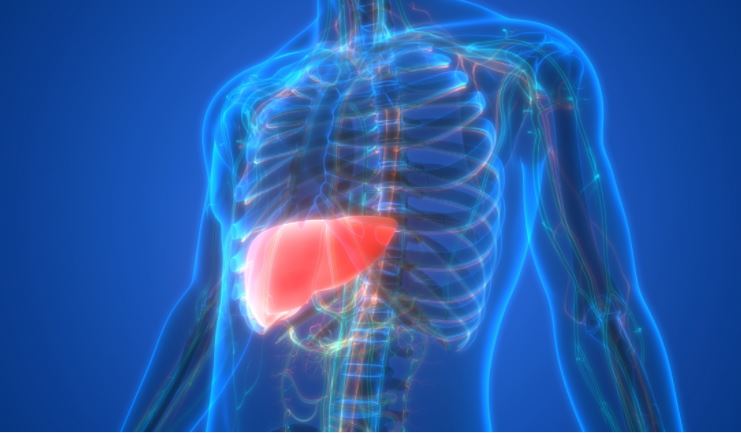
Researchers believe the liver may hold the key to new, preventative Type 2 diabetes treatments. This year marks the 100th anniversary of the discovery of insulin, a scientific breakthrough that transformed Type 1 diabetes, once known as juvenile diabetes or insulin-dependent diabetes, from a terminal disease into a manageable condition.
Today, Type 2 diabetes is 24 times more prevalent than Type 1...
A schematic diagram showing the observation of particles moving through a generic porous material. CREDIT Haichao Wu
University of Colorado Boulder researchers have discovered that minuscule, self-propelled particles called “nanoswimmers” can escape from mazes as much as 20 times faster than other passive particles, paving the way for their use in everything from industrial clean-ups to medication delivery.
The findings, published this week in the Proceedings of the National Academy of Sciences, describe how these tiny synthetic nanorobots are incredibly effective at escaping cavities within maze-like environments...
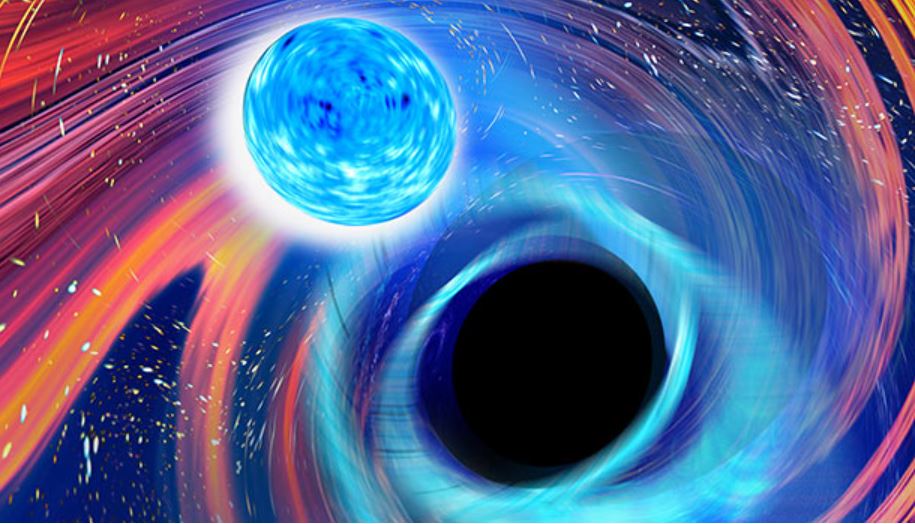
A long time ago, in two galaxies about 900 million light-years away, two black holes each gobbled up their neutron star companions, triggering gravitational waves that finally hit Earth in January 2020.
Discovered by an international team of astrophysicists including Northwestern University researchers, two events—detected just 10 days apart—mark the first-ever detection of a black hole merging with a neutron star. The findings will enable researchers to draw the first conclusions about the origins of these rare binary systems and how often they merge.
“Gravitational waves have allowed us to detect collisions of pairs of black holes and pairs of neutron stars, but the mixed collision of a black hole with a neutron star has been the elusive missing piece of the family picture...












Recent Comments