A Molecule that Responds to Light

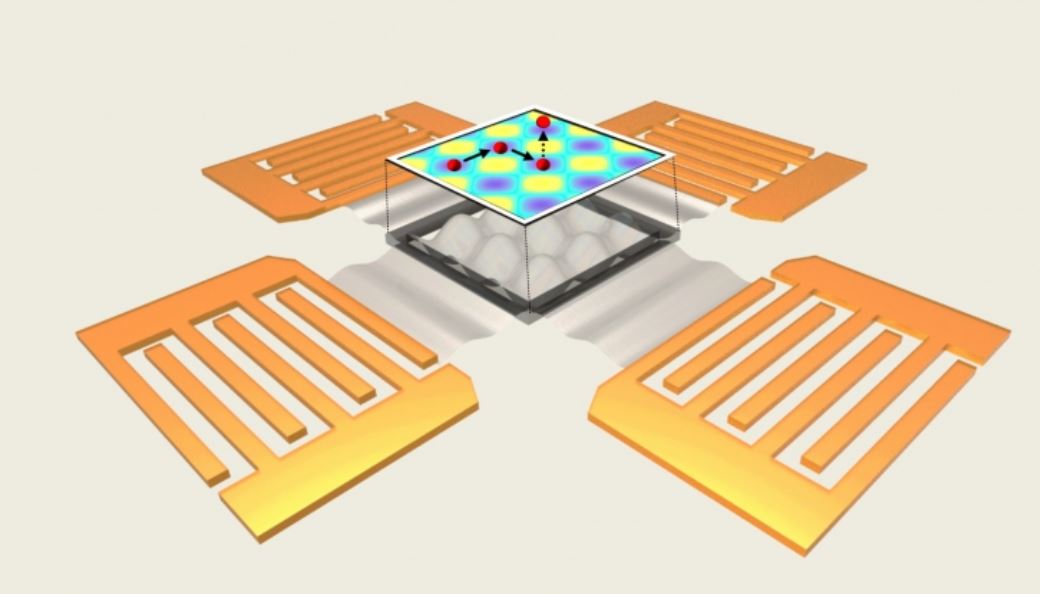
Based on the Europium(III) scientists aim to  advance the development of Quantum Computers. (S. Kuppusamy, KIT)
Based on the Europium(III) scientists aim to advance the development of Quantum Computers. (S. Kuppusamy, KIT)

Light can be used to operate quantum information processing systems, e.g. quantum computers, quickly and efficiently. Researchers at Karlsruhe Institute of Technology (KIT) and Chimie ParisTech/CNRS have now significantly advanced the development of molecule-based materials suitable for use as light-addressable fundamental quantum units. As they report in the journal Nature Communications, they have demonstrated for the first time the possibility of addressing nuclear spin levels of a molecular complex of europium(III) rare-earth ions with light.

Whether in drug development, communication, or for climate forecasts: Processing information quickly and efficiently is crucial i...

Read More

Study warns of ‘Oxygen False Positives’ in Search for Signs of Life on other Planets

exoplanet-atmospheres-500.jpg
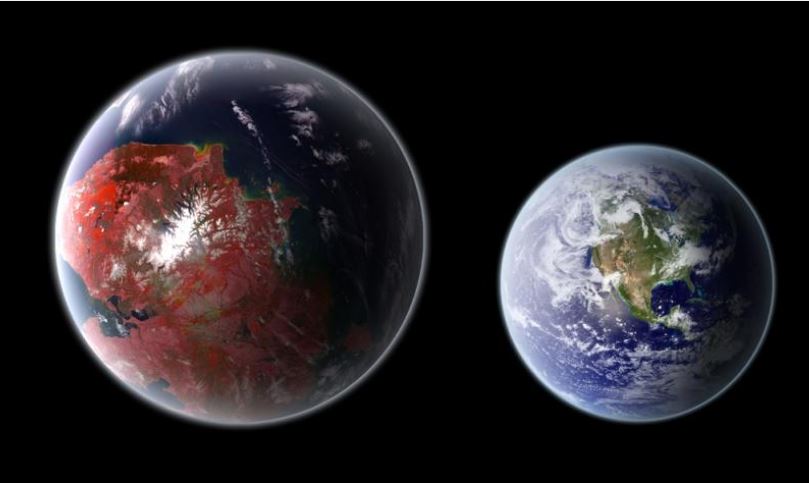
By varying the initial inventory of volatile elements in a model of the geochemical evolution of rocky planets, researchers obtained a wide range of outcomes, including several scenarios in which a lifeless rocky planet around a sun-like star could evolve to have oxygen in its atmosphere. (Illustration by J. Krissansen-Totton)

In the search for life on other planets, the presence of oxygen in a planet’s atmosphere is one potential sign of biological activity that might be detected by future telescopes. A new study, however, describes several scenarios in which a lifeless rocky planet around a sun-like star could evolve to have oxygen in its atmosphere.

The new findings, published April 13 in AGU Advances, highlight the need for next-generation telescopes that are capable of characte...

Read More

Pain Receptors linked to the Generation of Energy-burning Fat cells: implications for Obesity Therapy

Brown adipocytes derived from progenitors expressing the Trpv1 receptor are labeled with Green Fluorescent Protein (GFP) and are found in brown adipose tissue of mice exposed to cold temperature. ( © Joslin Diabetes Center 2021)

A new source of energy-expending brown fat cells has been uncovered by researchers at the Joslin Diabetes Center, which they say points towards potential new therapeutic options for obesity. According to the new report, published in Nature Metabolism, the key lies in the expression of a receptor called Trpv1 (temperature-sensitive ion channel transient receptor potential cation subfamily V member 1) — a protein known to sense noxious stimuli, including pain and temperature.

Specifically, the authors point to smooth muscle cells expressing the Trpv1 receptor...

Read More

New Bosealant can Stabilize Cartilage, Promote Healing after Injury

knee cartilage

A new biosealant therapy may help to stabilize injuries that cause cartilage to break down, paving the way for a future fix or — even better — begin working right away with new cells to enhance healing, according to a new animal-based study by researchers at the Perelman School of Medicine at the University of Pennsylvania. Their research was published in Advanced Healthcare Materials.

“Our research shows that using our hyaluronic acid hydrogel system at least temporarily stops cartilage degeneration that commonly occurs after injury and causes pain in joints,” said the study’s senior author, Robert Mauck, PhD, a professor of Orthopaedic Surgery and the director of Penn Medicine’s McKay Orthopaedic Research Laboratory...

Read More