Engineering T cells to Attack Cancer Broadly

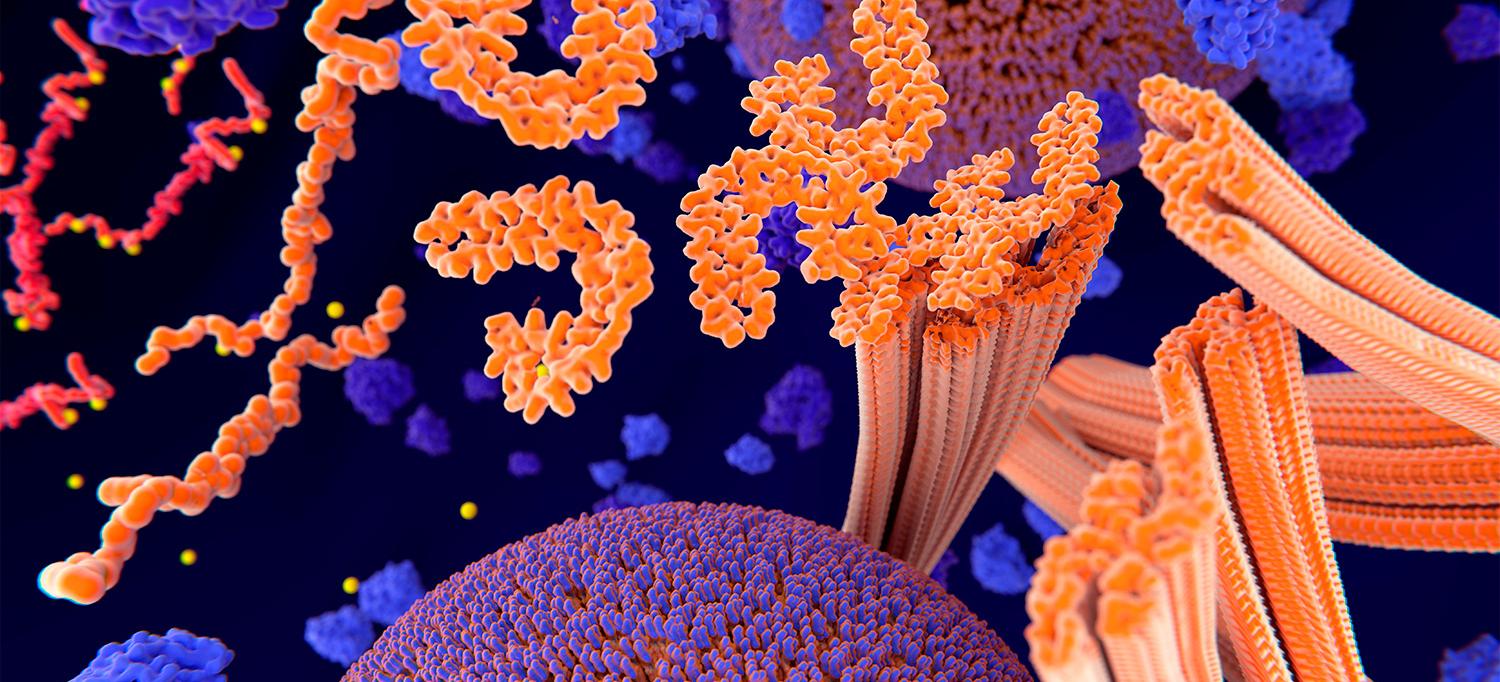
Through T cell engineering, researchers at Virginia Commonwealth University Massey Cancer Center show that it’s possible to arrest tumor growth for a variety of cancers and squash the spread of cancer to other tissues. This research will be published in tomorrow’s print edition of Cancer Research.

The paper builds on decades of research by study co-senior author Paul B. Fisher, M.Ph., Ph.D., a member of Massey’s Cancer Biology research program, who discovered a protein called IL-24 that attacks a variety of cancers in several different ways.

In this latest study, Fisher teamed up with his colleague Xiang-Yang (Shawn) Wang, Ph.D...

Read More

Stable, Efficient, Anode-free Sodium Battery

Bingyuan Ma holding a transparent capillary cell. Bai’s Lab at the McKelvey School of Engineering is the only one in the world with such diagnostic cells. (Courtesy: Bai Lab)

One-of-a-kind tool helped solve anode puzzle that thwarted previous attempts. The Washington University in St. Louis lab of Peng Bai, assistant professor in the Department of Energy, Environmental & Chemical Engineering in the McKelvey School of Engineering, has developed a stable sodium ion battery that is highly efficient, will be less expensive to make and is significantly smaller than a traditional lithium ion battery due to the elimination of a once-necessary feature.
“We’ve found that the minimal is maximum,” Bai said. “No anode is the best anode.”
The research was published May 3, 2021, in the journal Advan...

Read More

Meteorite Amino Acids derived from Substrates more widely available in the Early Solar System

Scientists have recreated the reaction by which carbon isotopes made their way into different organic compounds, challenging the notion that organic compounds, such as amino acids, were formed by isotopically enriched substrates. Their discovery suggests that the building blocks of life in meteorites were derived from widely available substrates in the early solar system.

Their findings were published online in Science Advances on April 28, 2021.

Carbonaceous meteorites contain the building blocks of life, including amino acids, sugars, and nucleobases. These meteorites are potential providers of these molecules to the prebiotic Earth.

The small organic molecules found in meteorites are generally enriched in a heavy carbon isotope (13C)...

Read More

Avocado discovery may point to Leukemia Treatment

man seated before several avocados and holding half an avocado in his right hand
Dr. Paul Spagnuolo

A compound in avocados may ultimately offer a route to better leukemia treatment, says a new University of Guelph study.

The compound targets an enzyme that scientists have identified for the first time as being critical to cancer cell growth, said Dr. Paul Spagnuolo, Department of Food Science.

Published recently in the journal Blood, the study focused on acute myeloid leukemia (AML), which is the most devastating form of leukemia. Most cases occur in people over age 65, and fewer than 10 per cent of patients survive five years after diagnosis.

Leukemia cells have higher amounts of an enzyme called VLCAD involved in their metabolism, said Spagnuolo.

“The cell relies on that pathway to survive,” he said, explaining that the compound is a likely candidate ...

Read More