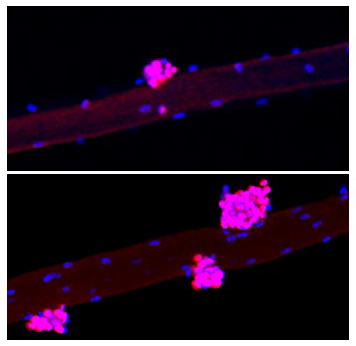
Could we Recycle Plastic Bags into Fabrics of the future?

Engineers have developed self-cooling fabrics from polyethylene, a material commonly used in plastic bags. They estimate that the new fabric may be more sustainable than cotton and other common textiles....Read More

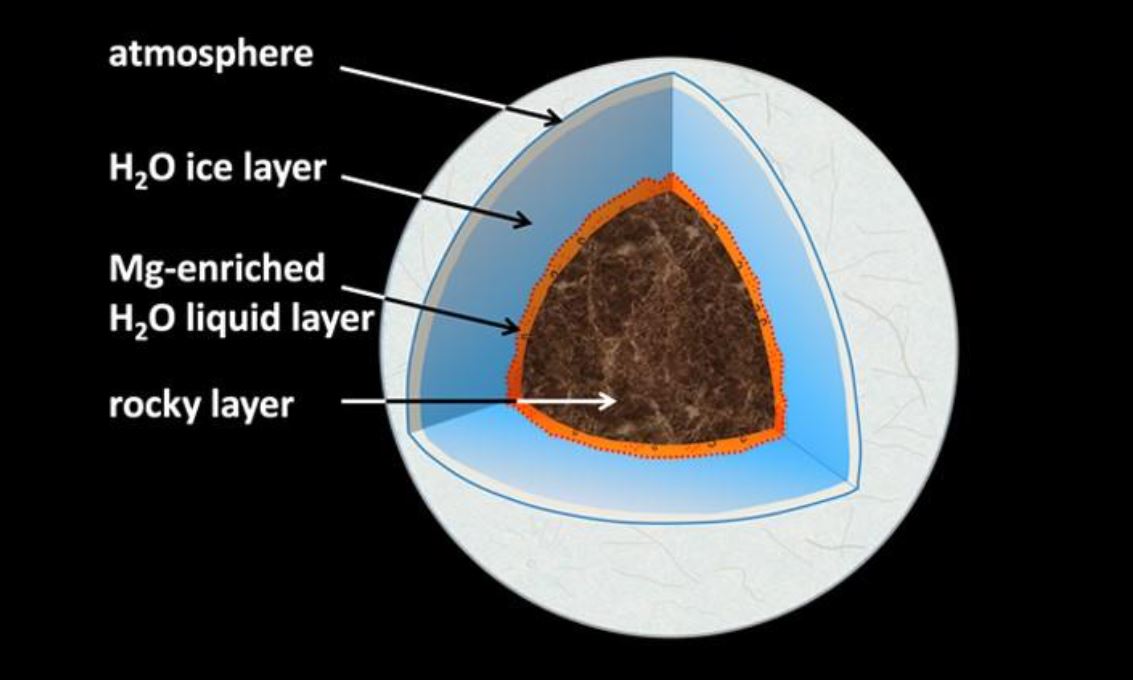
There might be many Planets with Water-Rich Atmospheres

Artist illustration of the exoplanet WASP-121b
A study suggests that exoplanets close to their stars may actually retain a thick atmosphere full of water. Above, an artist’s illustration of the exoplanet WASP-121b, which appears to have water in its atmosphere.
Image courtesy of Engine House VFX, At-Bristol Science Centre, University of Exeter

A new study suggests that hot, rocky exoplanets could not only develop atmospheres full of water vapor, but keep them for long stretches. An atmosphere is what makes life on Earth’s surface possible, regulating our climate and sheltering us from damaging cosmic rays. But although telescopes have counted a growing number of rocky planets, scientists had thought most of their atmospheres long lost.

However, a new study by University of Chicago and Stanford University researchers expands our p...

Read More

How the Brain learns from Subconscious Stimuli

The ventral tegmental area contains, among others, cells that produce dopamine.

Researchers uncovered for the first time what happens in animals’ brains when they learn from subconscious, visual stimuli. In time, this knowledge can lead to new treatments for a number of conditions. The study, a collaboration between KU Leuven, Massachusetts General Hospital, and Harvard was published in Neuron.

An experienced birdwatcher recognises many more details in a bird’s plumage than the ordinary person. Thanks to extensive training, he or she can identify specific features in the plumage. This learning process is not only dependent on conscious processes...

Read More

Largest Supernova Remnant ever discovered with X-rays

In the first all-sky survey by the eROSITA X-ray telescope onboard SRG, astronomers at the Max Planck Institute for Extraterrestrial Physics have identified a previously unknown supernova remnant, dubbed “Hoinga.” The finding was confirmed in archival radio data and marks the first discovery of a joint Australian-eROSITA partnership established to explore our Galaxy using multiple wavelengths, from low-frequency radio waves to energetic X-rays. The Hoinga supernova remnant is very large and located far from the galactic plane — a surprising first finding — implying that the next years might bring many more discoveries.

Massive stars end their lives in gigantic supernova explosions when the fusion processes in their interiors no longer produce enough energy to counter their gravitat...

Read More