To raise new questions, new possibilities, to regard old problems from a new angle, requires creative imagination and marks real advance in science.
~Albert Einstein
Read More
Old Newtonian physics claimed that things have an objective reality separate from our perception of them. Quantum physics, and particularly Heisenberg's Uncertainty Principle, reveal that, as our perception of an object changes, the object itself literally changes.
~Marianne Williamson
Read More
The microMESH has the shape of a micrometric polymeric net, it is made with biodegradable materials and wraps around the tumor mass. Its structure consists of two separate compartments in which different drugs can be loaded which are released towards the tumor mass in an independent, precise, and prolonged fashion. The microMESH can ‘attack’ glioblastoma by combining different therapies: chemotherapy, nanomedicine, and immunotherapy. CREDIT D. Beghetto/IIT
A micro-sized polymeric net wrapping around brain tumors, just like a fishing net around a shoal of fish: this is microMESH, a new nanomedicine device capable of conforming around the surface of tumor masses and efficiently delivering drugs...
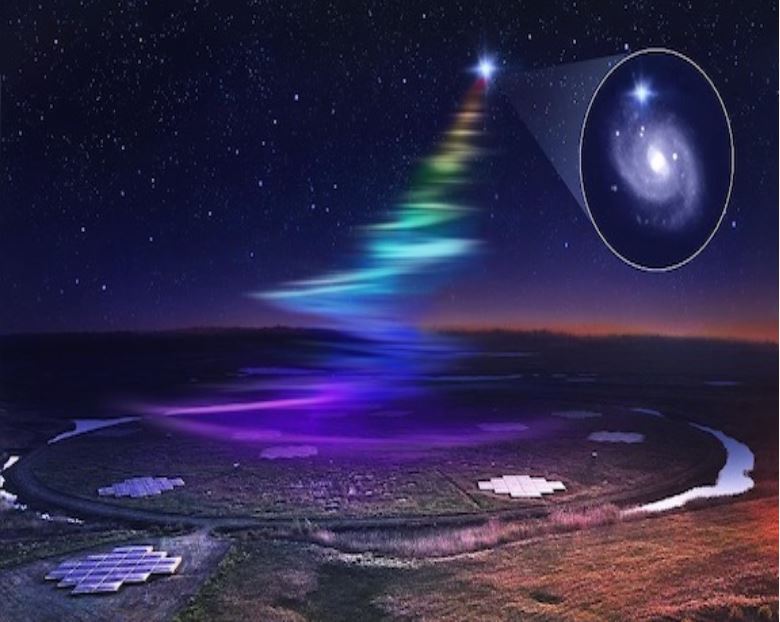
Fast radio bursts shown to include lower frequency radio waves than previously detected
A team of researchers has established that fast radio bursts (FRBs) include radio waves at frequencies lower than ever detected before, a discovery that redraws the boundaries for theoretical astrophysicists trying to put their finger on the source of FRBs.
Since fast radio bursts (FRBs) were first discovered over a decade ago, scientists have puzzled over what could be generating these intense flashes of radio waves from outside of our galaxy. In a gradual process of elimination, the field of possible explanations has narrowed as new pieces of information are gathered about FRBs — how long they last, the frequencies of the radio waves detected, and so on.
Treating people with Type 2 diabetes with a new once-a-week injectable insulin therapy proved to be safe and as effective as daily insulin injections, according to the results of two international clinical trials published online today in Diabetes Care. The studies suggest that the once-weekly treatment could provide a convenient alternative to the burden of daily insulin shots for diabetes patients.
Starting and maintaining insulin treatment remain a challenge for millions of patients worldwide with Type 2 diabetes. Fear of injections and the inconvenience and burden of injectable therapy contribute to the barriers against insulin therapy initiation and adherence...
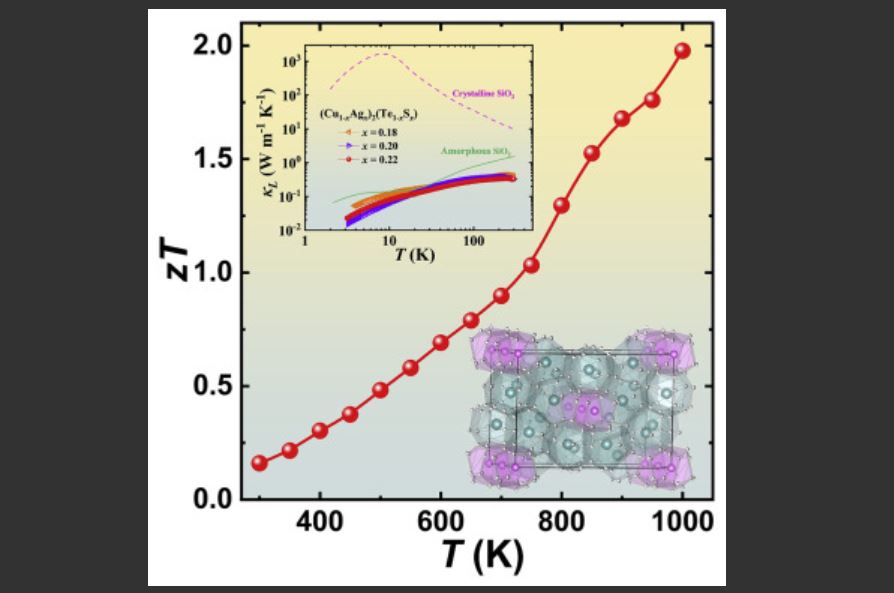
Researchers have created a new and potentially paradigm-shifting high-performance thermoelectric compound. The team created a new hybrid compound in which the crystalline and amorphous sublattices are intertwined into a one-of-a-kind crystal-amorphic duality.
Thermoelectrics directly convert heat into electricity and power a wide array of items – from NASA’s Perseverance rover currently exploring Mars to travel coolers that chill beverages.
A Clemson University physicist has joined forces with collaborators from China and Denmark to create a new and potentially paradigm-shifting high-performance thermoelectric compound.
A material’s atomic structure, which is how atoms arrange themselves in space and time, determines its properties...












Recent Comments