Solar Hydrogen: Photoanodes made of alpha-SnWO4 promise High Efficiencies

Solar hydrogen: Photoanodes promise high efficiencies
TEM-Image of a α-SnWO4 film (green) coated with 20 nm NiOx (pink). At the interface of α-SnWO4 and NiOx an additional interfacial layer can be observed. Credit: HZB

Photoanodes made of metal oxides are considered to be a viable solution for the production of hydrogen with sunlight. α-SnWO4 has optimal electronic properties for photoelectrochemical water splitting with sunlight, but corrodes easily. Protective layers of nickel oxide prevent corrosion, but reduce the photovoltage and limit the efficiency. Now a team at HZB has investigated at BESSY II what happens at the interface between the photoanode and the protective layer. Combined with theoretical methods, the measurement data reveal the presence of an oxide layer that impairs the efficiency of the photoanode.

Hydrogen is an...

Read More

How Heavy is Dark Matter? Scientists radically narrow the potential mass range for the first time

Credit: Greg Rakozy on Unsplash

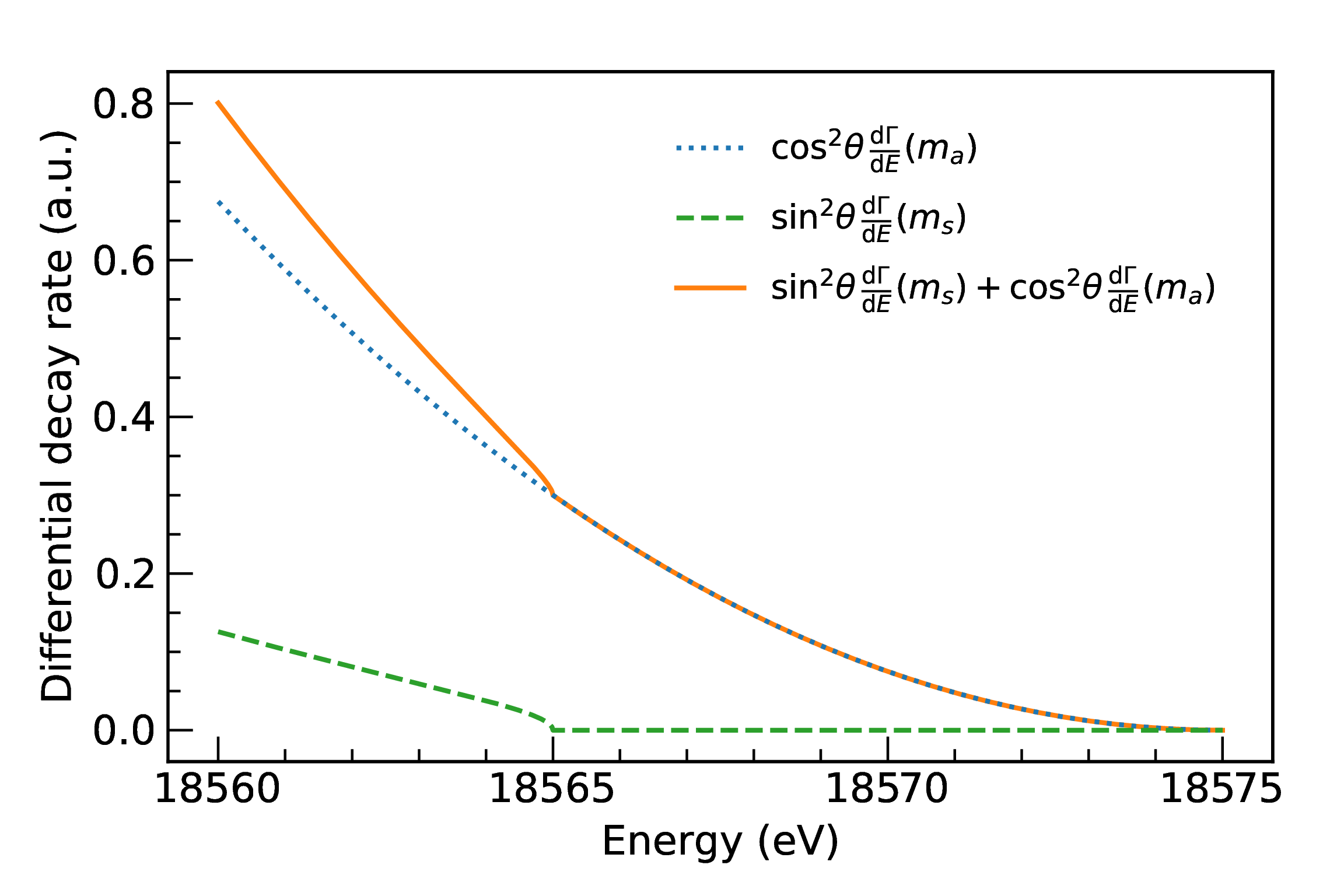
Scientists have calculated the mass range for Dark Matter – and it’s tighter than the science world thought. Their findings – due to be published in Physics Letters B in March – radically narrow the range of potential masses for Dark Matter particles, and help to focus the search for future Dark Matter-hunters. The University of Sussex researchers used the established fact that gravity acts on Dark Matter just as it acts on the visible universe to work out the lower and upper limits of Dark Matter’s mass.

The results show that Dark Matter cannot be either ‘ultra-light’ or ‘super-heavy’, as some have theorised, unless an as-yet undiscovered force also acts upon it.

The team used the assumption that the only force acting on Dark Matter is gravity, an...

Read More

Protein Anchors as a newly discovered Key Molecule in Cancer Spread and Epilepsy

Certain anchor proteins inhibit a key metabolic driver that plays an important role in cancer and developmental brain disorders. Scientists from the German Cancer Research Center (DKFZ) and the University of Innsbruck, together with a Europe-wide research network, discovered this molecular mechanism, which could open up new opportunities for personalized therapies for cancer and neuronal diseases. They published their results in the journal Cell.

The signaling protein MTOR (Mechanistic Target of Rapamycin) is a sensor for nutrients such as amino acids and sugars. When sufficient nutrients are available, MTOR boosts metabolism and ensures that sufficient energy and cellular building blocks are available...

Read More

Biodegradable Displays for Sustainable Electronics

2020_111_Kompostierbare Displays fuer nachhaltige Elektronik_72dpi
Thanks to its flexibility and adhesion, the biodegradable display can be worn directly on the hand. (Photo: Manuel Pietsch, KIT)

Researchers develop biodegradable printed display. In the next years, increasing use of electronic devices in consumables and new technologies for the internet of things will increase the amount of electronic scrap. To save resources and minimize waste volumes, an eco-friendlier production and more sustainable lifecycle will be needed. Scientists of Karlsruhe Institute of Technology (KIT) have now been the first to produce displays, whose biodegradability has been checked and certified by an independent office. The results are reported in the Journal of Materials Chemistry.

“For the first time, we have demonstrated that it is possible to produce sustainabl...

Read More