Highly Efficient Grid-scale Electricity storage at 5th of Cost

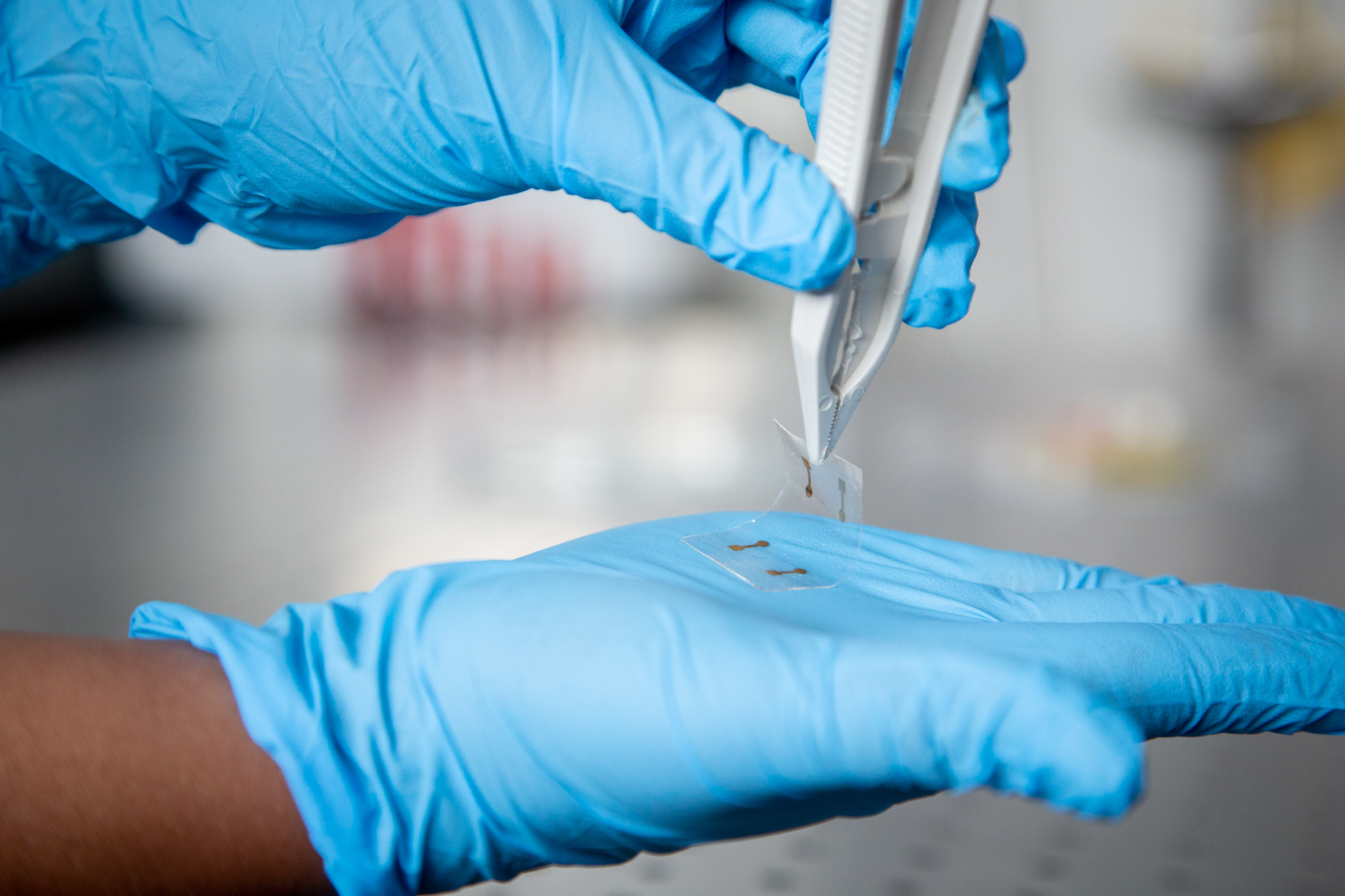
Researchers in WMG at the University of Warwick, in collaboration with Imperial College London, have found a way to enhance hybrid flow batteries and their commercial use. The new approach can store electricity in these batteries for very long durations for about a fifth the price of current technologies, with minimal location restraints and zero emissions.

The researchers enhanced three hybrid flow cells using nitrogen doped graphene (exposed to nitrogen plasma) in a binder-free electrophoresis technique (EPD).

Wind and solar power are increasingly popular sources for renewable energy. Unfortunately, intermittency issues keep them from connecting widely to the National grid...

Read More

Exercising Muscle combats Chronic Inflammation on its own

Four square images, three of detailed fibers stained red and green, one a line graph
Long, thin, well-defined muscle fibers (top left) are in shambles after prolonged inflammation (top right), but maintain their structure (bottom left) and strength (bottom right) when exercised during the inflammation.

Exercising lab-grown human muscle autonomously blocks the damaging effects of interferon gamma. Biomedical engineers at Duke University have demonstrated that human muscle has an innate ability to ward off the damaging effects of chronic inflammation when exercised. The discovery was made possible through the use of lab-grown, engineered human muscle, demonstrating the potential power of the first-of-its-kind platform in such research endeavors.

The results appear online on January 22 in the journal Science Advances.

“Lots of processes are taking place throughout t...

Read More

CRISPR technology to Cure Sickle Cell Disease

Blood smear illustrating sickle cell anemia
This blood smear shows sickle cell disease.

University of Illinois Chicago is one of the U.S. sites participating in clinical trials to cure severe red blood congenital diseases such as sickle cell anemia or Thalassemia by safely modifying the DNA of patients’ blood cells.

The first cases treated with this approach were recently published in an article co-authored by Dr. Damiano Rondelli, the Michael Reese Professor of Hematology at the UIC College of Medicine. The article reports two patients have been cured of beta thalassemia and sickle cell disease after their own genes were edited with CRISPR-Cas9 technology. The two researchers who invented this technology received the Nobel Prize in Chemistry in 2020.

In the paper published in the New England Journal of Medicine, CRISPR-Ca...

Read More

Saturn’s Moon Titan: Largest Sea is 1,000-feet deep

Kraken Mare
An artistic rendering of Kraken Mare, the large liquid methane sea on Saturn’s moon Titan.

Far below the gaseous atmospheric shroud on Saturn’s largest moon, Titan, lies Kraken Mare, a sea of liquid methane. Cornell University astronomers have estimated that sea to be at least 1,000-feet deep near its center — enough room for a potential robotic submarine to explore.

After sifting through data from one of the final Titan flybys of the Cassini mission, the researchers detailed their findings in “The Bathymetry of Moray Sinus at Titan’s Kraken Mare,” which published in the Journal of Geophysical Research.

“The depth and composition of each of Titan’s seas had already been measured, except for Titan’s largest sea, Kraken Mare — which not only has a great name, but also contains ab...

Read More