A ‘Super-Puff’ Planet like no other

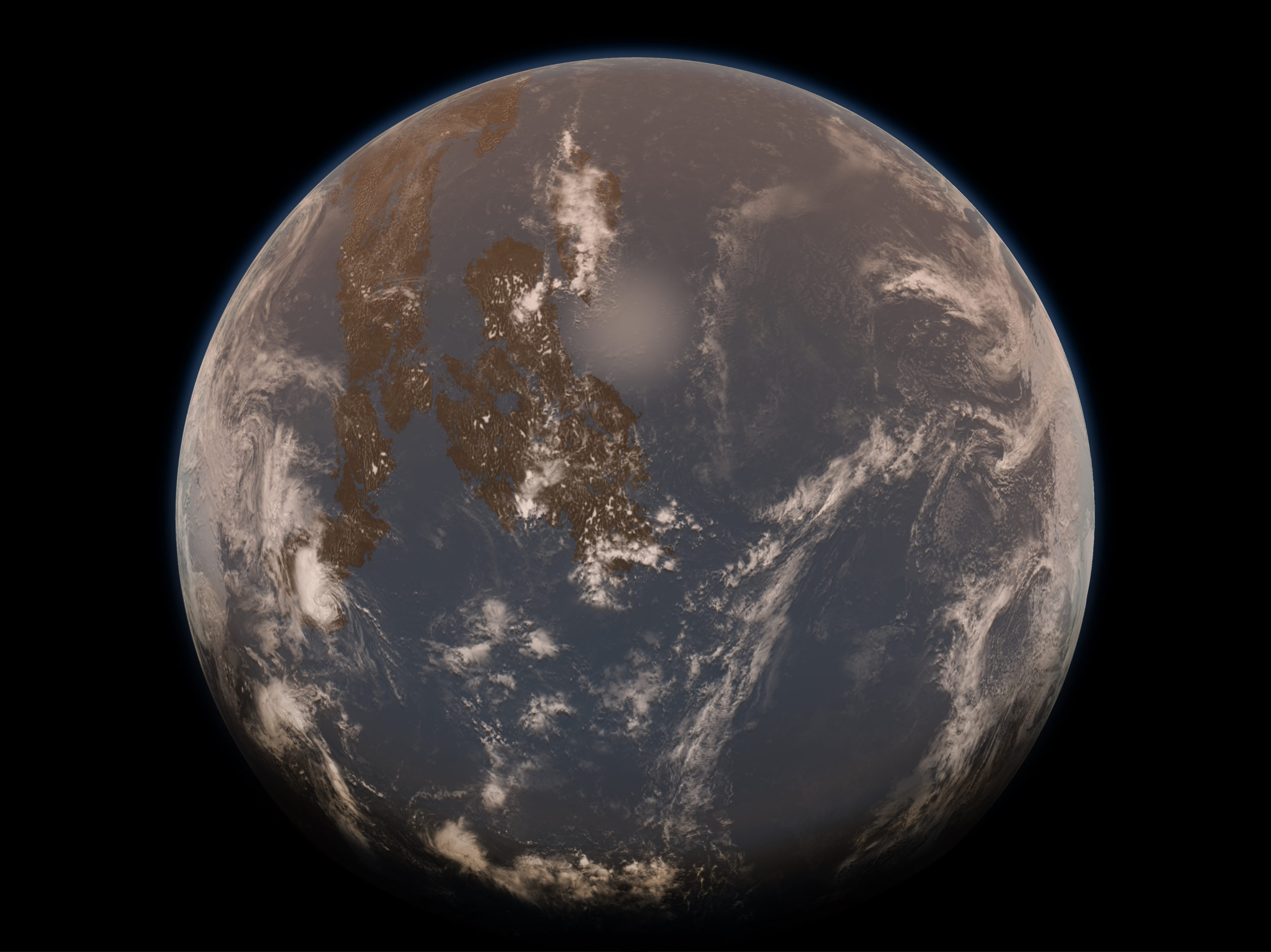
Artistic rendition of the exoplanet WASP-107b and its star, WASP-107. Some of the star’s light streams through the exoplanet’s extended gas layer.
CREDIT: ESA/HUBBLE, NASA, M. KORNMESSER

The core mass of the giant exoplanet WASP-107b is much lower than what was thought necessary to build up the immense gas envelope surrounding giant planets like Jupiter and Saturn, astronomers at Université de Montréal have found.

This intriguing discovery by Ph.D. student Caroline Piaulet of UdeM’s Institute for Research on Exoplanets (iREx) suggests that gas-giant planets form a lot more easily than previously believed.

Piaulet is part of the groundbreaking research team of UdeM astrophysics professor Björn Benneke that in 2019 announced the first detection of water on an exoplanet located in ...

Read More

Scientists reveal mechanism that causes Irritable Bowel Syndrome

Patients with irritable bowel syndrome are not always taken seriously by doctors, says Professor Guy Boeckxstaens. | © Shutterstock

KU Leuven researchers have identified the biological mechanism that explains why some people experience abdominal pain when they eat certain foods. The finding paves the way for more efficient treatment of irritable bowel syndrome and other food intolerances. The study, carried out in mice and humans, was published in Nature.

Up to 20% of the world’s population suffers from the irritable bowel syndrome (IBS), which causes stomach pain or severe discomfort after eating. This affects their quality of life...

Read More

Blue-light Stride in perovskite-based LEDs

Blue-LED-perovskite in close-up.
Blue light perovskite-basedLEDs are key to creating white light. Thor Balkhe

Mixed halide perovskites for spectrally stable and high-efficiency blue light-emitting diodes. Researchers at Linköping University, Sweden, have developed efficient blue light-emitting diodes based on halide perovskites. “We are very excited about this breakthrough,” says Feng Gao, professor at Linköping University. The new LEDs may open the way to cheap and energy-efficient illumination.

Illumination is responsible for approximately 20% of global electricity consumption, a figure that could be reduced to 5% if all light sources consisted of light-emitting diodes (LEDs)...

Read More

Galaxies hit single, doubles, and triple (growing black holes)

J1027 and J1708: Two of seven triple galaxy mergers that are located between 370 million and one billion light years away from Earth.

Caption: This pair of objects comes from a study of seven triple galaxy mergers. By using Chandra and other telescopes, astronomers determined what happened to the supermassive black holes at thecenters of the galaxies after the collision of three galaxies. The results show a range of outcomes: a single growing supermassive black hole, four doubles, a triple, and one system where no black holes are rapidly pulling in matter. Two of the doubles are shown here in X-rays (Chandra) and optical light (SDSS and Hubble). This information tells astronomers more about how galaxies and the giant black holes in their centers grow over cosmic time...
Read More