Scientists identify Nutrient that helps Prevent Bacterial Infection

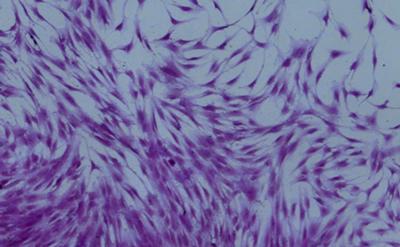
Colorized scanning electron micrograph showing carbapenem-resistant Klebsiella pneumoniae interacting with a human neutrophil
Credit: NIAID

Taurine, which helps the body digest fats and oils, could offer treatment benefit. Scientists studying the body’s natural defenses against bacterial infection have identified a nutrient — taurine — that helps the gut recall prior infections and kill invading bacteria, such as Klebsiella pneumoniae (Kpn). The finding, published in the journal Cell by scientists from five institutes of the National Institutes of Health, could aid efforts seeking alternatives to antibiotics.

Scientists know that microbiota — the trillions of beneficial microbes living harmoniously inside our gut — can protect people from bacterial infections, but little is known abo...

Read More

Eliminating Microplastics in Wastewater directly at the Source

A research team from INRS has developed a process for the electrolytic treatment of wastewater that degrades microplastics at the source. Wastewater can carry high concentrations of microplastics into the environment. These small particles of less than 5 mm can come from our clothes, usually as microfibers. Professor Patrick Drogui, who led the study, points out there are currently no established degradation methods to handle this contaminant during wastewater treatment. Some techniques already exist, but they often involve physical separation as a means of filtering pollutants. These technologies do not degrade them, which requires additional work to manage the separated particles.

Therefore, the research team decided to degrade the particles by electrolytic oxidation, a process n...

Read More

Concept for a Hybrid-Electric Plane may Reduce Aviation’s Air Pollution problem

Caption:A proposed hybrid-electric plane could “eliminate aviation’s air pollution problem,” say MIT engineers.

Proposed design could reduce nitrogen oxide emissions by 95 percent, a new study finds. At cruising altitude, airplanes emit a steady stream of nitrogen oxides into the atmosphere, where the chemicals can linger to produce ozone and fine particulates. Nitrogen oxides, or NOx, are a major source of air pollution and have been associated with asthma, respiratory disease, and cardiovascular disorders. Previous research has shown that the generation of these chemicals due to global aviation results in 16,000 premature deaths each year.

Now MIT engineers have come up with a concept for airplane propulsion that they estimate would eliminate 95 percent of aviation’s NOx emi...

Read More

X-Rays surrounding ‘Magnificent 7’ may be Traces of Sought-after Particle

An artistic rendering of the XMM-Newton (X-ray Multi-Mirror Mission) space telescope. A study of archival data from the XMM-Newton and the Chandra X-ray space telescopes found evidence of high levels of X-ray emission from the nearby Magnificent Seven neutron stars, which may arise from the hypothetical particles known as axions. (Credits: D. Ducros, ESA/XMM-Newton, CC BY-SA 3.0 IGO)

Researchers say they may have found proof of theorized axions, and possibly dark matter, around group of neutron stars. A new study, led by a theoretical physicist at the U.S...

Read More