

New Supercluster discovered by Astronomers

New supercluster discovered by astronomers
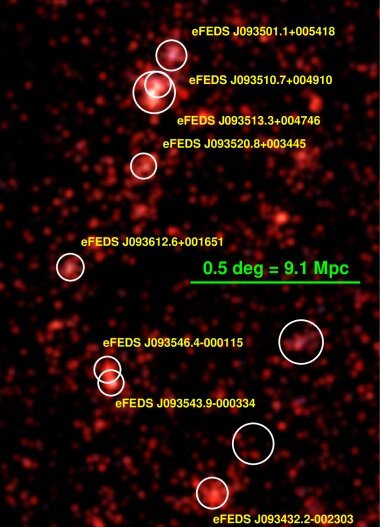
Color image of the galaxy density map at redshift of 0.36 from eROSITA’s Hyper Suprime-Cam (HSC). White circles mark the location of the eight galaxy clusters forming the new supercluster. Credit: Ghirardini et al., 2020.

By analyzing the data from the eROSITA Final Equatorial Depth Survey (eFEDS), an international team of astronomers has detected a new supercluster. The newly found structure consists of eight galaxy clusters. The discovery is reported in a paper published December 21 on the arXiv pre-print server.

Containing various structures with a range of masses, from massive and dense clusters of galaxies to low-density bridges, filaments and sheets of matter, superclusters are among the largest structures in the known universe...

Read More
Astrocytes eat Connections to maintain Plasticity in Adult Brains

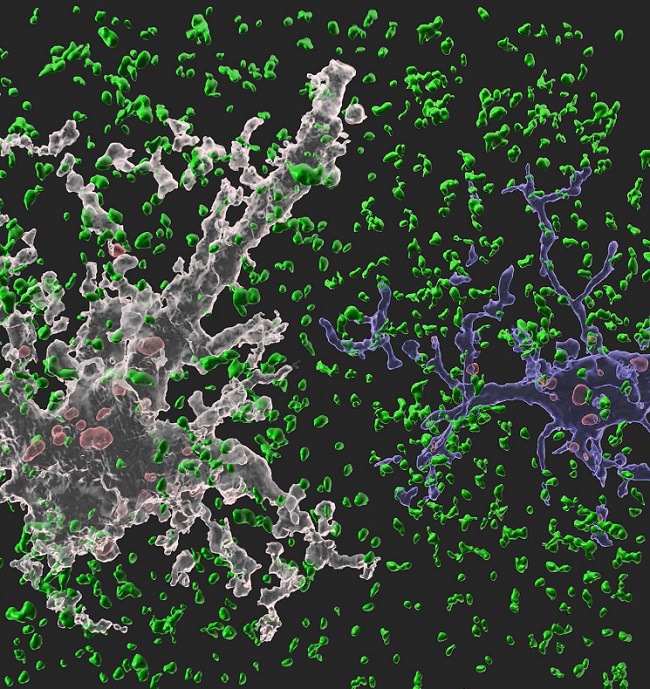
Image: A 3-D animated image showing our synapse phagocytosis reporter in mouse hippocampus. Presynapses in green, astrocytes in white, and microglia in blue. Phagocytosed presynapses by glia were shown in red.
 Image: A 3-D animated image showing our synapse phagocytosis reporter in mouse hippocampus. Presynapses in green, astrocytes in white, and microglia in blue. Phagocytosed presynapses by glia were shown in red.

Developing brains constantly sprout new synapses as they learn and remember. Important connections — the ones that are repeatedly introduced, such as how to avoid danger — are nurtured and reinforced, while connections deemed unnecessary are pruned away. Adult brains undergo similar pruning, but it was unclear how or why synapses in the adult brain get eliminated.

Now, a team of researchers based in Korea has found the mechanism underlying plasticity and, potentially, neurological disorders in adult brains. They published their findings on December 23 in Nature.

“Our findi...

Read More

New Quantum Nanodevice can simultaneously act as a Heat Engine and a Refrigerator

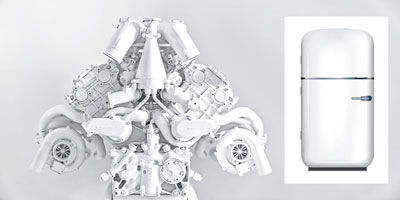
image of an engine and a refrigerator
 RIKEN researchers have produced a quantum nanodevice that can behave both as an engine and a refrigerator—at the same time. Left: © Martin Steinthaler/Getty; Right: © lilographik/Getty

A multitasking nanomachine that can act as a heat engine and a refrigerator at the same time has been created by RIKEN engineers. The device is one of the first to test how quantum effects, which govern the behavior of particles on the smallest scale, might one day be exploited to enhance the performance of nanotechnologies.

Conventional heat engines and refrigerators work by connecting two pools of fluid. Compressing one pool causes its fluid to heat up, while rapidly expanding the other pool cools its fluid...

Read More

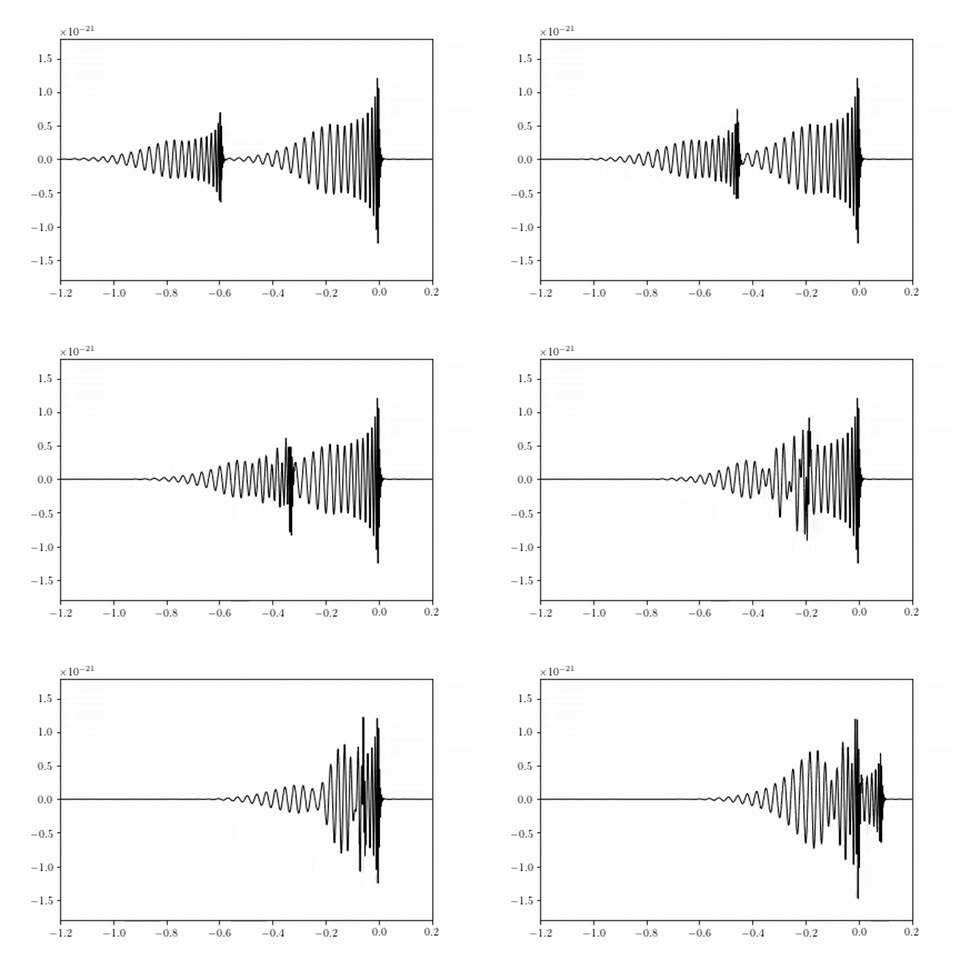
Ripples in Space-Time could provide clues to Missing Components of the Universe

An illustration of waves blending and creating a distinct new signature. Credit: Ezquiaga and Zumalácarregui

There’s something a little off about our theory of the universe. Almost everything fits, but there’s a fly in the cosmic ointment, a particle of sand in the infinite sandwich. Some scientists think the culprit might be gravity—and that subtle ripples in the fabric of space-time could help us find the missing piece.

A new paper co-authored by a University of Chicago scientist lays out how this might work. Published Dec. 21 in Physical Review D, the method depends on finding such ripples that have been bent by traveling through supermassive black holes or large galaxies on their way to Earth.

The trouble is that something is making the universe not only expand, but expand...

Read More