Jupiter’s Moons could be Warming each other

Jupiter’s moons are hotter than they should be, for being so far from the sun. In a process called tidal heating, gravitational tugs from Jupiter’s moons and the planet itself stretch and squish the moons enough to warm them. As a result, some of the icy moons contain interiors warm enough to host oceans of liquid water, and in the case of the rocky moon Io, tidal heating melts rock into magma.

Researchers previously believed that the gas giant Jupiter was responsible for most of the tidal heating associated with the liquid interiors of the moons, but a new study published in Geophysical Research Letters found that moon-moon interactions may be more responsible for the heating than Jupiter alone.

“It’s surprising because the moons are so much smaller than Jupiter...

Read More

Superconductors are Super Resilient to Magnetic Fields

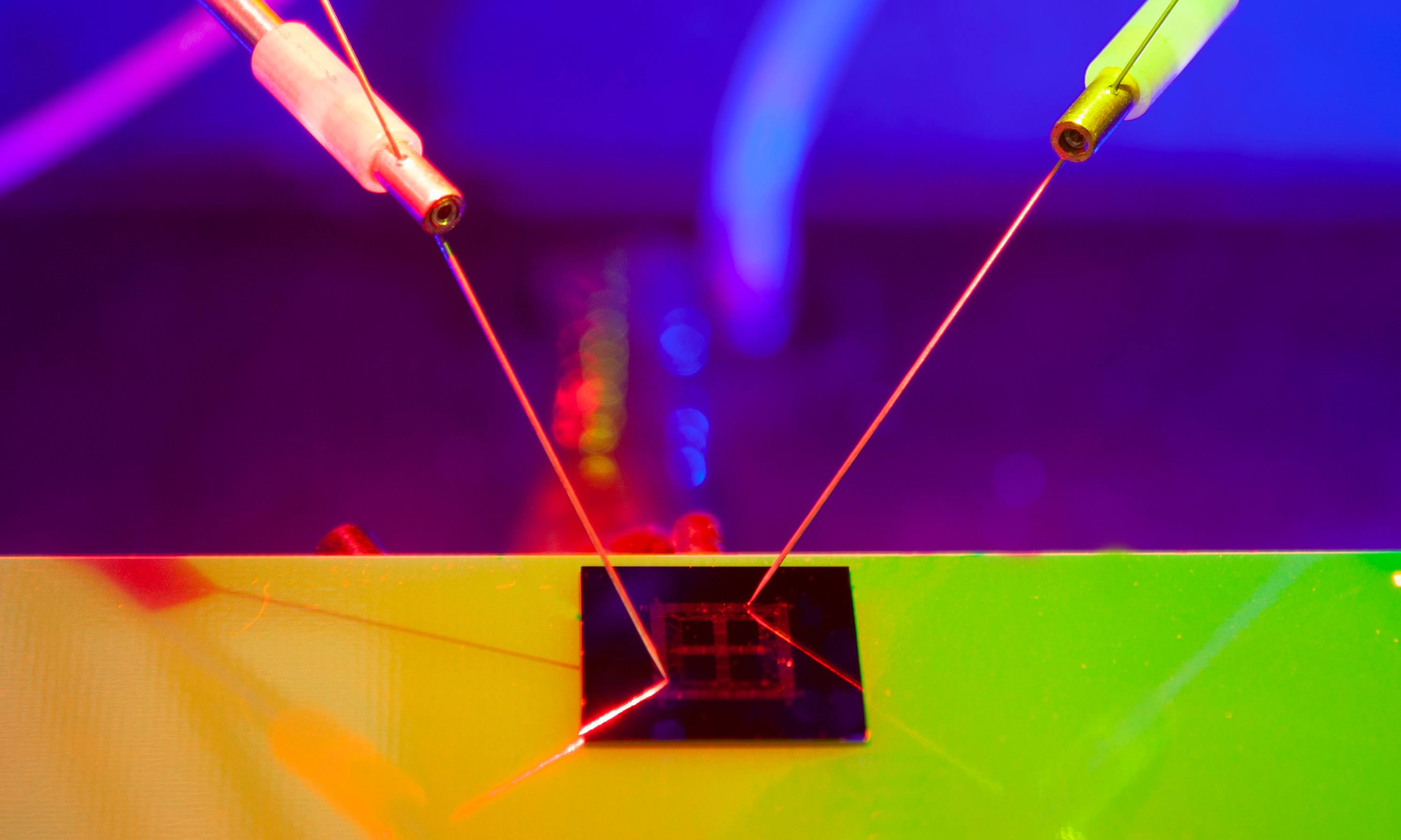
A researcher at the University of Tsukuba has offered a new explanation for how superconductors exposed to a magnetic field can recover — without loss of energy — to their previous state after the field is removed. This work may lead to a new theory of superconductivity and a more eco-friendly electrical distribution system.

Superconductors are a class of materials with the amazing property of being able to conduct electricity with zero resistance. In fact, an electrical current can circle around a loop of superconducting wire indefinitely. The catch is that these materials must be kept very cold, and even so, a strong magnetic field can cause a superconductor to revert back to normal.

It was once assumed that the superconducting-to-normal transition caused by a magnetic field c...

Read More

Carbon-Rich Exoplanets may be made of Diamonds

llustration of a carbon-rich planet with diamond and silica as main minerals. Water can convert a carbide planet into a diamond-rich planet. In the interior, the main minerals would be diamond and silica (a layer with crystals in the illustration). The core (dark blue) might be iron-carbon alloy. Credit: Shim/ASU/Vecteezy

As missions like NASA’s Hubble Space Telescope, TESS and Kepler continue to provide insights into the properties of exoplanets (planets around other stars), scientists are increasingly able to piece together what these planets look like, what they are made of, and if they could be habitable or even inhabited.

In a new study published recently in The Planetary Science Journal, a team of researchers from Arizona State University (ASU) and the University of Chicago ha...

Read More

Artificial Intelligence Aids Gene Activation Discovery

With the aid of artificial intelligence, UC San Diego scientists have solved a long-standing puzzle in human gene activation. The discovery described in the journal Nature could be used to control gene activation in biotechnology and biomedical applications.

Machine learning enables long-awaited code breakthrough with potential applications in biomedicine. Scientists have long known that human genes spring into action through instructions delivered by the precise order of our DNA, directed by the four different types of individual links, or “bases,” coded A, C, G and T.

Nearly 25% of our genes are widely known to be transcribed by sequences that resemble TATAAA, which is called the “TATA box...

Read More