To raise new questions, new possibilities, to regard old problems from a new angle, requires creative imagination and marks real advance in science.
~Albert Einstein
Read More
Old Newtonian physics claimed that things have an objective reality separate from our perception of them. Quantum physics, and particularly Heisenberg's Uncertainty Principle, reveal that, as our perception of an object changes, the object itself literally changes.
~Marianne Williamson
Read More
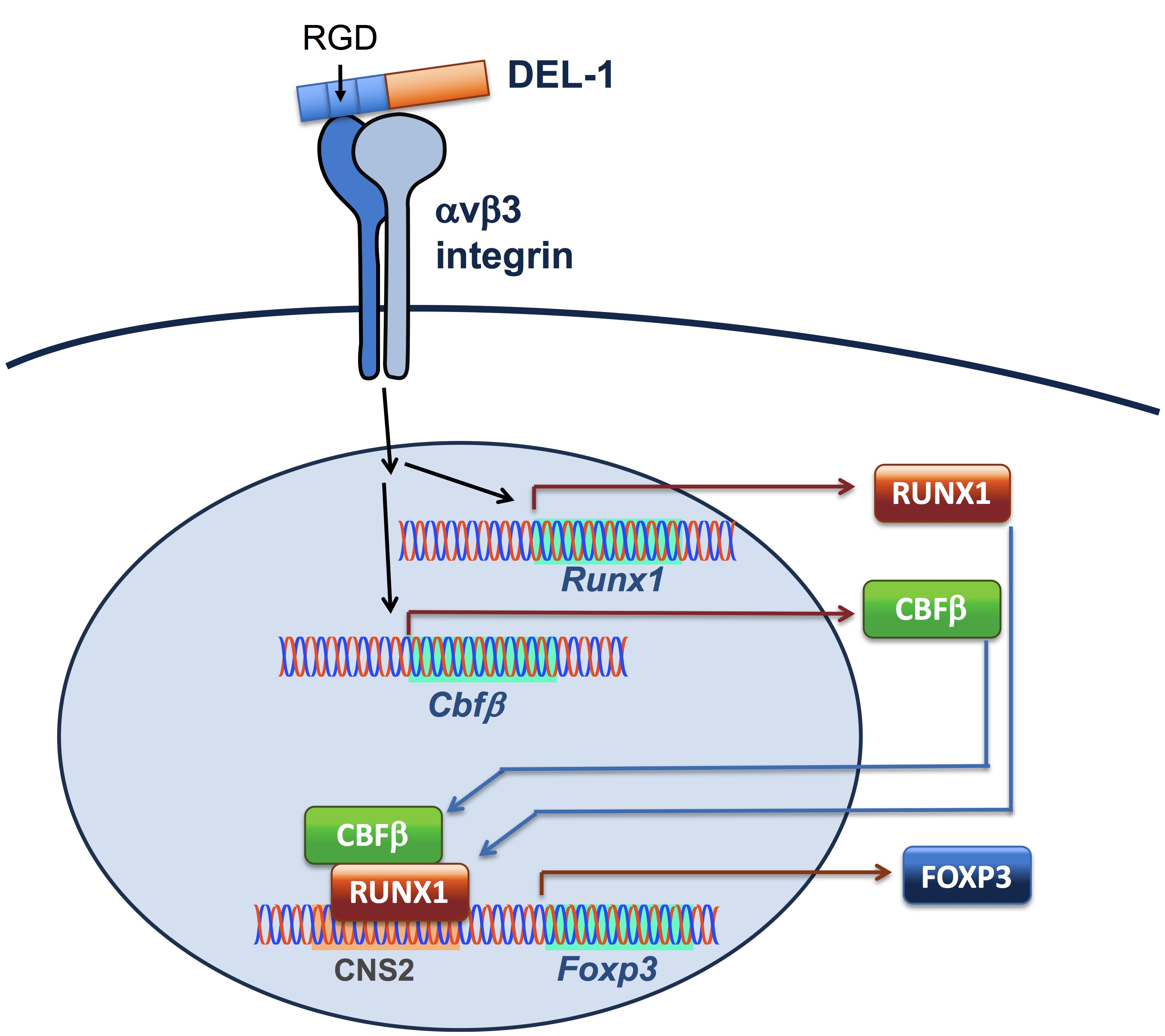
Researchers from Penn teamed with colleagues to decipher the mechanism by which the protein DEL-1 leads to the generation of T cells expression FOXP3, which rein in inflammatory responses, such as those responsible for autoimmune disease. (Image: Courtesy of the Hajishengallis laboratory)
With insights into a molecular pathway that regulates the activity of Tregs, a type of T cell involved in immunosuppression, new research opens up possibly new avenues for treating inflammatory and autoimmune diseases.
Immune response is a balancing act: Too much can lead to inflammatory or autoimmune disease; too little could lead to a serious infection...
Computer Science graduate student Andrew Hundt has developed a means to teach a robot to stack blocks. Photo: Will Kirk/Johns Hopkins University
With a training technique commonly used to teach dogs to sit and stay, Johns Hopkins University computer scientists showed a robot how to teach itself several new tricks, including stacking blocks. With the method, the robot, named Spot, was able to learn in days what typically takes a month.
By using positive reinforcement, an approach familiar to anyone who’s used treats to change a dog’s behavior, the team dramatically improved the robot’s skills and did it quickly enough to make training robots for real-world work a more feasible enterprise. The findings are newly published in a paper called, “Good Robot!”
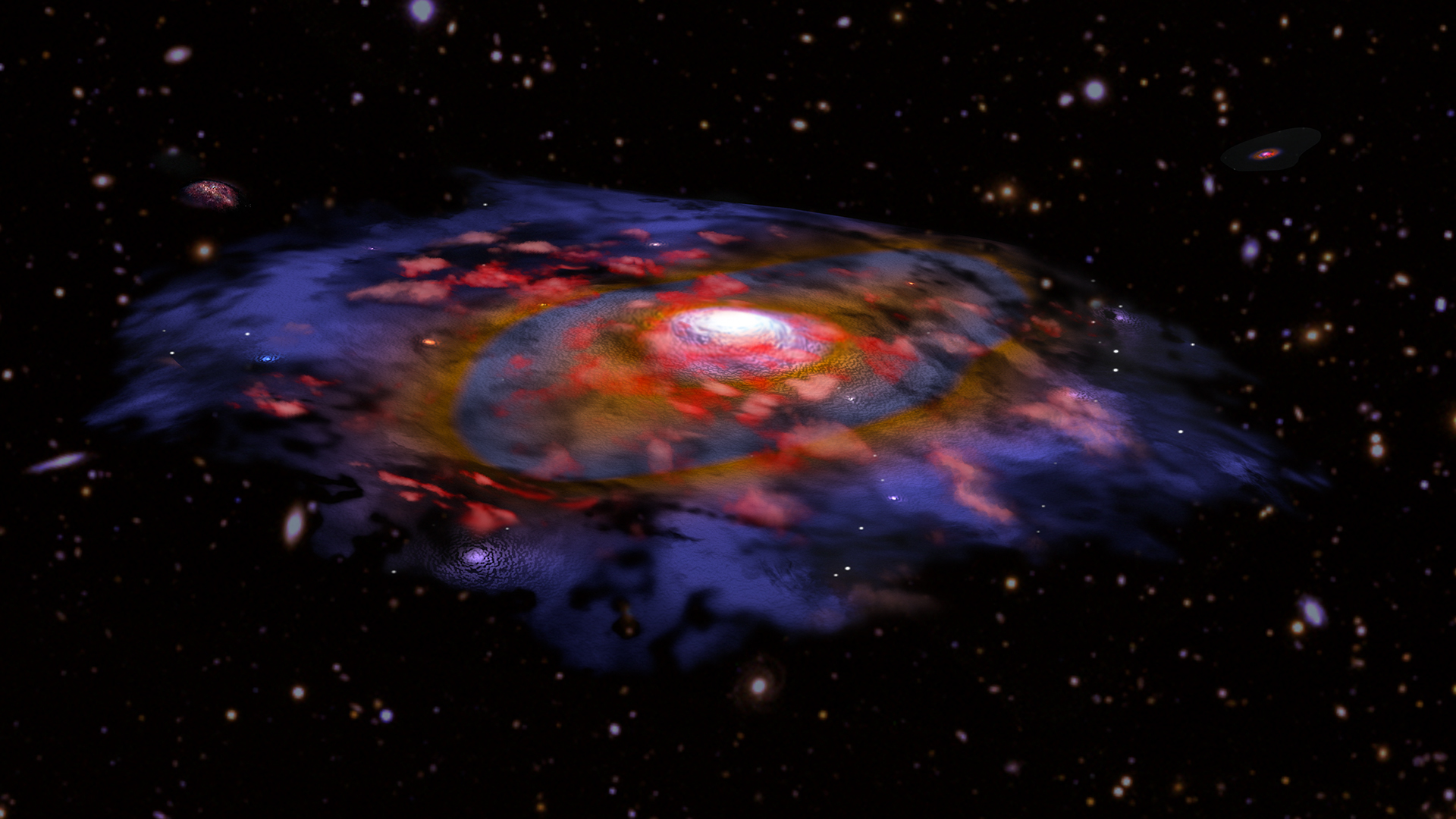
Artist’s illustration of a dusty, rotating distant galaxy Credit: B. Saxton NRAO/AUI/NSF, ESO, NASA/STScI; NAOJ/Subaru
ALMA telescope conducts largest survey yet of distant galaxies in the early universe. Massive galaxies were already much more mature in the early universe than previously expected. This was shown by an international team of astronomers who studied 118 distant galaxies with the Atacama Large Millimeter/submillimeter Array (ALMA).
Most galaxies formed when the universe was still very young. Our own galaxy, for example, likely started forming 13.6 billion years ago, in our 13.8 billion-year-old universe. When the universe was only ten percent of its current age (1-1.5 billion years after the Big Bang), most of the galaxies experienced a “growth spurt...
Astronomers have found compelling evidence that planets start to form while infant stars are still growing. The high-resolution image obtained with the Atacama Large Millimeter/submillimeter Array (ALMA) shows a young proto-stellar disk with multiple gaps and rings of dust. This new result, just published in Nature, shows the youngest and most detailed example of dust rings acting as cosmic cradles, where the seeds of planets form and take hold.
An international team of scientists led by Dominique Segura-Cox at the Max Planck Institute for Extraterrestrial Physics (MPE) in Germany targeted the proto-star IRS 63 with the ALMA radio observatory...













Recent Comments