To raise new questions, new possibilities, to regard old problems from a new angle, requires creative imagination and marks real advance in science.
~Albert Einstein
Read More
Old Newtonian physics claimed that things have an objective reality separate from our perception of them. Quantum physics, and particularly Heisenberg's Uncertainty Principle, reveal that, as our perception of an object changes, the object itself literally changes.
~Marianne Williamson
Read More
Jonathan H. Chow , et al. Aspirin Use is Associated with Decreased Mechanical Ventilation, ICU Admission, and In-Hospital Mortality in Hospitalized Patients with COVID-19. Anesthesia & Analgesia, 2020; Publish Ahead of Print DOI: 10.1213/ANE.0000000000005292
Hospitalized COVID-19 patients who were taking a daily low-dose aspirin to protect against cardiovascular disease had a significantly lower risk of complications and death compared to those who were not taking aspirin, according to a new study led by researchers at the University of Maryland School of Medicine (UMSOM)...
Minkyung Kim, Mihee Jeong, Won-Sub Yoon, Byoungwoo Kang. Ultrafast kinetics in a phase separating electrode material by forming an intermediate phase without reducing the particle size. Energy & Environmental Science, 2020; DOI: 10.1039/D0EE02518F
POSTECH Professor Byoungwoo Kang’s research team uncovers a new Li-ion battery electrode material that can achieve high-energy density and high power capability per volume without reducing particle size.
With Telsa in the lead, the electric vehicle market is growing around the world. Unlike conventional cars that use internal combustion engines, electric cars are solely powered by lithium ion batteries, so the battery performance defines the car’s overall performance...
‘Galactic archaeology’ refers to the study of second generation stars to learn about the physical characteristics of the first stars, which disappeared only tens of millions of years after the Big Bang. A computational physics study modeled for the first time faint supernovae of metal-free first stars, yielding carbon-enhanced abundance patterns for star formation. Slice of density, temperature, and carbon abundance for a 13 solar mass progenitor model at times (left-right) 0.41, 15.22, and 29.16 million years after the supernovae explosion in a box with a side 2 kpc. Credit: Chiaki, et al.
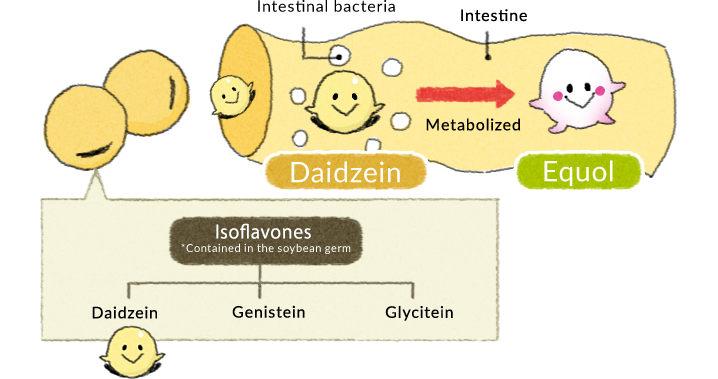
A metabolite produced following consumption of dietary soy may decrease a key risk factor for dementia — with the help of the right bacteria, according to a new discovery led by researchers at the University of Pittsburgh Graduate School of Public Health.
Their study, published today in the journal Alzheimer’s & Dementia: Translational Research & Clinical Interventions, reports that elderly Japanese men and women who produce equol — a metabolite of dietary soy created by certain types of gut bacteria — display lower levels of white matter lesions within the brain.
“White matter lesions are significant risk factors for cognitive decline, dementia and all-cause mortality,” said lead author Akira Sekikawa, M.D., Ph.D., associate professor of epidemiology at Pitt Public Health...












Recent Comments