Calcium-Rich Supernova examined with X-rays for first time

Artist’s interpretation of the calcium-rich supernova 2019ehk. shown in orange is the calcium-rich material created in the explosion. purple coloring represents gas shedded by the star right before the explosion, which then produced bright x-ray emission when the material collided with the supernova shockwave
Credit: Aaron M. Geller, Northwestern University

X-ray images give unprecedented view of extremely rare type of supernova. New information suggests that these supernovae start as compact stars that lose mass at the end of life. Calcium-rich supernovae are responsible for up to half the calcium in the entire universe. SN 2019ehk has the richest calcium emission of all known transients.

Called “calcium-rich supernovae,” these stellar explosions are so rare that astrophysicists h...

Read More

New molecule Reverses Alzheimer’s-like Memory Decline – The drug CMS121 treats neurodegeneration in mice

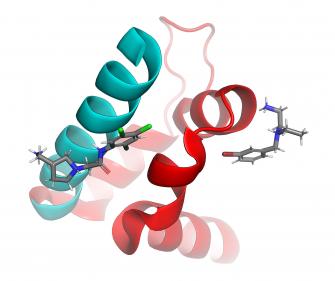
CMS121, a fisetin-derivative, alleviates memory decline in a double transgenic AD mouse model.

A drug candidate developed by Salk researchers, and previously shown to slow aging in brain cells, successfully reversed memory loss in a mouse model of inherited Alzheimer’s disease. The new research, published online in July 2020 in the journal Redox Biology, also revealed that the drug, CMS121, works by changing how brain cells metabolize fatty molecules known as lipids.

“This was a more rigorous test of how well this compound would work in a therapeutic setting than our previous studies on it,” says Pamela Maher, a senior staff scientist in the lab of Salk Professor David Schubert and the senior author of the new paper...

Read More

Implantable Transmitter provides Wireless option for Biomedical devices

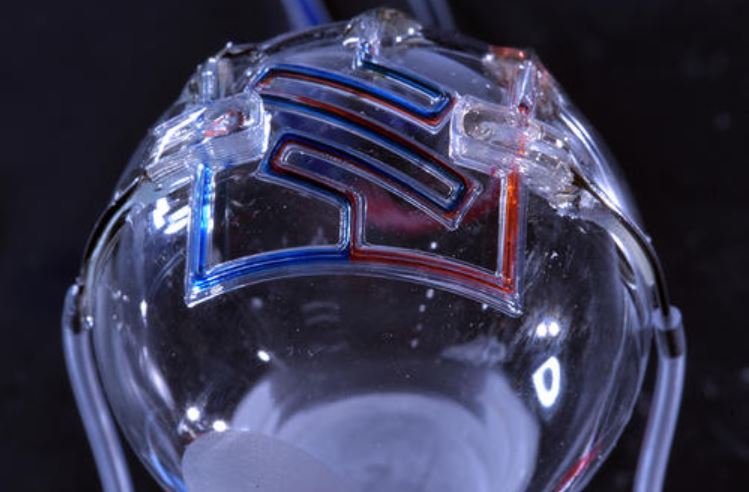
A Purdue University team developed a fully implantable transmitter chip for wireless sensor nodes and biomedical devices. (Image provided)

Purdue University innovators are working on inventions to use micro-chip technology in implantable devices and other wearable products such as smart watches to improve biomedical devices, including those used to monitor people with glaucoma and heart disease.

The Purdue team developed a fully implantable radio-frequency transmitter chip for wireless sensor nodes and biomedical devices. The research is published in the journal IEEE Transactions on Circuits and Systems II. The transmitter chip consumes lowest amount of energy per digital bit published to date.

The transmitter works in a similar fashion to communication technology in mobile phone...

Read More

Surprisingly Dense Exoplanet challenges Planet Formation theories

noirlab2018a – Artist’s impression of K2-25b
New detailed observations with NSF’s NOIRLab facilities reveal a young exoplanet, orbiting a young star in the Hyades cluster, that is unusually dense for its size and age. Slightly smaller than Neptune, K2-25b orbits an M-dwarf star — the most common type of star in the galaxy — in 3.5 days.
Credit: NOIRLab/NSF/AURA/J. Pollard

Small telescope and inexpensive diffuser key to results. New detailed observations with NSF’s NOIRLab facilities reveal a young exoplanet, orbiting a young star in the Hyades cluster, that is unusually dense for its size and age. Weighing in at 25 Earth-masses, and slightly smaller than Neptune, this exoplanet’s existence is at odds with the predictions of leading planet formation theories.

New observations...

Read More