

The discovery that our galaxy is teeming with exoplanets has also revealed the vast diversity of planetary systems out there a...
Read More


Until we recognize the essential role of biology, our attempts to truly unify the universe will remain a train to nowhere. ~Robert Lanza Read More

Good health is not something we can buy. However, it can be an extremely valuable savings account. ~Anne Wilson Schaef Read More

The only way forward, if we are going to improve the quality of the environment, is to get everybody involved. ~Richard Rogers Read More

To raise new questions, new possibilities, to regard old problems from a new angle, requires creative imagination and marks real advance in science. ~Albert Einstein Read More

Old Newtonian physics claimed that things have an objective reality separate from our perception of them. Quantum physics, and particularly Heisenberg's Uncertainty Principle, reveal that, as our perception of an object changes, the object itself literally changes. ~Marianne Williamson Read More

Astronomy compels the soul to look upwards and leads us from this world to another. ~ Read More
September 8, 2020,
 Astronomy/Space
The discovery that our galaxy is teeming with exoplanets has also revealed the vast diversity of planetary systems out there a...
Read More
September 5, 2020,
Health/Medical, Biology/Biotechnology

A team of scientists, led by researchers at University of California San Diego School of Medicine, report that a class of drugs used for a broad array of conditions, from allergies and colds to hypertension and urinary incontinence, may be associated with an increased risk of cognitive decline, particularly in older adults at greater risk for Alzheimer’s disease (AD).
The findings were published in the September 2, 2020 online issue of Neurology, the medical journal of the American Academy of Neurology.
Anticholinergic drugs are widely used for dozens of conditions, minor and major. Some of these medications require a prescription, while others can be purchased over the counter...
Read More
September 5, 2020,
Physics, Technology/Electronics
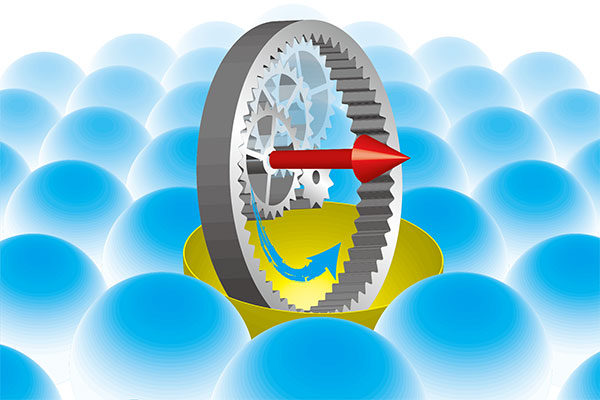
Quantum bits, or -qubits, can hold quantum information much longer now thanks to efforts by an international research team. The researchers have increased the retention time, or coherence time, to 10 milliseconds – 10,000 times longer than the previous record – by combining the orbital motion and spinning inside an atom...
Read More
September 5, 2020,
Astronomy/Space
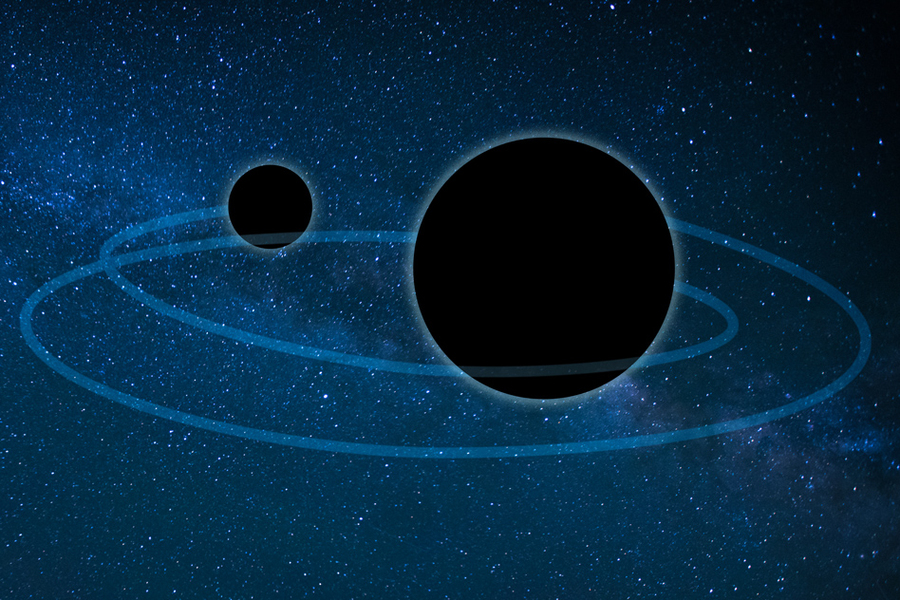
Researchers suggest a novel process to explain the collision of a large black hole and a much smaller one. A lopsided merger of two black holes may have an oddball origin story, according to a new study by researchers at MIT and elsewhere.
The merger was first detected on April 12, 2019 as a gravitational wave that arrived at the detectors of both LIGO (the Laser Interferometer Gravitational-wave Observatory), and its Italian counterpart, Virgo. Scientists labeled the signal as GW190412 and determined that it emanated from a clash between two David-and-Goliath black holes, one three times more massive than the other. The signal marked the first detection of a merger between two black holes of very different sizes.
Now the new study, published today in the journal Physical Review...
Read More
Recent Comments