






Astronomers shocked by how these giant exoplanets formed

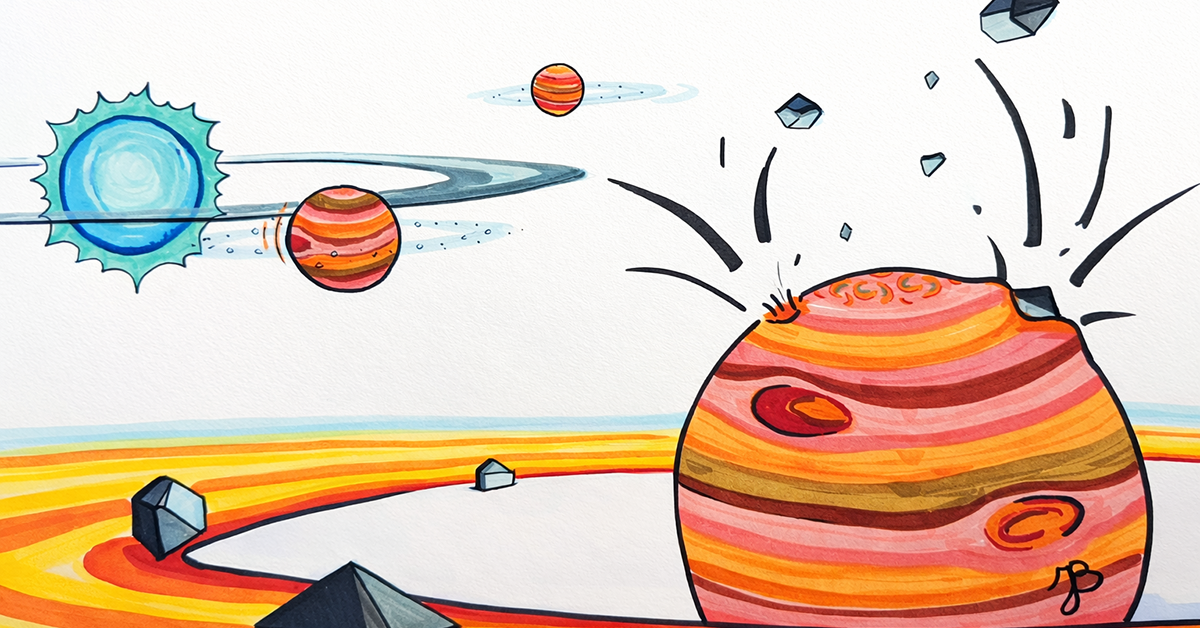
drawing of gas giant planet being bombarded by meteorites
One way gas giants form is through core accretion, where solid cores gradually grow in a disk by pulling in rocky and icy pebbles until they become massive enough to attract the gas that surrounds young stars. (cr: Jean-Baptiste Ruffio)

JWST just found evidence that some “super-Jupiters” may have formed like planets, not failed stars. A distant star system with four super-sized gas giants has revealed a surprise. Thanks to JWST’s powerful vision, astronomers detected sulfur in their atmospheres — a chemical clue that they formed like Jupiter, by slowly building solid cores. That’s unexpected because these planets are far bigger and orbit much farther from their star than models once allowed.

Gas giants are enormous planets made primarily of hydrogen and helium...

Read More
Current flows without heat loss in newly engineered fractional quantum material

Current flows without heat loss in newly engineered fractional quantum material
Phase diagram of a fractional quantum Hall insulator. Credit: Heonjoon Park et al.

A team of US researchers has unveiled a device that can conduct electricity along its fractionally charged edges without losing energy to heat. Described in Nature Physics, the work, led by Xiaodong Xu at the University of Washington, marks the first demonstration of a “dissipationless fractional Chern insulator,” a long-sought state of matter with promising implications for future quantum technologies.

From quantum Hall to fractional phases
The quantum Hall effect emerges when electrons are confined to a two-dimensional material, cooled to extremely loow temperatures, and exposed to strong magnetic fields...

Read More

This tiny organism refused to die under Mars-like illusion

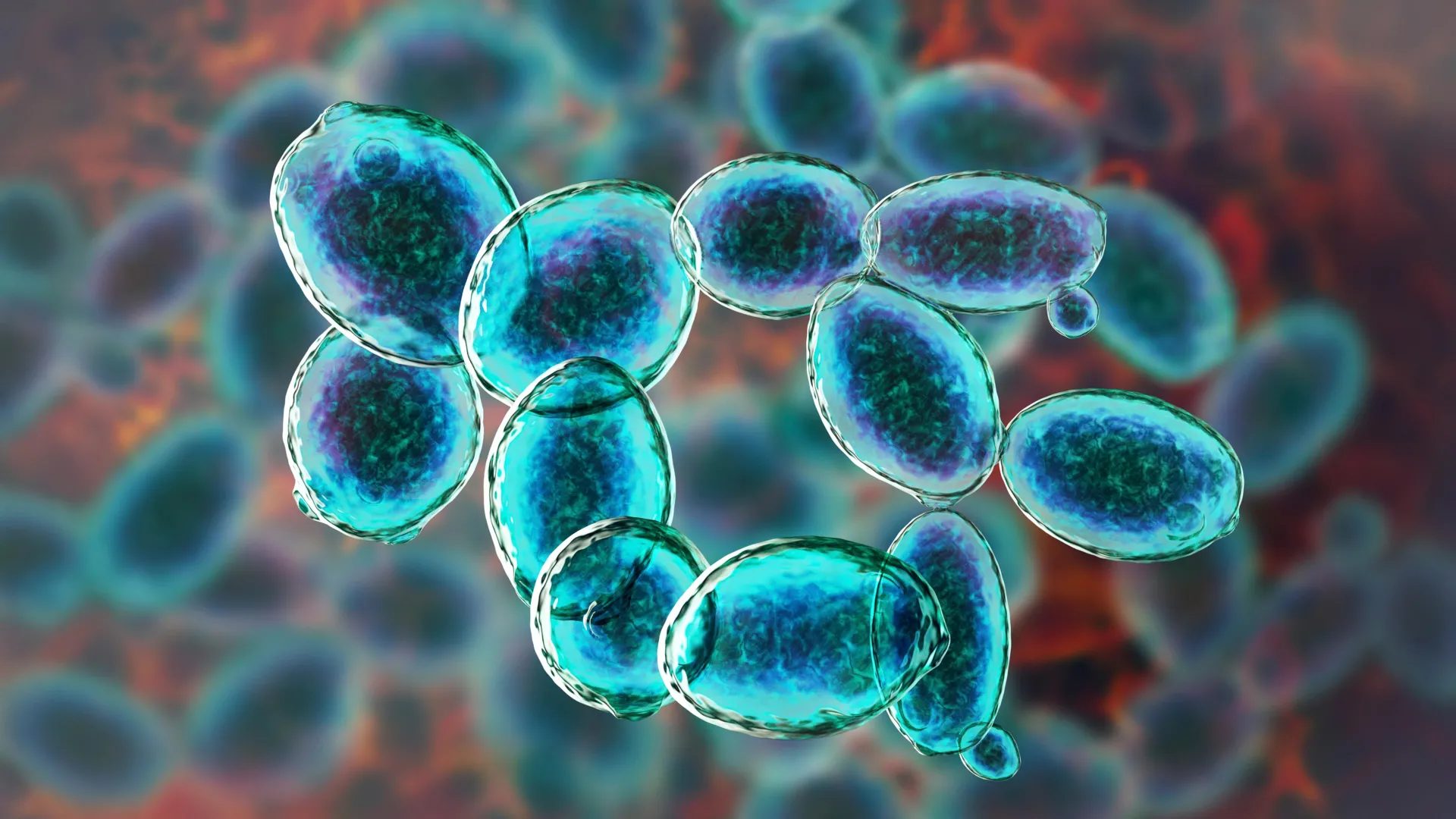
Yeast Survives Mars-Like Conditions
Scientists exposed yeast cells to extreme conditions resembling Mars — violent shock waves from meteorite impacts and toxic perchlorate salts found in Martian soil — and the cells survived. Credit: Shutterstock

Baker’s yeast (Saccharomyces cerevisiae) is best known for its role in baking, brewing, and modern biotechnology. Yet this everyday microorganism may also offer insight into a far bigger question: how life might endure the extreme conditions found beyond Earth.

Researchers from the Department of Biochemistry (BC) at the Indian Institute of Science (IISc), working with collaborators at the Physical Research Laboratory (PRL) in Ahmedabad, have discovered that yeast can survive environmental stresses similar to those on Mars...

Read More

Study suggests protein made in the liver is a key factor in men’s bone health

Study suggests protein made in the liver is a key factor in men's bone health
Absence of plasma FN results in osteopenia and significant loss of trabecular bone mass in male mice. Credit: Matrix Biology (2026). DOI: 10.1016/j.matbio.2025.12.001

New research suggests the liver plays a previously unrecognized role in bone health, but only in males. A McGill University-led study published in Matrix Biology found that a protein made in the liver helps regulate bone growth in male mice, but not in females. The findings may help explain why men with liver disease are more likely to experience bone loss.

The protein, known as plasma fibronectin, is naturally present in blood at higher levels in men than in women, declines when the liver is damaged and builds up in bone to modulate bone formation...

Read More
