Scientists finally crack down Nature’s most Common Chemical Bond

A catalyst (center) based on iridium (blue ball) can snip a hydrogen atom (white balls) off a terminal methyl group (upper and lower left) to add a boron-oxygen compound (pink and red) that is easily swapped out for more complicated chemical groups. The reaction works on simple hydrocarbon chains (top reaction) or more complicated carbon compounds (bottom reaction). The exquisite selectivity of this catalytic reaction is due to the methyl group (yellow) that has been added to the iridium catalyst. The black balls are carbon atoms; red is oxygen; pink is boron. (UC Berkeley image by John Hartwig)

Carbon-hydrogen bonds in hydrocarbon molecules have resisted functionalization until now...

Read More

‘Cosmic Ring of Fire’ 11 Billion Years Ago: How did Structures in Early Universe Form?

An artist’s impression of how the ring galaxy formed.
Credit: James Josephides, Swinburne Astronomy Productions

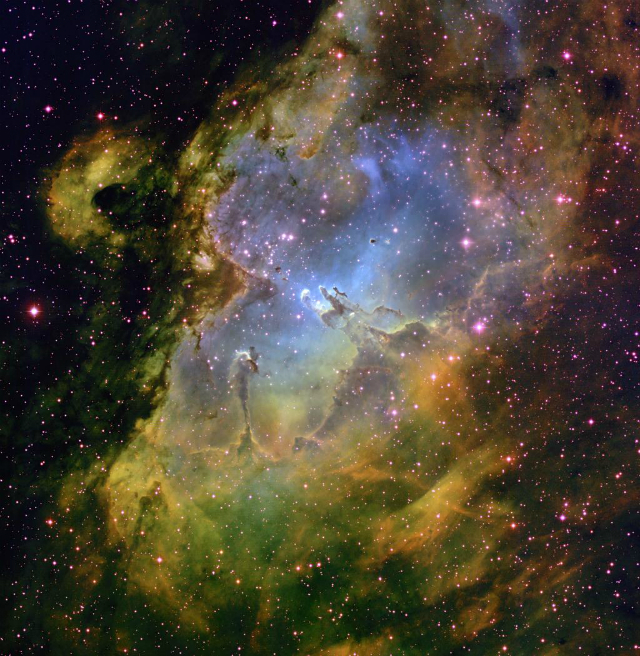
Unusual galaxy set to prompt rethink on how structures in the universe form. Astronomers have captured an image of a super-rare type of galaxy – described as a “cosmic ring of fire” – as it existed 11 billion years ago.

The galaxy, which has roughly the mass of the Milky Way, is circular with a hole in the middle, rather like a titanic doughnut. Its discovery, announced in the journal Nature Astronomy, is set to shake up theories about the earliest formation of galactic structures and how they evolve.

“It is a very curious object that we’ve never seen before,” said lead researcher Dr Tiantian Yuan, from Australia’s ARC Centre of Excellence for All Sky Astrophysics in 3 Dimens...

Read More

A ‘Switch’ that turns Autoimmunity Drugs into powerful Anti-Cancer Treatments

CCI

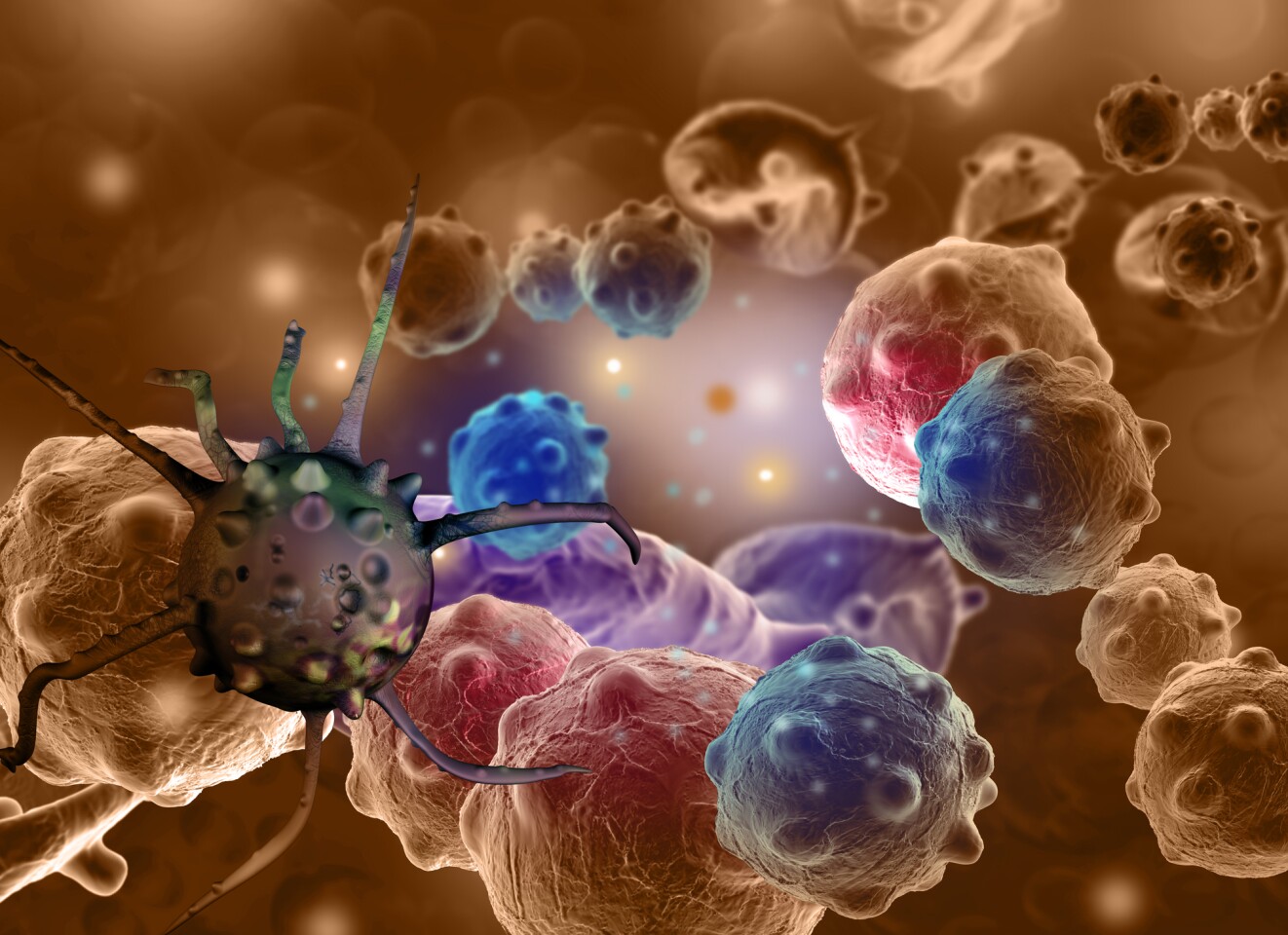
Scientists from the Antibody and Vaccine group at the University of Southampton have discovered a way to transform antibody drugs previously developed to treat autoimmunity into antibodies with powerful anti-cancer activity through a simple molecular “switch.”

This work, published in the journal Cancer Cell, focuses on a molecule called CD40 which is present on the surface of immune cells and controls both autoimmunity and cancer. In autoimmunity, CD40 is thought to be over-stimulated, increasing the chance of the immune system attacking healthy tissues; whereas in cancer, CD40 is believed to be under-stimulated, enabling tumour cells to evade the immune system. Targeting of CD40 with antibody drugs is ongoing in therapeutic interventions for both diseases.

Accordingly, antibody...

Read More

Novel Device Harnesses Shadows to Generate Electricity

The novel shadow-effect energy generator developed by NUS researchers uses the contrast in illumination between the lit and shadowed areas to generate electricity. (Photo: Royal Society of Chemistry)

Researchers have created a device called a ‘shadow-effect energy generator’ that makes use of the contrast in illumination between lit and shadowed areas to generate electricity. This novel concept opens up new approaches in harnessing indoor lighting conditions to power electronics.

Shadows are often associated with darkness and uncertainty. Now, researchers from the National University of Singapore (NUS) are giving shadows a positive spin by demonstrating a way to harness this common but often overlooked optical effect to generate electricity.

“Shadows are omnipresent, and we often...

Read More