To raise new questions, new possibilities, to regard old problems from a new angle, requires creative imagination and marks real advance in science.
~Albert Einstein
Read More
Old Newtonian physics claimed that things have an objective reality separate from our perception of them. Quantum physics, and particularly Heisenberg's Uncertainty Principle, reveal that, as our perception of an object changes, the object itself literally changes.
~Marianne Williamson
Read More
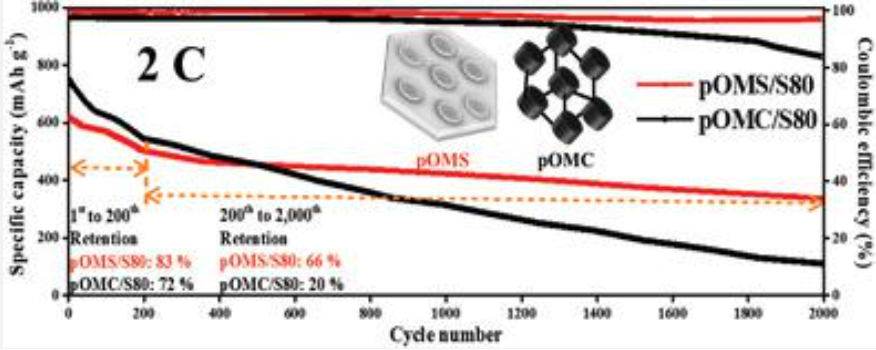
This work has conducted an evaluation on the role of polarity over conductivity by using a polar but nonconductive platelet ordered mesoporous silica (pOMS) and its replica platelet ordered mesoporous carbon (pOMC), which is conductive but nonpolar. It is found that the polar pOMS/S cathode with a sulfur mass fraction of 80 wt% demonstrates outstanding long‐term cycle stability for 2000 cycles even at a high current density of 2C.
Non-conductive silica could be key to realizing next-generation lithium-sulfur batteries. Scientists have developed a novel silica-based cathode for lithium-sulfur batteries, thereby enabling the realization of batteries that can last for over 2000 charge/discharge cycles...
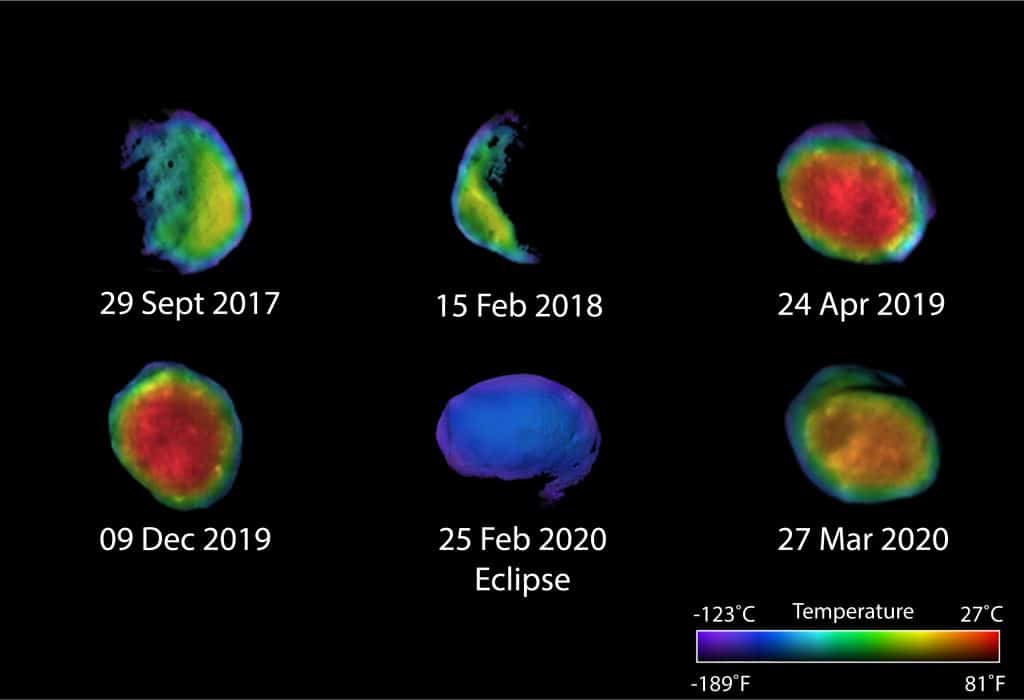
Christopher Edwards, assistant professor in NAU’s Department of Astronomy and Planetary Science, just processed new images of the Martian moon Phobos that give scientists insight into the physical properties of the moon and its composition. The images of the small moon, which is about 25 kilometers (15 miles) in diameter, were captured by NASA’s 2001 Mars Odyssey orbiter. When reviewed in combination with three previously released images, these new images could ultimately help settle the debate over whether the planetary body is a “captured asteroid” — pulled into perpetual orbit around Mars — or an ancient chunk of Mars blasted off the surface by a meteorite impact.
Along with scientists at NASA’s Jet Propulsion Lab and Arizona State University, Edwards used the Thermal Emission I...
Artificial red blood cells, like the one shown here, could carry oxygen, therapeutic drugs and other cargo in the bloodstream. Scale bar, 2 μm. Credit: Adapted from ACS Nano2020, DOI: 10.1021/acsnano.9b08714
Scientists have tried to develop synthetic red blood cells that mimic the favorable properties of natural ones, such as flexibility, oxygen transport and long circulation times. But so far, most artificial red blood cells have had one or a few, but not all, key features of the natural versions. Now, researchers reporting in ACS Nano have made synthetic red blood cells that have all of the cells’ natural abilities, plus a few new ones.
Red blood cells (RBCs) take up oxygen from the lungs and deliver it to the body’s tissues...
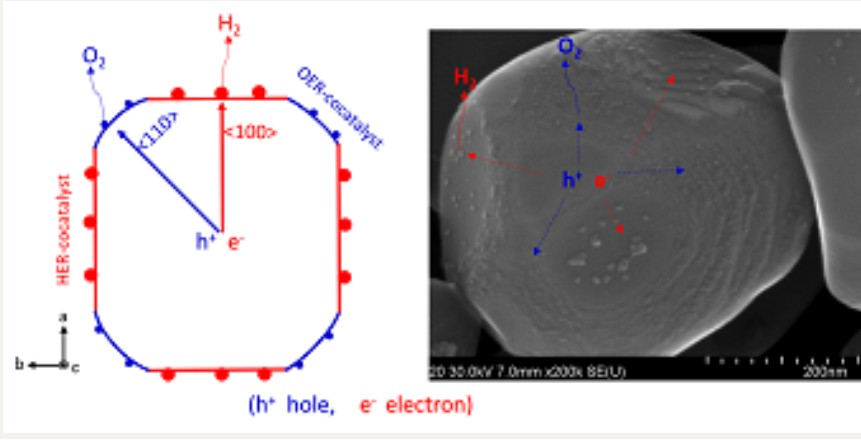
Photocatalytic water splitting with a quantum efficiency of almost unity Authors:Tsuyoshi Takata, Junzhe Jiang, Yoshihisa Sakata, Mamiko Nakabayashi, Naoya Shibata, Vikas Nandal, Kazuhiko Seki, Takashi Hisatomi, Kazunari Domen Journal:Nature, 581, 411-414 (2020) DOI10.1038/s41586-020-2278-9
Scientists have successfully split water into hydrogen and oxygen using light and meticulously designed catalysts, and they did so at the maximum efficiency meaning there was almost no loss and undesired side reactions. This latest breakthrough in solar hydrogen production makes the likelihood of scalable, economically viable hydrogen production more than likely, paving the way for humanity to make the switch to clean energy.
Pour yourself a glass of water and take a look at it...












Recent Comments