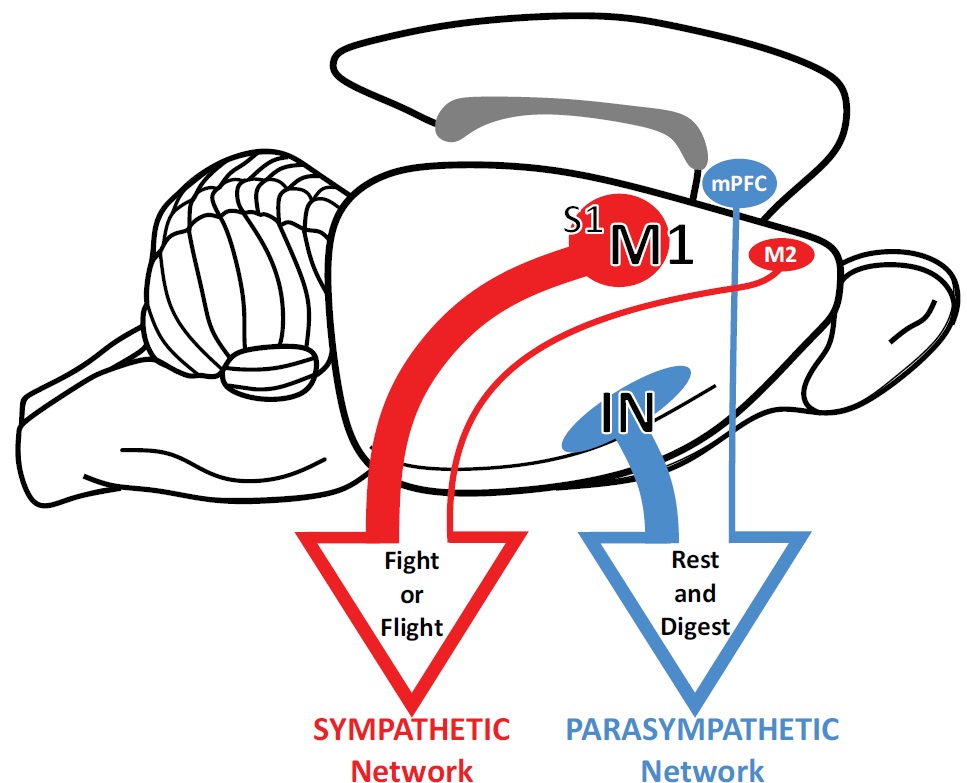
Scientists Regenerate Neurons in mice with Spinal Cord Injury and Optic Nerve damage

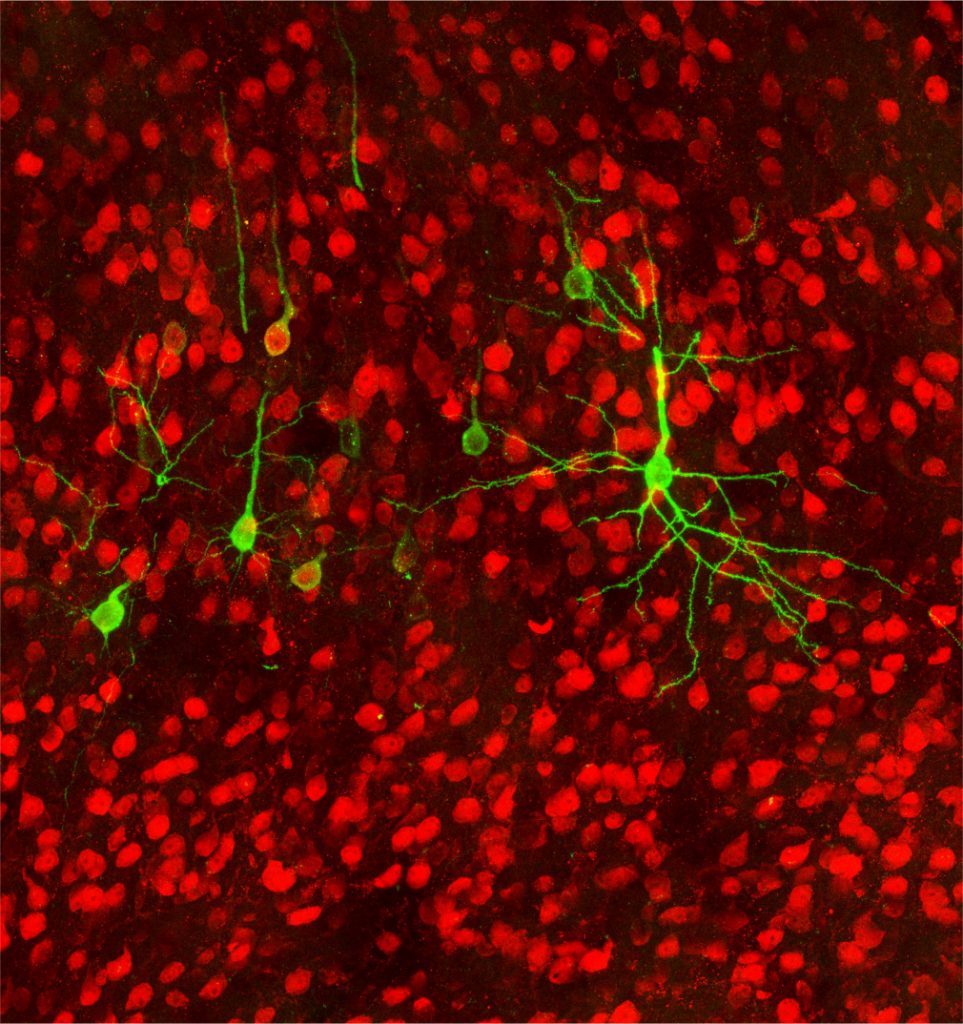
Injured CNS axons fail to regenerate in adult mammals and there are no effective regenerative strategies to treat patients with CNS injuries. Dr. Li’s group demonstrates that upregulating Lin28 gene in mature neurons induces significant long distance regeneration of both spinal cord axons and optic nerve in adult mice.

Each year thousands of patients face life-long losses in sensation and motor function from spinal cord injury and related conditions in which axons are badly damaged or severed. New research by scientists at the Lewis Katz School of Medicine Temple University (LKSOM) shows, however, that gains in functional recovery from these injuries may be possible, thanks to a molecule known as Lin28, which regulates cell growth...

Read More

A 3D Memristor-based Circuit for Brain-inspired Computing

An image of the 3D circuit created by the researchers, captured using a scanning electron microscope (SEM). Credit: Lin et al.

Researchers at the University of Massachusetts and the Air Force Research Laboratory Information Directorate have recently created a 3D computing circuit that could be used to map and implement complex machine learning algorithms, such convolutional neural networks (CNNs). This 3D circuit, presented in a paper published in Nature Electronics, comprises eight layers of memristors; electrical components that regulate the electrical current flowing in a circuit and directly implement neural network weights in hardware.

“Previously, we developed a very reliable memristive device that meets most requirements of in-memory computing for artificial neural networks, ...

Read More

Possibly Active Tectonic System on the Moon

Infrared (upper left) and other images from NASA’s Lunar Reconnaissance Orbiter revealed strange bare spots where the Moon’s ubiquitous dust is missing. The spots suggest an active tectonic process. 

Researchers have discovered a system of ridges spread across the nearside of the Moon topped with freshly exposed boulders. The ridges could be evidence of active lunar tectonic processes, the researchers say, possibly the echo of a long-ago impact that nearly tore the Moon apart.

“There’s this assumption that the Moon is long dead, but we keep finding that that’s not the case,” said Peter Schultz, a professor in Brown University’s Department of Earth, Environmental and Planetary Sciences and co-author of the research, which is published in the journal Geology...

Read More

Nanodevices for the Brain could thwart formation of Alzheimer’s Plaques

Scanning Electron Microscopy (SEM) images of the porous silica nanodevices. The exposed amount of surface area provides high opportunity to attach the peptide-attracting antibody fragments. (Image by Center for Nanoscale Materials, Argonne National Laboratory.)

Researchers designed a nanodevice with the potential to prevent peptides from forming dangerous plaques in the brain in order to halt development of Alzheimer’s disease. Alzheimer’s disease is the sixth leading cause of death in the United States, affecting one in 10 people over the age of 65. Scientists are engineering nanodevices to disrupt processes in the brain that lead to the disease.

People who are affected by Alzheimer’s disease have a specific type of plaque, made of self-assembled molecules called β-amyloid (Aβ) pep...

Read More