To raise new questions, new possibilities, to regard old problems from a new angle, requires creative imagination and marks real advance in science.
~Albert Einstein
Read More
Old Newtonian physics claimed that things have an objective reality separate from our perception of them. Quantum physics, and particularly Heisenberg's Uncertainty Principle, reveal that, as our perception of an object changes, the object itself literally changes.
~Marianne Williamson
Read More
In research conducted by Cun-Zheng Ning and his ASU and Tsinghua University collaborators, a single layer of 2D material was placed on a carefully designed substrate with gold as a back-gate to control the number of electrons in the material. Another laser pumps the 2D material to create excitons, some of which form trions with the pre-existing electrons. The reflected light is monitored to find the signature of amplification. Graphic courtesy of Cun-Zheng Ning
Scientists have discovered a process of physics that enables low-power nanolasers to be produced in 2D semiconductor materials. Understanding the physics behind lasers at nanoscale and how they interact with semiconductors can have major implications for high-speed communication channels for supercomputers and data centers.
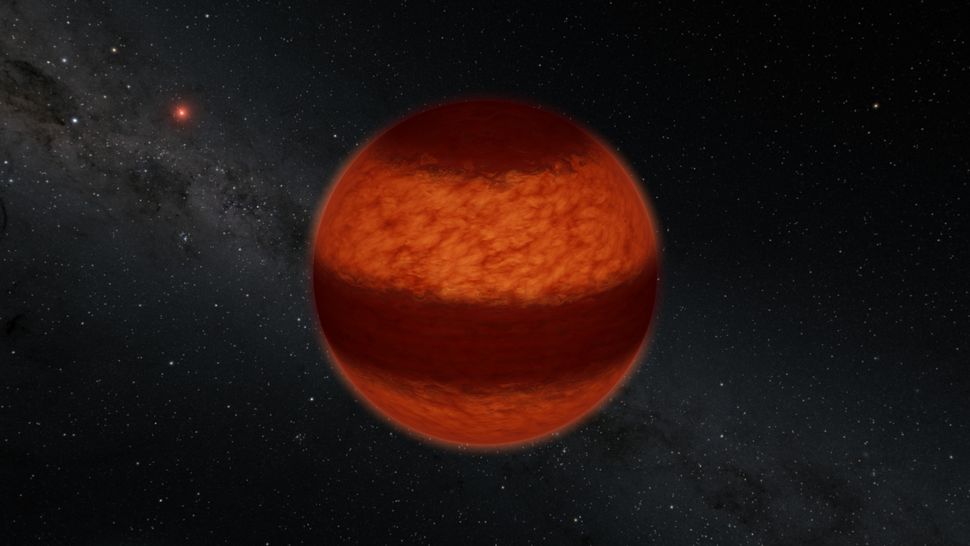
A team of astronomers has discovered that the closest known brown dwarf, Luhman 16A, shows signs of cloud bands similar to those seen on Jupiter and Saturn. This is the first time scientists have used the technique of polarimetry to determine the properties of atmospheric clouds outside of the solar system, or exoclouds.
Brown dwarfs are objects heavier than planets but ...
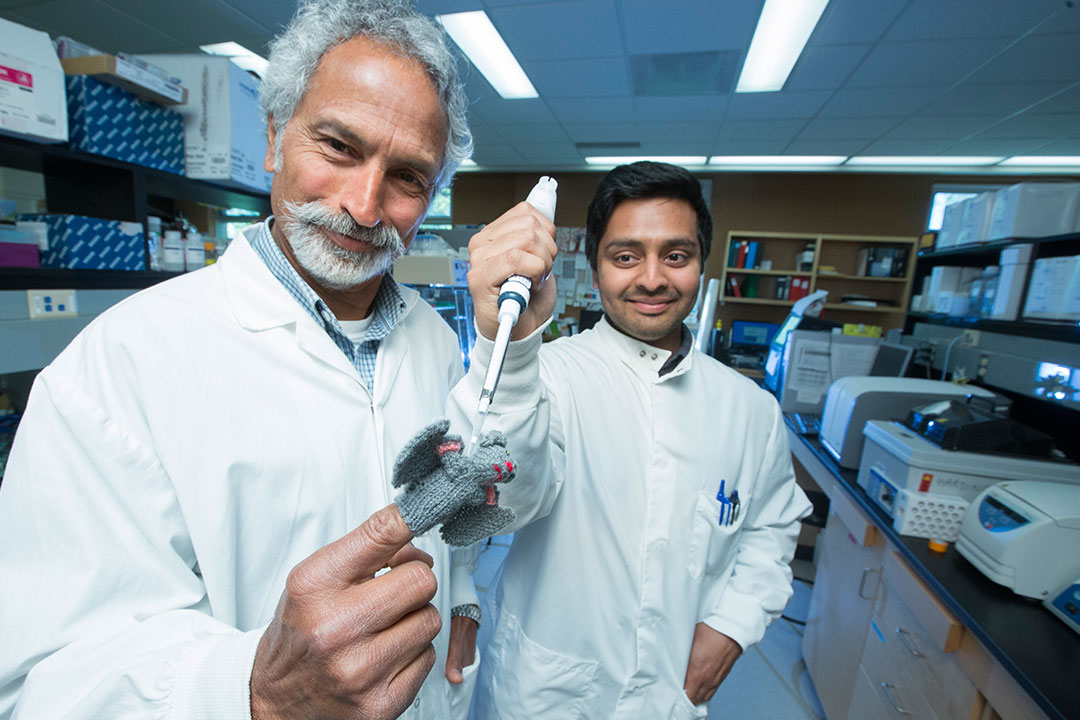
USask student Arinjay Banerjee (right) and professor Vikram Misra (left) posing with a bat finger puppet. (Photo: David Stobbe)
Bat-virus adaptation may explain species spillover, researchers say. A University of Saskatchewan (USask) research team has uncovered how bats can carry the Middle East respiratory syndrome (MERS) coronavirus without getting sick — research that could shed light on how coronaviruses make the jump to humans and other animals.
Coronaviruses such as MERS, Severe Acute Respiratory Syndrome (SARS), and more recently the COVID19-causing SARS-CoV-2 virus, are thought to have originated in bats. While these viruses can cause serious and often fatal disease in people, for reasons not previously well understood, bats seem unharmed.
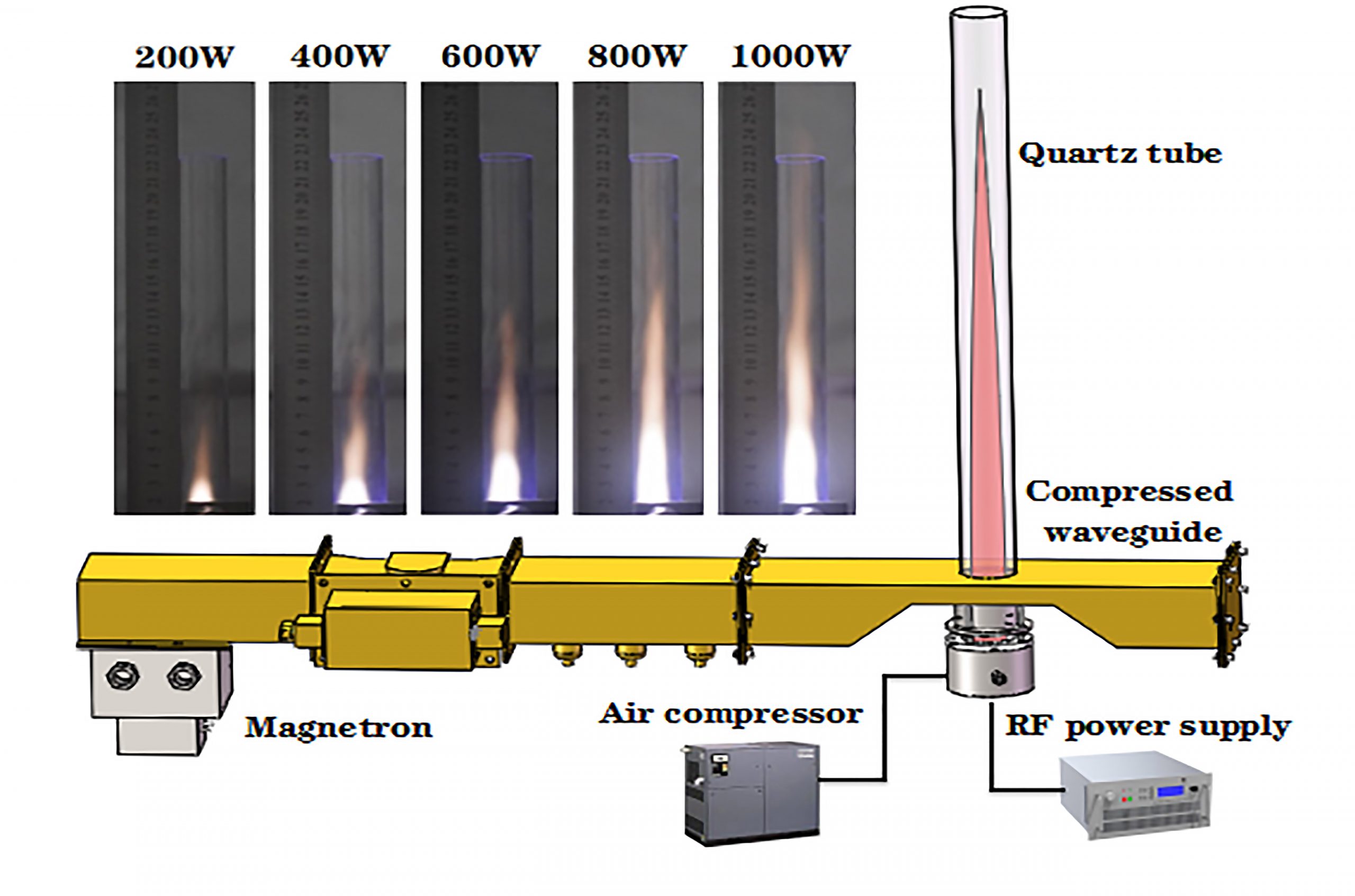
A schematic diagram of a prototype microwave air plasma thruster and the images of the bright plasma jet at different microwave powers. This device consists of a microwave power supply, an air compressor, a compressed microwave waveguide and a flame ignitor. CREDIT: Jau Tang and Jun Li
Humans depend on fossil fuels as their primary energy source, especially in transportation. However, fossil fuels are both unsustainable and unsafe, serving as the largest source of greenhouse gas emissions and leading to adverse respiratory effects and devastation due to global warming.
A team of researchers at the Institute of Technological Sciences at Wuhan University has demonstrated a prototype device that uses microwave air plasmas for jet propulsion...











Recent Comments