To raise new questions, new possibilities, to regard old problems from a new angle, requires creative imagination and marks real advance in science.
~Albert Einstein
Read More
Old Newtonian physics claimed that things have an objective reality separate from our perception of them. Quantum physics, and particularly Heisenberg's Uncertainty Principle, reveal that, as our perception of an object changes, the object itself literally changes.
~Marianne Williamson
Read More
This is the largest study on multiple dietary factors and subtypes of stroke. Ischaemic and haemorrhagic stroke have markedly different patterns of dietary associations. For ischaemic stroke, lower risks were associated with higher consumption of dietary fibre, fruit and vegetables, and dairy foods. For haemorrhagic stroke, higher risk was associated with higher egg consumption. The results highlight the importance of examining stroke subtypes separately.
Different types of food are linked to risks of different types of stroke, according to the largest study to investigate this, published in the European Heart Journal today (Monday).
Until now, most studies have looked at the association between food and total stroke (all types of stroke combined), or focused on ischaemic stroke o...
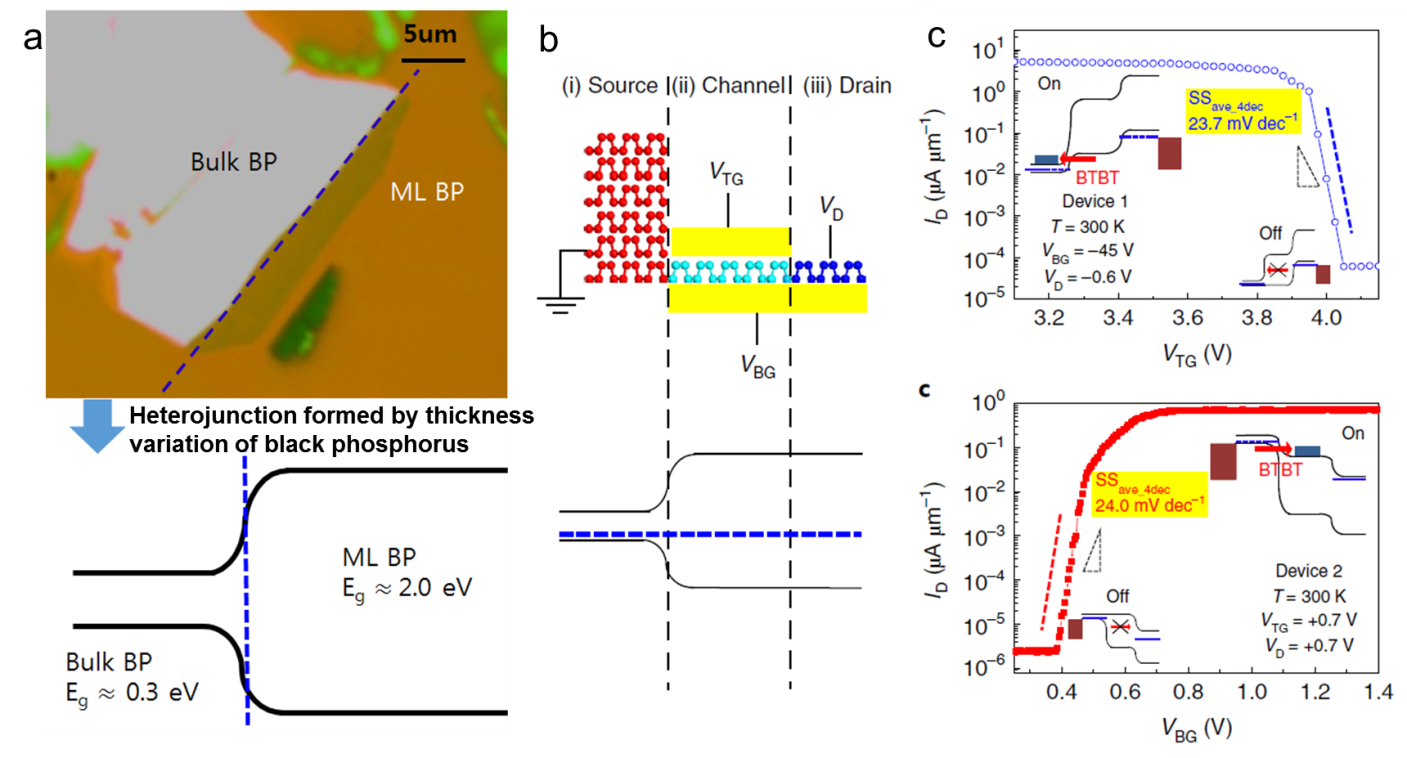
Optical image and band diagram of the heterojunction formed by the thickness variation of black phosphorus 2D material. B: Schematic of the tunnel field-effect transistor and the thickness-dependent bandgap. C: Characteristic transfer curve showing steep subthreshold swing and high on-current.
Researchers have reported a black phosphorus transistor that can be used as an alternative ultra-low power switch. A research team led by Professor Sungjae Cho in the KAIST Department of Physics developed a thickness-controlled black phosphorus tunnel field-effect transistor (TFET) that shows 10-times lower switching power consumption as well as 10,000-times lower standby power consumption than conventional complementary metal-oxide-semiconductor (CMOS) transistors.
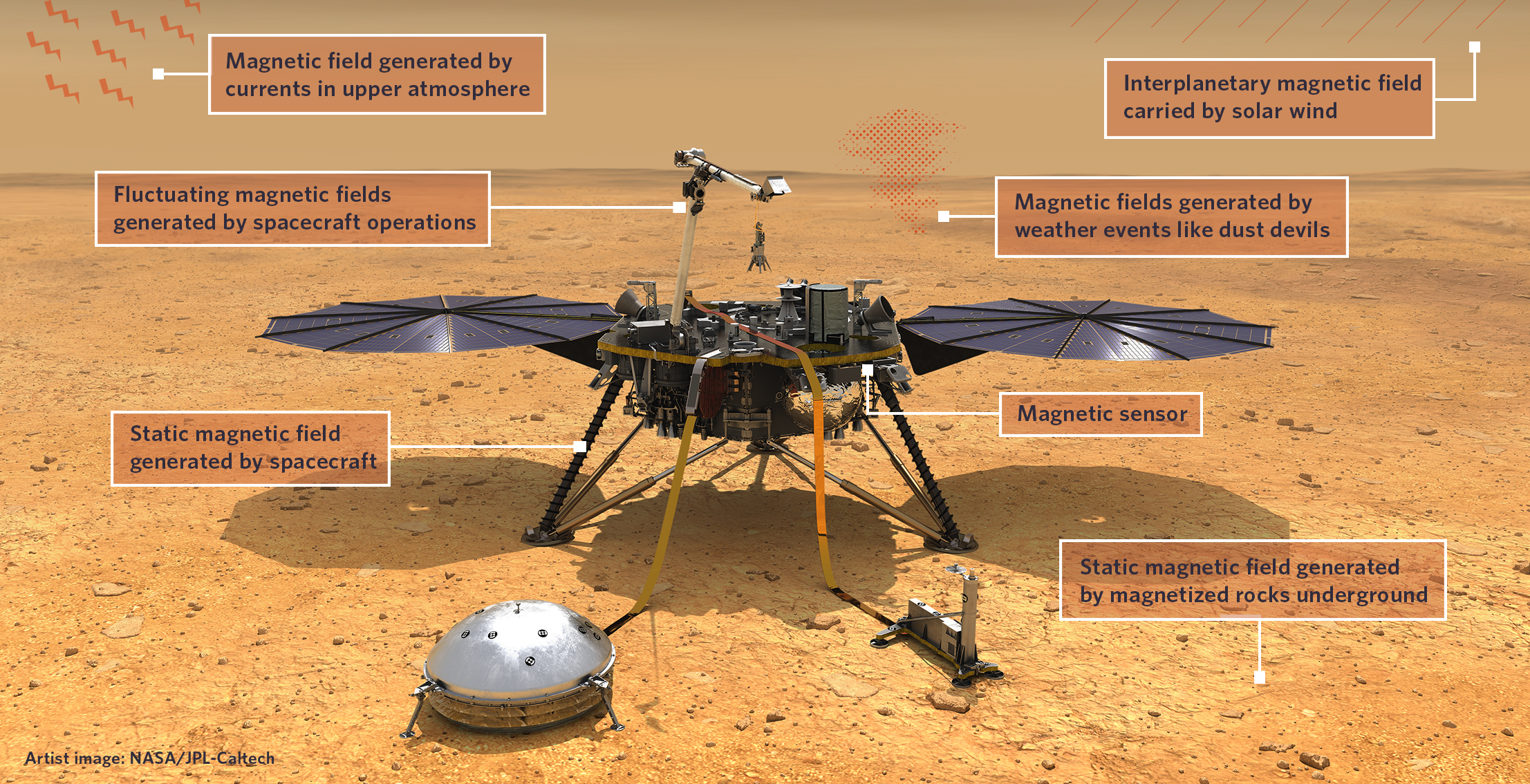
Sources of magnetism detected by magnetic sensor aboard the Mars InSight Lander. Credit: NASA/JPL-Caltech.
Fluctuations in field provide clues about upper atmosphere. New data gleaned from the magnetic sensor aboard NASA’s InSight spacecraft is offering an unprecedented close-up of magnetic fields on Mars.
In a study published today in Nature Geoscience, scientists reveal that the magnetic field at the InSight landing site is ten times stronger than anticipated, and fluctuates over time-scales of seconds to days.
“One of the big unknowns from previous satellite missions was what the magnetization looked like over small areas,” said lead author Catherine Johnson, a professor at the University of British Columbia and senior scientist at the Planetary Science Institute...
Kenny Roberts, Bayraktar lab, Wellcome Sanger Institute
Cell atlas of human thymus could help engineer improved therapeutic T cells. A first cell atlas of the human thymus gland could lead to new immune therapies to treat cancer and autoimmune diseases. Researchers from the Wellcome Sanger Institute, Newcastle University and Ghent University, Belgium, mapped thymus tissue through the human lifespan to understand how it develops and makes vital immune cells called T cells. In the future, this information could help researchers to generate an artificial thymus and engineer improved therapeutic T cells.
Published today (20 February) in Science, this human thymus atlas has revealed new cell types and identified signals that tell immature immune cells how to develop into T cells...












Recent Comments