
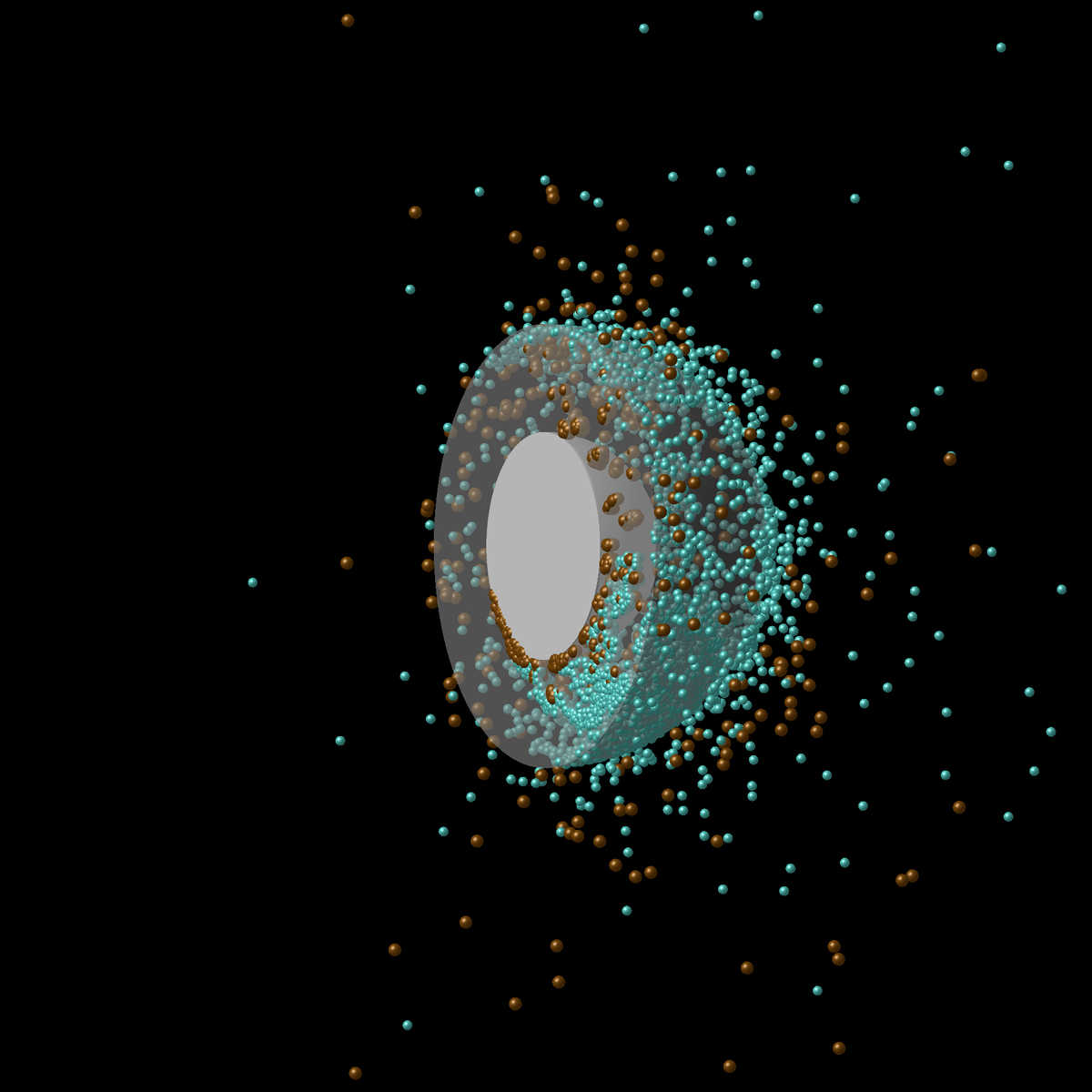
The early solar system was a chaotic place, with evidence indicating that Mars was likely struck by planetesimals, small protoplanets up to 1,200 miles in diameter, early in its history...
Read More


Until we recognize the essential role of biology, our attempts to truly unify the universe will remain a train to nowhere. ~Robert Lanza Read More

Good health is not something we can buy. However, it can be an extremely valuable savings account. ~Anne Wilson Schaef Read More

The only way forward, if we are going to improve the quality of the environment, is to get everybody involved. ~Richard Rogers Read More

To raise new questions, new possibilities, to regard old problems from a new angle, requires creative imagination and marks real advance in science. ~Albert Einstein Read More

Old Newtonian physics claimed that things have an objective reality separate from our perception of them. Quantum physics, and particularly Heisenberg's Uncertainty Principle, reveal that, as our perception of an object changes, the object itself literally changes. ~Marianne Williamson Read More

Astronomy compels the soul to look upwards and leads us from this world to another. ~ Read More
February 16, 2020,
 Astronomy/Space
The early solar system was a chaotic place, with evidence indicating that Mars was likely struck by planetesimals, small protoplanets up to 1,200 miles in diameter, early in its history...
Read More
February 15, 2020,
Biology/Biotechnology, Health/Medical

Chronic and non-healing wounds – one of the most devastating complications of diabetes and the leading cause of limb amputation – affects millions of Americans each year. Due to the complex nature of these wounds, proper clinical treatment has been limited.
For the first time, faculty in the biomedical engineering department – a shared department with the UConn School of Dental Medicine, School of Medicine, and School of Engineering – designed a wirelessly-controlled, or “smart,” bandage and corresponding smartphone-sized platform that can precisely deliver different medications to the wound with independent dosing.
This bandage, developed by Dr...
Read More
February 15, 2020,
Health/Medical, Biology/Biotechnology
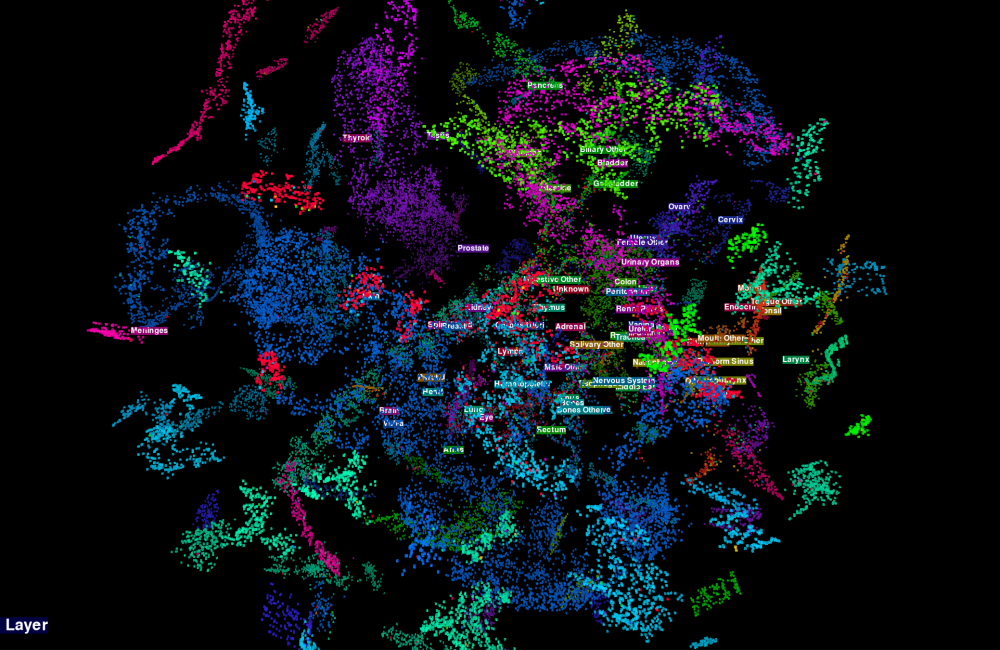
To better leverage cancer data for research, scientists are developing an artificial intelligence (AI)-based natural language processing tool to improve information extraction from textual pathology reports. In a first for cancer pathology reports, the team developed a multitask convolutional neural network (CNN) – a deep learning model that learns to perform tasks, such as identifying key words in a body of text, by processing language as a two-dimensional numerical dataset.
As the second-leading cause of death in the United States, cancer is a public health crisis that afflicts nearly one in two people during their lifetime...
Read More
February 15, 2020,
Astronomy/Space

Data from NASA’s New Horizons mission are providing new insights into how planets and planetesimals – the building blocks of the planets – were formed.
The New Horizons spacecraft flew past the ancient Kuiper Belt object Arrokoth (2014 MU69) on Jan...
Read More
Recent Comments