
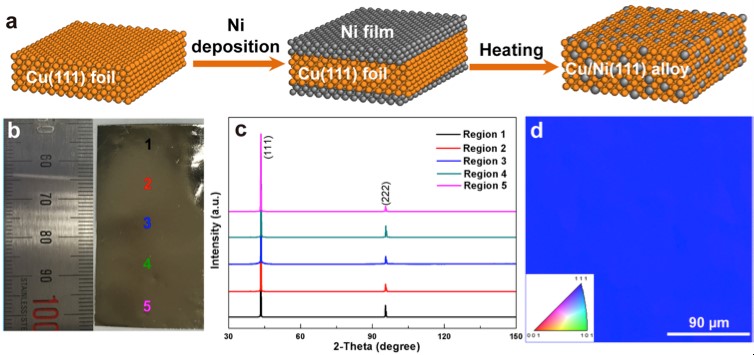
IBS researchers fabricate single crystal copper nickel alloy...
Read More


Until we recognize the essential role of biology, our attempts to truly unify the universe will remain a train to nowhere. ~Robert Lanza Read More

Good health is not something we can buy. However, it can be an extremely valuable savings account. ~Anne Wilson Schaef Read More

The only way forward, if we are going to improve the quality of the environment, is to get everybody involved. ~Richard Rogers Read More

To raise new questions, new possibilities, to regard old problems from a new angle, requires creative imagination and marks real advance in science. ~Albert Einstein Read More

Old Newtonian physics claimed that things have an objective reality separate from our perception of them. Quantum physics, and particularly Heisenberg's Uncertainty Principle, reveal that, as our perception of an object changes, the object itself literally changes. ~Marianne Williamson Read More

Astronomy compels the soul to look upwards and leads us from this world to another. ~ Read More
January 22, 2020,
 Physics, Technology/Electronics, Chemistry/Nanotechnology
IBS researchers fabricate single crystal copper nickel alloy...
Read More
January 22, 2020,
Chemistry/Nanotechnology
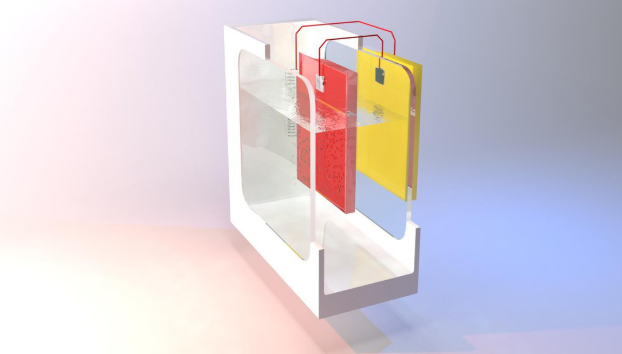
Solar-to-fuel conversion offers a promising technology to solve energy problems, yet device performance could be limited by undesired sunlight absorption. Researchers show copper thiocyanate can assist hole transport in oxide photoelectrodes and enable a 4.55% solar-to-hydrogen efficiency in tandem devices.
Photoelectrochemical (PEC) water splitting for hydrogen fuel generation has been considered the Holy Grail of electrochemistry. But to achieve it, many scientists believe the materials have to be abundant and low cost.
The most promising oxide photocathodes are cuprous oxide (Cu2O) photoelectrodes...
Read More
January 22, 2020,
Astronomy/Space, Chemistry/Nanotechnology
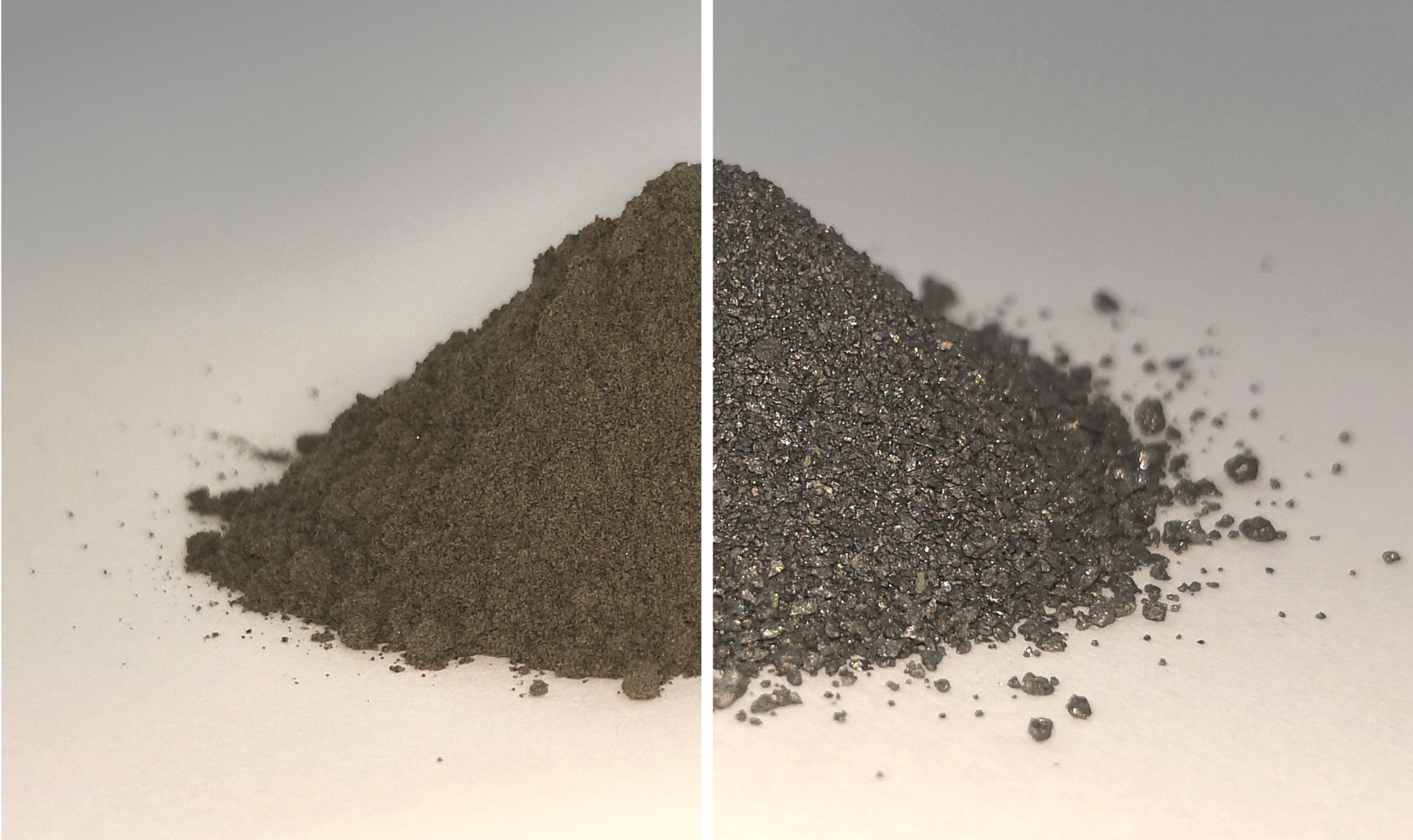
ESA’s technical heart has begun to produce oxygen out of simulated moondust. A prototype oxygen plant has been set up in the Materials and Electrical Components Laboratory of the European Space Research and Technology Centre, ESTEC, based in Noordwijk in the Netherlands.
“Having our own facility allows us to focus on oxygen production, measuring it with a mass spectrometer as it is extracted from the regolith simulant,” comments Beth Lomax of the University of Glasgow, whose Ph.D. work is being supported through ESA’s Networking and Partnering Initiative, harnessing advanced academic research for space applications.
“Being able to acquire oxygen from resources found on the Moon would obviously be hugely useful for future lunar settlers, both...
Read More
January 21, 2020,
Biology/Biotechnology

Biologists from The University of Manchester have explained for the first time why having a good night’s sleep really could prepare us for the rigours of the day ahead. The study in mice and published in Nature Cell Biology, shows how the body clock mechanism boosts our ability to maintain our bodies when we are most active.
And because we know the body clock is less precise as we age, the discovery, argues lead author Professor Karl Kadler, may one day help unlock some of the mysteries of aging.
The discovery throws fascinating light on the body’s extracellular matrix -which provides structural and biochemical support to cells in the form of connective tissue such as bone, skin, tendon and cartilage.
Over half our body weight is matrix, and half of this is collagen – and sci...
Read More
Recent Comments