






Scientists convert Plastics into useful Chemicals using Sunlight

Webbanner SPMS Photocatalyst.jpg
Visible Light–Driven Cascade Carbon–Carbon Bond Scission for Organic Transformations and Plastics RecyclingAdvanced Science, 2019; 1902020 DOI: 10.1002/advs.201902020

Chemists at Nanyang Technological University, Singapore (NTU Singapore) have discovered a method that could turn plastic waste into valuable chemicals by using sunlight.

In lab experiments, the research team mixed plastics with their catalyst in a solvent, which allows the solution to harness light energy and convert the dissolved plastics into formic acid – a chemical used in fuel cells to produce electricity.

Reporting their work in Advanced Science, the team led by NTU Assistant Professor Soo Han Sen from the School of Physical and Mathematical Sciences made their catalyst from the affordable, biocomp...

Read More

ALMA spots most distant Dusty Galaxy Hidden in Plain Sight

Credit: NRAO/AUI/NSF, B. Saxton

Astronomers using the Atacama Large Millimeter/submillimeter Array (ALMA) have spotted the light of a massive galaxy seen only 970 million years after the Big Bang. This galaxy, called MAMBO-9, is the most distant dusty star-forming galaxy that has ever been observed without the help of a gravitational lens.

Dusty star-forming galaxies are the most intense stellar nurseries in the universe. They form stars at a rate up to a few thousand times the mass of the Sun per year (the star-forming rate of our Milky Way is just three solar masses per year) and they contain massive amounts of gas and dust...

Read More

Identification of a Key Protein linked to Aging

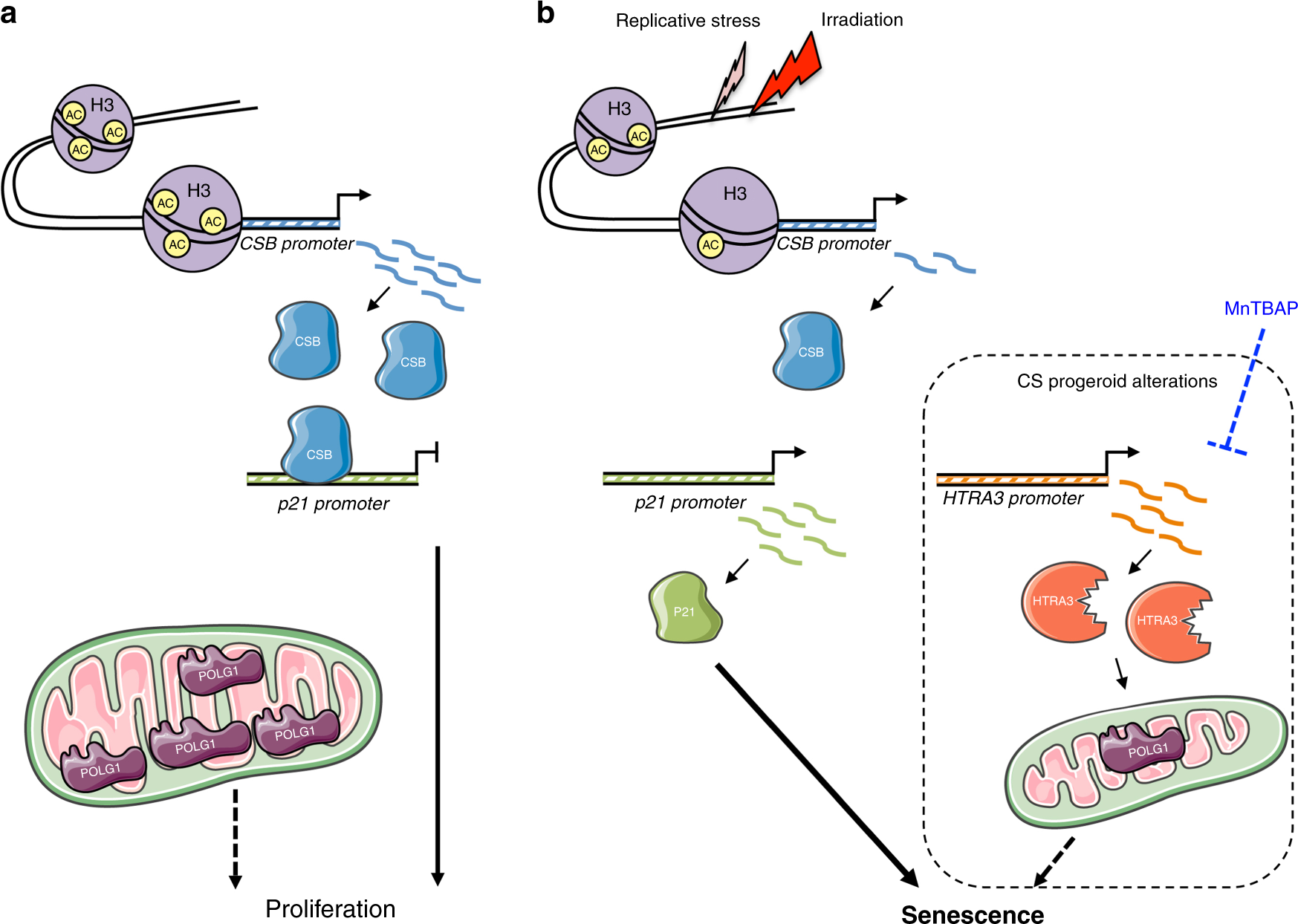
Fig. 8
Scheme: role of CSB depletion in replicative senescence. Illustration of epigenetic regulation of CSB expression and its effect on downstream targets (a) regular CSB expression (b) low CSB levels leading to replicative senescence. Novel senescence effectors that are shared with the Cockayne syndrome paradigm (a disease due to CSB impairment in its most severe form) are shown in a framed area. Transcripts are indicated with a wavy line, active promoter with an arrow; Ac, acetyl group.

Ageing is a dramatic public health issue in the face of the current demographic changes: the proportion of 60 and over in the world’s population will almost double by 2050. In this context, a new discovery has just broadened scientific knowledge...

Read More

Tiny Magnetic Particles enable new Material to Bend, Twist, and Grab

An assortment of objects made from magnetic shape-memory polymers. (Credit: Shuai Wu, The Ohio State University)

A team of researchers from the Georgia Institute of Technology and The Ohio State University has developed a soft polymer material, called magnetic shape memory polymer, that uses magnetic fields to transform into a variety of shapes. The material could enable a range of new applications from antennas that change frequencies on the fly to gripper arms for delicate or heavy objects.

The material is a mixture of three different ingredients, all with unique characteristics: two types of magnetic particles, one for inductive heat and one with strong magnetic attraction, and shape-memory polymers to help lock various shape changes into place.

“This is the first material t...

Read More