Complex Quantum Teleportation achieved for the first time

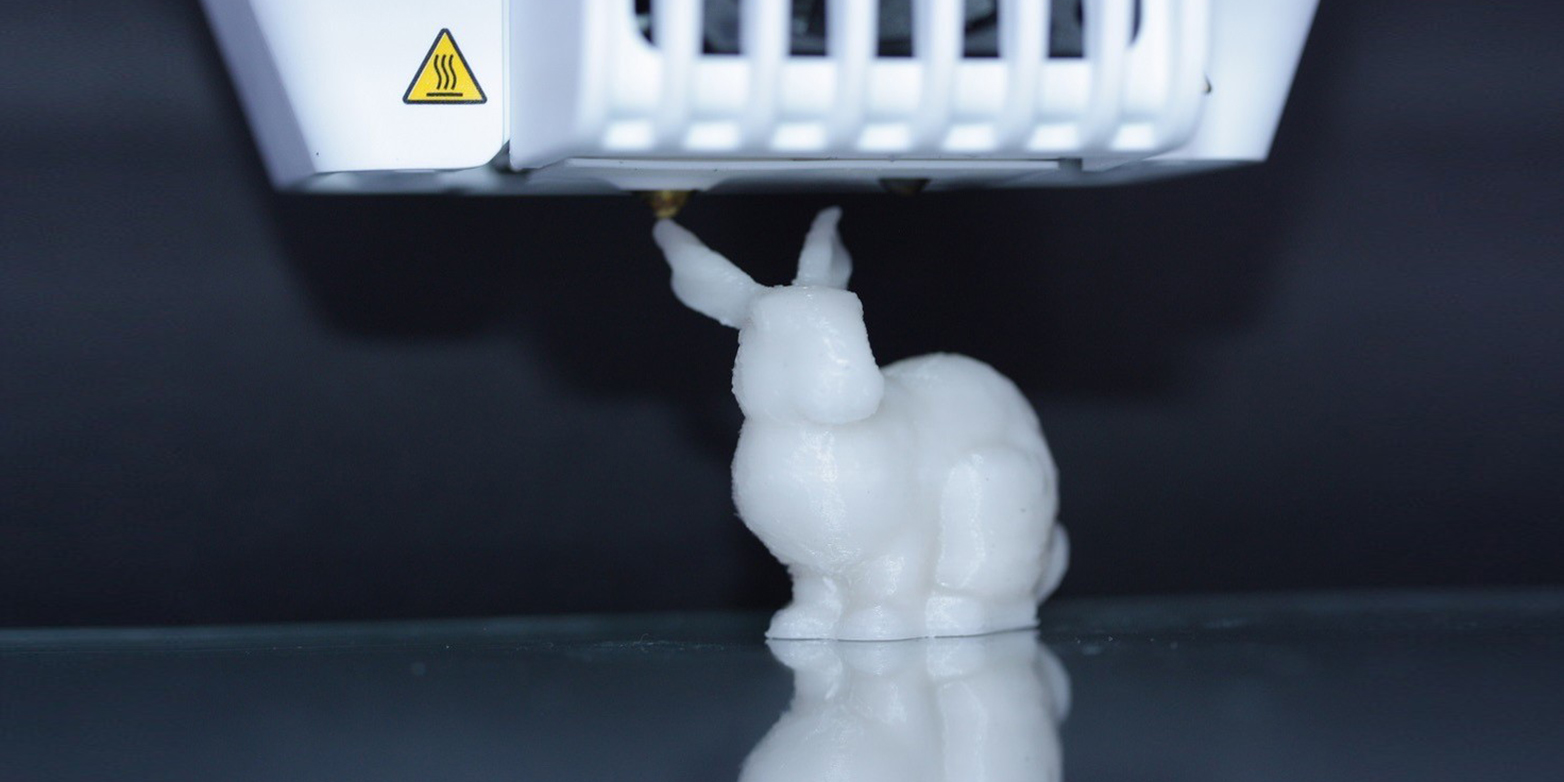
Austrian and Chinese scientists have for the first time succeeded in transferring three-dimensional quantum states (symbolic image). Credit: ÖAW/Harald Ritsch

Austrian and Chinese scientists have succeeded in teleporting 3D quantum states for the first time. High-dimensional teleportation could play an important role in future quantum computers.

Researchers from the Austrian Academy of Sciences and the University of Vienna have experimentally demonstrated what was previously only a theoretical possibility. Together with quantum physicists from the University of Science and Technology of China, they have succeeded in teleporting complex high-dimensional quantum states. The research teams report this international first in the journal Physical Review Letters.

In their study, the...

Read More

HADES Experiment simulates Colliding and Merging Neutron Stars

Illustration of two merging neutron stars. Gravitational waves travel out from the collision, seconds later a burst of gamma rays is shot out. The merging stars eject swirling clouds of material.
Illustration of two merging neutron stars. Gravitational waves travel out from the collision, seconds later a burst of gamma rays is shot out. The merging stars eject swirling clouds of material.Image: National Science Foundation/LIGO/Sonoma State University/A. Simonnet

Temperatures of 800 billion degrees in the cosmic kitchen. It is among the most spectacular events in the universe: a merger of neutron stars. An international team of researchers with strong representation from the Technical University of Munich (TUM) has completed the first laboratory measurements of thermal electromagnetic radiation arising in such collisions. The resulting data enabled them to calculate the prevailing temperature when such stars merge.

When two neutron stars collide, the matter at their core en...

Read More

Dietary Zinc protects against Streptococcus pneumoniae infection, study finds

These are elemental bio-images of mouse lungs during Streptococcus pneumoniae infection. The image shows increased zinc levels (orange to red regions) mobilised by the innate immune response to sites where the bacteria has invaded.
CREDIT:
Philip A. Doble and Christopher A. McDevitt

Researchers have uncovered a crucial link between dietary zinc intake and protection against Streptococcus pneumoniae, the primary bacterial cause of pneumonia. Globally, it is estimated that nearly two billion people suffer from zinc deficiency, but why this increases susceptibility to bacterial infection has not been well understood – until now.

University of Melbourne Associate Professor Christopher McDevitt, a laboratory head at the Doherty Institute, led an interdisciplinary team using state-of-the-...

Read More

Scorpion Toxin that Targets ‘Wasabi Receptor’ may help Solve Mystery of Chronic Pain

A Cell-Penetrating Scorpion Toxin Enables Mode-Specific Modulation of TRPA1 and PainCell, 2019; DOI: 10.1016/j.cell.2019.07.014

Researchers at UC San Francisco and the University of Queensland have discovered a scorpion toxin that targets the “wasabi receptor,” a chemical-sensing protein found in nerve cells that’s responsible for the sinus-jolting sting of wasabi and the flood of tears associated with chopping onions. Because the toxin triggers a pain response through a previously unknown mechanism, scientists think it can be used as a tool for studying chronic pain and inflammation, and may eventually lead to the development of new kinds of non-opioid pain relievers.

The scientists isolated the toxin, a short protein (or peptide) that they dubbed the “wasabi receptor toxin” (W...

Read More