








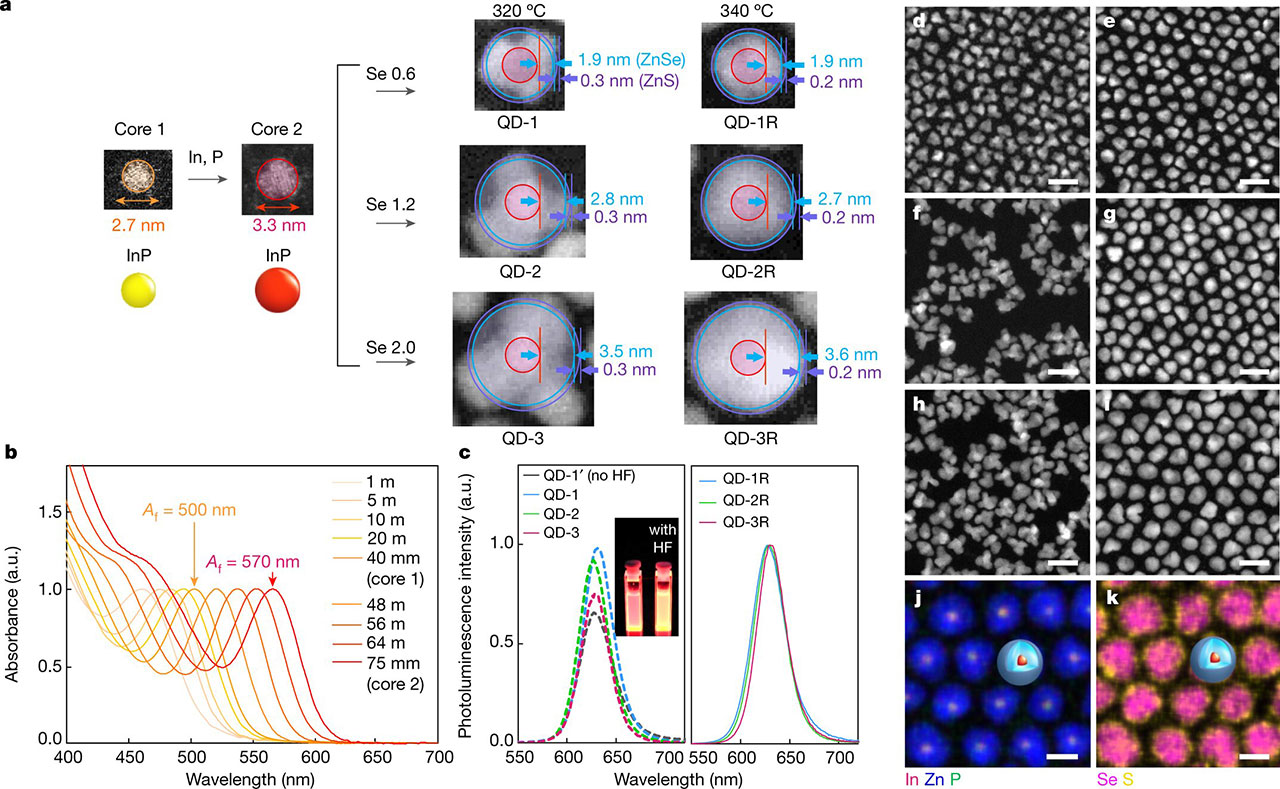
More efficient Quantum Dots without Heavy Metals
December 2, 2019,
 Physics, Technology/Electronics
Mapping our Galaxy’s Magnetic Field
December 2, 2019,
Astronomy/Space
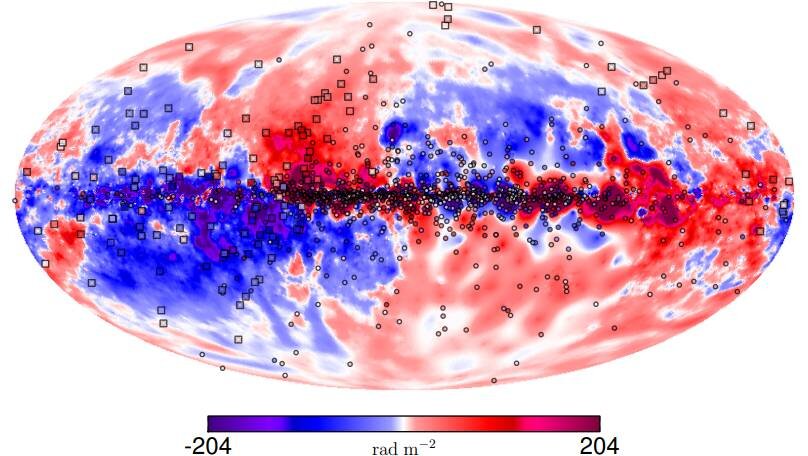
Astronomers from CSIRO and Curtin University have used pulsars to probe the Milky Way’s magnetic fie...
Read MoreFirst-of-a-kind Electro-Optical Device provides solution to faster and more energy efficient Computing Memories and processors
December 2, 2019,
Physics, Technology/Electronics

The first ever integrated nanoscale device which can be programmed with either photons or electrons has been developed by scientists in Harish Bhaskaran’s Advanced Nanoscale Engineering research group at the University of Oxford.
In collaboration with researchers at the universities of Münster and Exeter, scientists have created a first-of-a-kind electro-optical device which bridges the fields of optical and electronic computing. This provides an elegant solution to achieving faster and more energy efficient memories and processors.
Computing at the speed of light has been an enticing but elusive prospect, but with this development it’s now in tangible pro...
Read MoreA surprisingly Big Black Hole might have Swallowed a Star from the Inside Out, and scientists are baffled
December 2, 2019,
Astronomy/Space
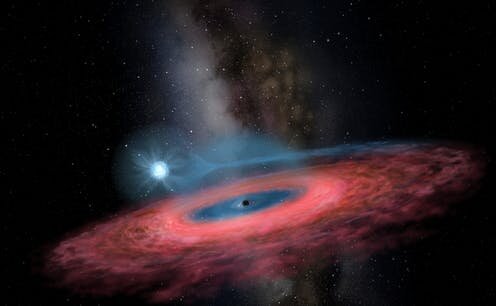
About 15,000 light years away, in a distant spiral arm of the Milky Way, there is a black hole about 70 times as heavy as the Sun. The black hole seems too big to be the product of a single star collapsing, which poses questions for our theories of how black holes form.
Our team, led by Professor Jifeng Liu at the National Astronomical Observatories, Chinese Academy of Sciences, has dubbed the mysterious object LB-1.
Astronomers estimate that our galaxy alone contains about 100 million black holes, created when massive stars have collapsed over the past 13 billion years.
...Read More
Recent Comments