






Subaru Telescope Captures 1800 Exploding Stars

Supernova illustration (stock image).
Credit: © Korn V. / Adobe Stock

The Subaru Telescope has captured images of more than 1800 exploding stars in the Universe, some 8 billion light years from Earth. By combining one of the world’s most powerful digital cameras and a telescope capable of capturing a wider shot of the night sky compared to other big telescopes, a team of researchers from Japan have been able to identify about 1800 new supernovae, including 58 Type Ia supernovae 8 billion light years away, reports a new study released online on 30 May.

A supernova is the name given to an exploding star that has reached the end of its life...

Read More
New way to Protect against High-dose Radiation Damage Discovered

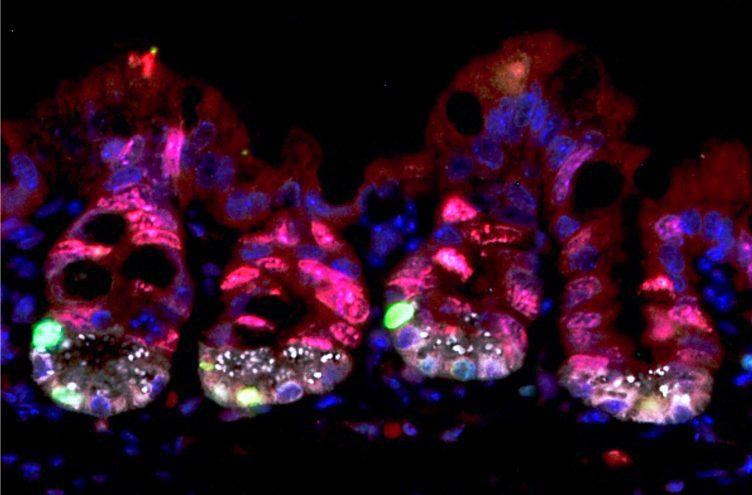
Intestinal stem cells with URI, CNIO
In red, highly proliferative cells of the intestinal crypts; they are targeted by irradiation and die during radiotherapy. They are considered to be radiosensitive. In green, dormant stem cells with high levels of URI; they survive irradiation, become proliferative after irradiation to regenerate the damaged intestine. /CNIO

Intensive radiotherapy can be toxic in 60% of patients with tumors located in the gastrointestinal cavity. Increases in levels of the protein URI protect mice against high-dose ionizing radiation-induced gastrointestinal syndrome and enhance mouse intestinal regeneration and survival in 100% of the cases...

Read More

Research confirms Gut-brain Connection in Autism

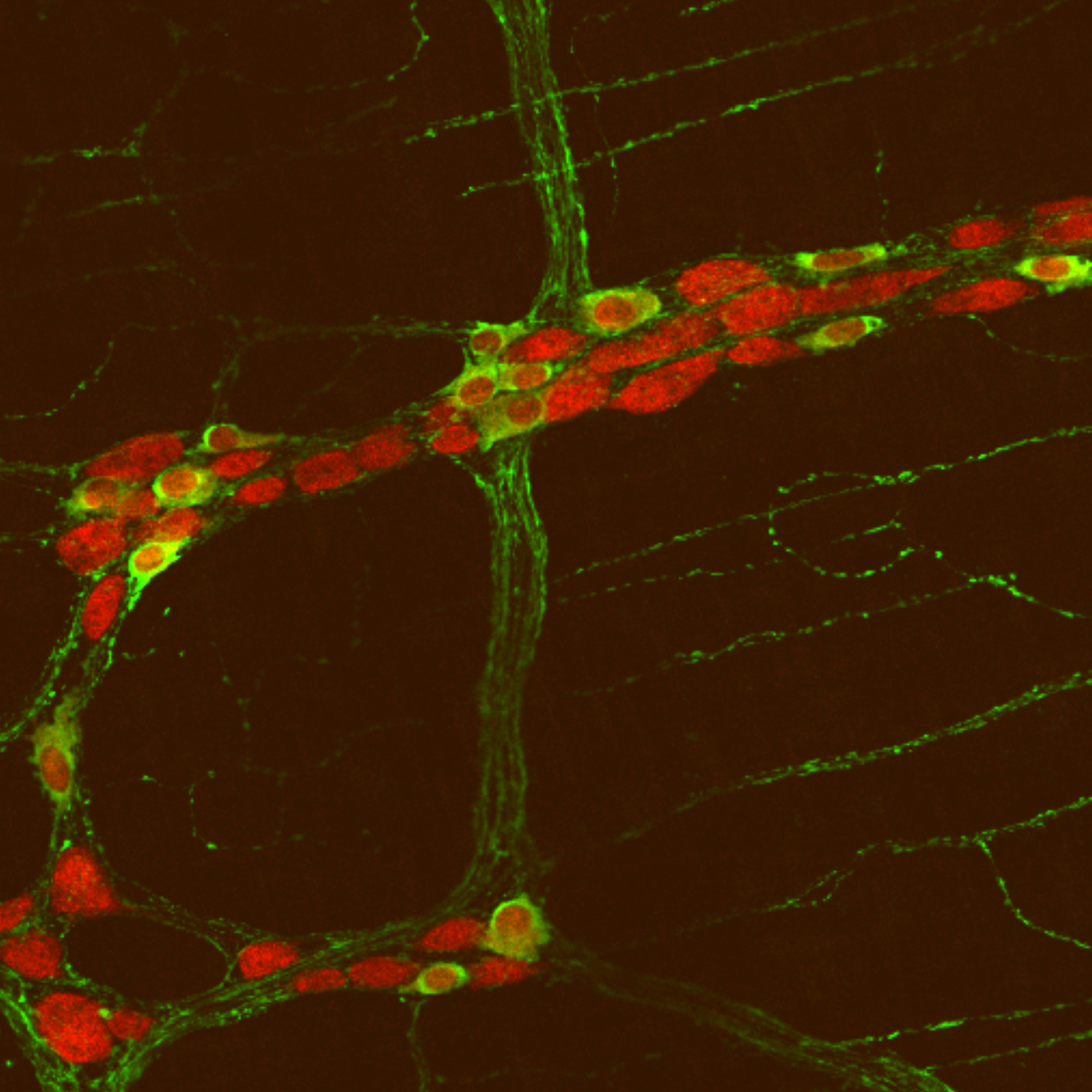
An image showing neurons in the gut of a mouse with the autism-related gene mutation. The study found mice with the mutation had more neurons in the small intestine.

Up to 90% of people with autism suffer from gut problems, but nobody has known why. New research reveals the same gene mutations – found both in the brain and the gut – could be the cause.

The discovery confirms a gut-brain nervous system link in autism, opening a new direction in the search for potential treatments that could ease behavioural issues associated with autism by targeting the gut.

Chief Investigator Associate Professor Elisa Hill-Yardin, RMIT University, said scientists trying to understand autism have long been looking in the brain, but the links with the gut nervous system have only been recently ex...

Read More

Flexible Generators turn Movement into Energy

Rice University postdoctoral researcher Michael Stanford holds a flip-flop with a triboelectric nanogenerator, based on laser-induced graphene, attached to the heel. Walking with the flip-flop generates electricity with repeated contact between the generator and the wearer's skin. Stanford wired the device to store energy on a capacitor. (Credit: Jeff Fitlow/Rice University)
Rice University postdoctoral researcher Michael Stanford holds a flip-flop with a triboelectric nanogenerator, based on laser-induced graphene, attached to the heel. Walking with the flip-flop generates electricity with repeated contact between the generator and the wearer’s skin. Stanford wired the device to store energy on a capacitor. Photo by Jeff Fitlow

Laser-induced graphene nanogenerators could power future wearables. Researchers have produced triboelectric nanogenerators with laser-induced graphene. The flexible devices turn movement into electrical energy and could enable wearable, self-powered sensors and devices.

The Rice lab of chemist James Tour has adapted laser-induced graphene (LIG) into small, metal-free devices that generate electricity...

Read More