Major sugar substitute found to impair brain blood vessel cell function, posing potential stroke risk

sugar substitute
Credit: Pixabay/CC0 Public Domain

Erythritol may impair cellular functions essential to maintaining brain blood vessel health, according to researchers at the University of Colorado Boulder. Findings suggest that erythritol increases oxidative stress, disrupts nitric oxide signaling, raises vasoconstrictive peptide production, and diminishes clot-dissolving capacity in human brain microvascular endothelial cells.

Erythritol has become a fixture in the ingredient lists of protein bars, low-calorie beverages, and diabetic-friendly baked goods. Its appeal lies in its sweetness-to-calorie ratio, roughly 60–80% as sweet as sucrose with a tiny fraction of the energy yield, and its negligible effect on blood glucose...

Read More

Astronomers just found a giant planet that shouldn’t exist

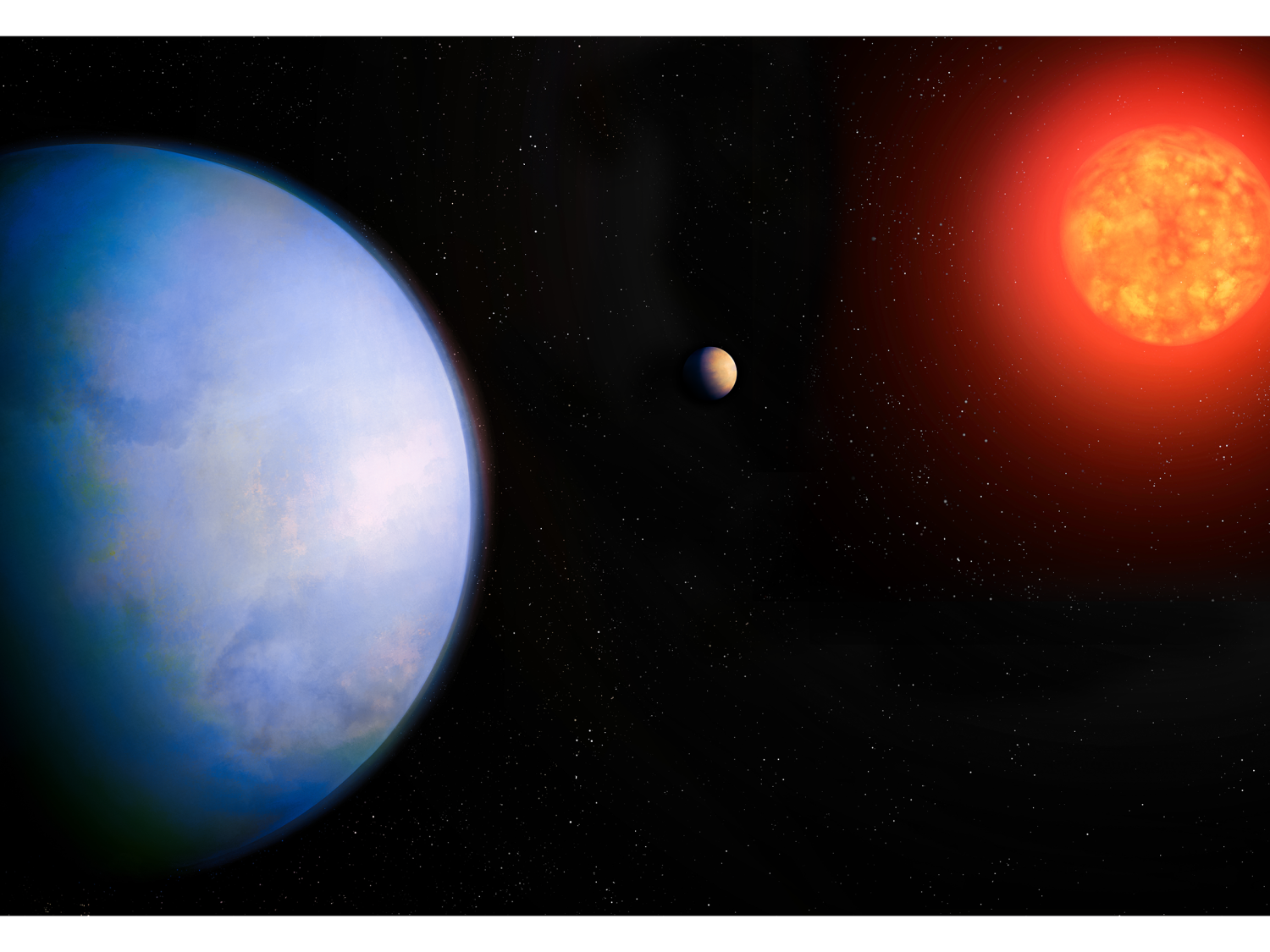
artist's illustration of the newly discovered exoplanet and star
Star TOI-6894 is just like many in our galaxy, a small red dwarf, and only ~20% of the mass of our Sun. Like many small stars, it is not expected to provide suitable conditions for the formation and hosting of a large planet.

Scientists have discovered a giant planet orbiting a tiny red dwarf star, something they believed wasn’t even possible. The planet, TOI-6894b, is about the size of Saturn but orbits a star just a fifth the mass of our Sun. This challenges long-standing ideas about how big planets form, especially around small stars. Current theories can’t fully explain how such a planet could have taken shape. Even more fascinating, this cold planet may have a rare kind of atmosphere rich in methane or even ammonia something we’ve never seen in an exoplanet before.

Star TOI-689...

Read More

World’s first non-silicon 2D computer developed

World's first non-silicon 2D computer developed
This conceptual illustration of a computer based on 2D molecules displays an actual scanning electron microscope image of the computer fabricated by a team by researchers at Penn State. The keyboard features highlighted keys labeled with the abbreviations for molybdenum disulfide and tungsten diselenide, representing the two 2D materials used to develop the transistors in the computer. Credit: Krishnendu Mukhopadhyay/Penn State

Silicon is king in the semiconductor technology that underpins smartphones, computers, electric vehicles and more, but its crown may be slipping, according to a team led by researchers at Penn State.

In a world first, they used two-dimensional (2D) materials, which are only an atom thick and retain their properties at that scale, unlike silicon, to develop a ...

Read More

From the andes to the beginning of time: Telescopes detect 13-billion-year-old signal

Small telescopes in Chile are first on Earth to cut through the cosmic noise. For the first time, scientists have used Earth-based telescopes to look back over 13 billion years to see how the first stars in the universe affect light emitted from the Big Bang.

Using telescopes high in the Andes mountains of northern Chile, astrophysicists have measured this polarized microwave light to create a clearer picture of one of the least understood epochs in the history of the universe, the Cosmic Dawn.

“People thought this couldn’t be done from the ground. Astronomy is a technology-limited field, and microwave signals from the Cosmic Dawn are famously difficult to measure,” said Tobias Marriage, project leader and a Johns Hopkins professor of physics and astronomy...

Read More