To raise new questions, new possibilities, to regard old problems from a new angle, requires creative imagination and marks real advance in science.
~Albert Einstein
Read More
Old Newtonian physics claimed that things have an objective reality separate from our perception of them. Quantum physics, and particularly Heisenberg's Uncertainty Principle, reveal that, as our perception of an object changes, the object itself literally changes.
~Marianne Williamson
Read More
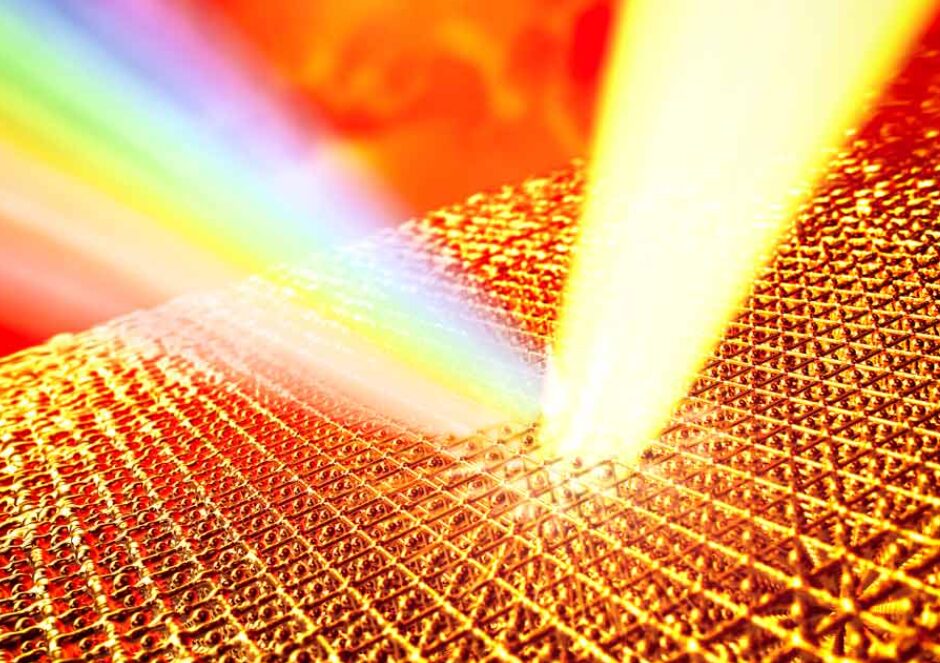
Researchers at SLAC’s Matter in Extreme Conditions (MEC) instrument used a laser to superheat a sample of gold. Then, they sent a pulse of ultrabright X-rays from the Linac Coherent Light Source (LCLS) through the sample to measure the speed, and thus the temperature, of the atoms vibrating in the sample. Graphic credit: Greg Stewart/SLAC National Accelerator Laboratory
Gold was superheated to 19,000 Kelvin without melting, defying physics and unlocking new possibilities in high-energy research. Physicists have heated gold to over 19,000 Kelvin, more than 14 times its melting point, without melting it, smashing the long-standing “entropy catastrophe” limit...
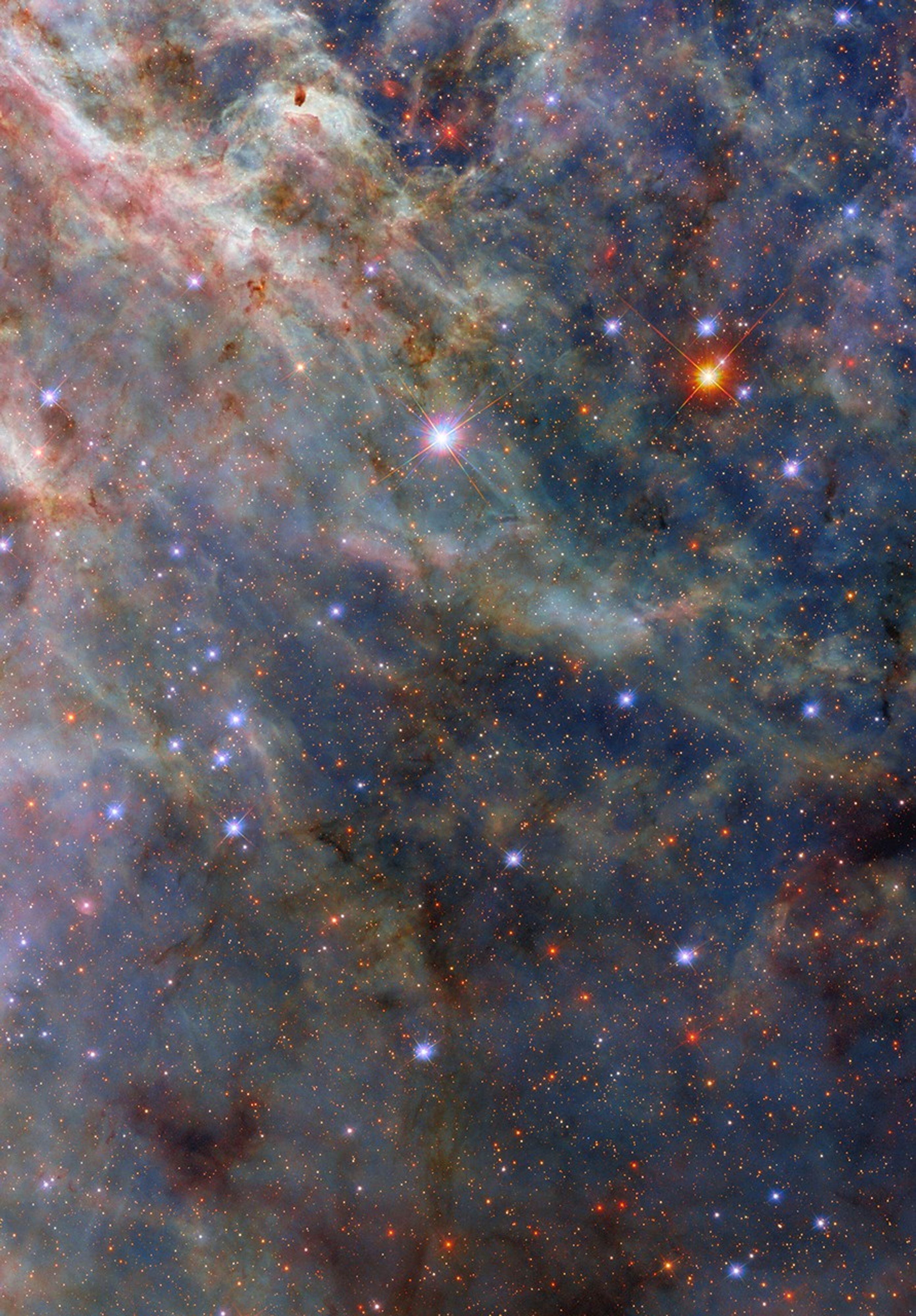
This NASA/ESA Hubble Space Telescope image shows a portion of the Tarantula Nebula. ESA/Hubble & NASA, C. Murray
This NASA/ESA Hubble Space Telescope image captures incredible details in the dusty clouds of a star-forming factory called the Tarantula Nebula. Most of the nebulae Hubble images are in our galaxy, but this nebula is in the Large Magellanic Cloud, a dwarf galaxy located about 160,000 light-years away in the constellations Dorado and Mensa.
The Large Magellanic Cloud is the largest of the dozens of small satellite galaxies that orbit the Milky Way. The Tarantula Nebula is the largest and brightest star-forming region, not just in the Large Magellanic Cloud, but in the entire group of nearby galaxies to which the Milky Way belongs.
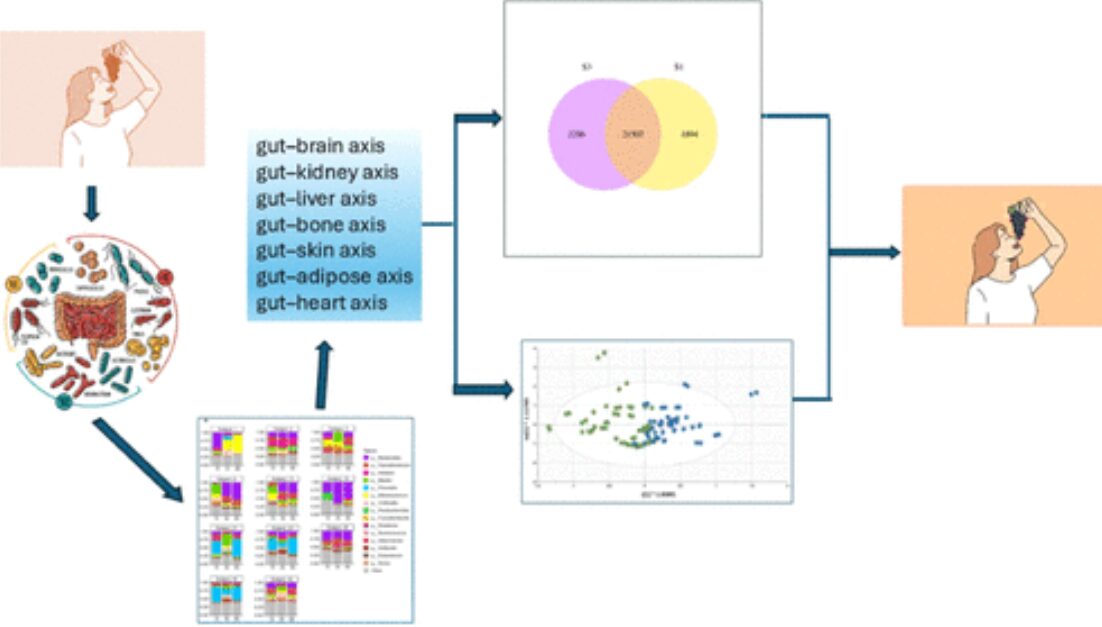
Fresh grapes contain a potent mix of over 1,600 compounds that benefit heart, brain, skin, and gut health. New evidence suggests they deserve official superfood recognition, with benefits even at the genetic level.
A new article appearing in the current issue of the peer-reviewed Journal of Agriculture and Food Chemistry explores the concept of “superfoods” and makes a case that fresh grapes have earned what should be a prominent position in the superfood family. The author, leading resveratrol and cancer researcher John M. Pezzuto, Ph.D., D.Sc., Dean of the College of Pharmacy and Health Sciences at Western New England University, brings forth an array of evidence to support his perspective on this issue.
As noted in the article, the term “superfood” is a common word without an...
This image depicts the structure of the proposed organic molecule, alongside the energy level diagrams of two-photon absorption (left side) and thermally activated delayed fluorescence (right side). Credit: Youhei Chitose/Kyushu University
Researchers at Kyushu University have developed a novel organic molecule that simultaneously exhibits two highly sought-after properties: efficient light emission suitable for advanced displays and strong light absorption for deep-tissue bioimaging. This breakthrough addresses a long-standing challenge in molecular design, paving the way for next-generation multifunctional materials.
Their study, published online in the journal Advanced Materials on July 29, 2025, was conducted in collaboration with the National Taipei University of Technology and...












Recent Comments