Next Leap in Rechargeable Batteries

Looking for the next leap in rechargeable batteries

Lithium-sulfur battery with Mixed Conduction Membrane barrier to stop polysulfide shuttling. Credit: Sri Narayan and Derek Moy

USC researchers may have just found a solution for one of the biggest stumbling blocks to the next wave of rechargeable batteries—small enough for cellphones and powerful enough for cars. In a paper published in the January issue of the Journal of the Electrochemical Society, Sri Narayan and Derek Moy of the USC Loker Hydrocarbon Research Institute outline how they developed an alteration to the lithium-sulfur battery that could make it more than competitive with the industry standard lithium-ion battery.

The lithium-sulfur battery, long thought to be better at energy storage capacity than its more popular lithium-ion counterpart, was hampered by its short cycle ...

Read More

Minor Planet named Bernard

A minor planet in the Solar System will officially be known as Bernardbowen from today after Australian citizen science project theSkyNet won a competition to name the celestial body. The minor planet was named by the International Centre for Radio Astronomy Research (ICRAR) in honour of their founding chairman Dr Bernard Bowen. Bernardbowen sits in the asteroid belt between Mars and Jupiter and takes 3.26 Earth years to orbit the Sun.

The minor planet was discovered on October 28, 1991, and until now has been known as (6196) 1991 UO4. Based at ICRAR, theSkyNet has been running since 2011 and sees citizen scientists donating their spare computing power to help Australian astronomers uncover the mysteries of the Universe...

Read More

Scientists uncover how Zika virus causes Microcephaly

Highlights
•Mexican ZIKV strain infects primary human fetal brain-derived neural stem cells
•ZIKV inhibits neuronal differentiation in a cell-strain-dependent manner
•Majority of differentiated ZIKV-infected cells are glial cells
•ZIKV-mediated transcriptome alteration is cell-strain-dependent

A multidisciplinary team from The University of Texas Medical Branch at Galveston has uncovered the mechanisms that the Zika virus uses to alter brain development. These findings are detailed in Stem Cell Reports. There are currently 70 countries and territories reporting active Zika transmission, according to the World Health Organization...

Read More

Printable Solar cells just got a little Closer

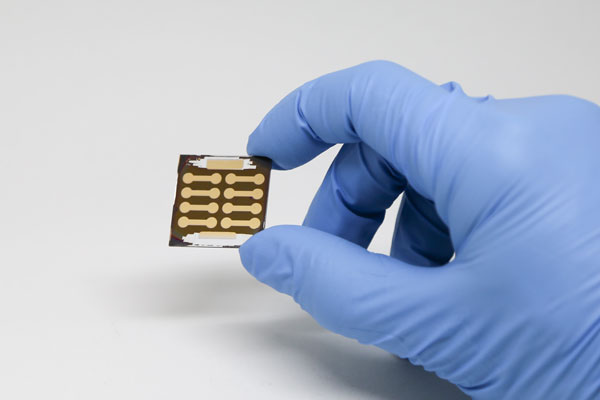
The new perovskite solar cells have achieved an efficiency of 20.1 per cent and can be manufactured at low temperatures, which reduces the cost and expands the number of possible applications. (Photo: Kevin Soobrian)

The new perovskite solar cells have achieved an efficiency of 20.1 per cent and can be manufactured at low temperatures, which reduces the cost and expands the number of possible applications. (Photo: Kevin Soobrian)

Research removes a key barrier to large-scale manufacture of low-cost, printable perovskite solar cells. A U of T Engineering innovation could make printing solar cells as easy and inexpensive as printing a newspaper. “Economies of scale have greatly reduced the cost of silicon manufacturing,” said Professor Ted Sargent, Canada Research Chair in Nanotechnology. “Perovskite solar cells can enable us to use techniques already established in the printing industry to produce solar cells at very low cost...

Read More