

A series of studies sheds light on the origins and characteristics of intermediate-mass black holes...
Read More


Until we recognize the essential role of biology, our attempts to truly unify the universe will remain a train to nowhere. ~Robert Lanza Read More

Good health is not something we can buy. However, it can be an extremely valuable savings account. ~Anne Wilson Schaef Read More

The only way forward, if we are going to improve the quality of the environment, is to get everybody involved. ~Richard Rogers Read More

To raise new questions, new possibilities, to regard old problems from a new angle, requires creative imagination and marks real advance in science. ~Albert Einstein Read More

Old Newtonian physics claimed that things have an objective reality separate from our perception of them. Quantum physics, and particularly Heisenberg's Uncertainty Principle, reveal that, as our perception of an object changes, the object itself literally changes. ~Marianne Williamson Read More

Astronomy compels the soul to look upwards and leads us from this world to another. ~ Read More
A series of studies sheds light on the origins and characteristics of intermediate-mass black holes...
Read More
June 2, 2025,
 Health/Medical, Biology/Biotechnology
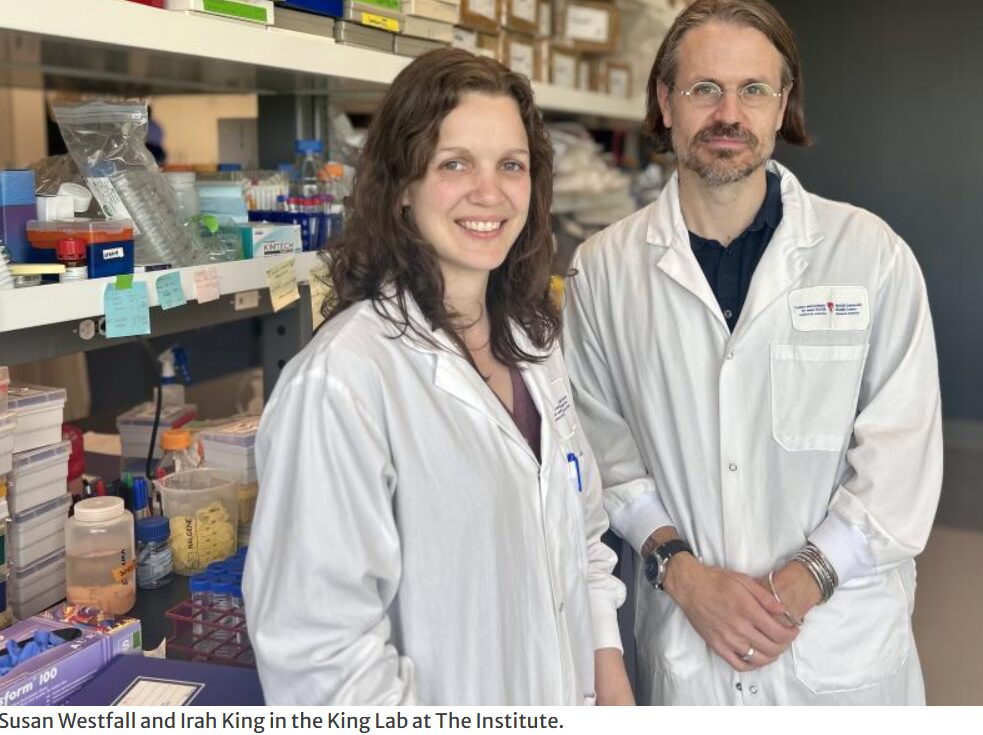
A team of scientists at the Research Institute of the McGill University Health Center (The Institute) has made a landmark discovery that sheds light on how the immune system protects the gut during infection. By studying intestinal worms—also known as helminths—the team, led by Professor Irah King, uncovered a previously unknown immune mechanism that preserves intestinal function in the presence of persistent infection.
Their finding, published in the journal Cell, could pave the way for new treatments for helminth infections, which affect over two billion people worldwide at some point in their lives, as well as for other intestinal diseases.
The results could also help revisit older therapeutic strategies that were previously dismissed due to an incomplete understanding of...
Read More
June 2, 2025,
Physics, Technology/Electronics
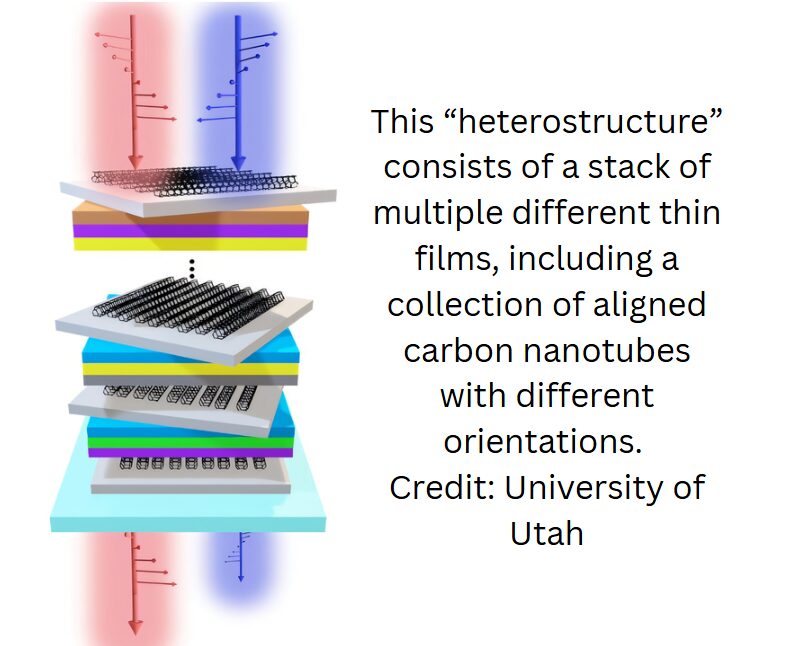
As fast as modern electronics have become, they could be much faster if their operations were based on light, rather than electricity. Fiber optic cables already transport information at the speed of light; to do computations on that information without translating it back to electric signals will require a host of new optical components.
Researchers at the John and Marcia Price College of Engineering have now developed such a device: one that can be adjusted on the fly to give light different degrees of circular polarization. Because information can be stored in this chiral property of light, the researchers’ device could serve as a multifunctional, reconfigurable component of an optical computing system.
Led by Weilu Gao, assistant professor in the Department of Electrical & C...
Read More
June 1, 2025,
Physics, Astronomy/Space

Scientists led by Hanns-Christoph Nägerl have observed anyons — quasiparticles that differ from the familiar fermions and bosons — in a one-dimensional quantum system for the first time. The results, published in Nature, may contribute to a better understanding of quantum matter and its potential applications.
Nature categorizes particles into two fundamental types: fermions and bosons. While matter-building particles such as quarks and electrons belong to the fermion family, bosons typically serve as force carriers — examples include photons, which mediate electromagnetic interactions, and gluons, which govern nuclear forces...
Read More
Recent Comments