Holographic 3D Printing has the potential to Revolutionize Multiple Industries

Holographic 3D printing has the potential to revolutionize multiple industries, says researchers
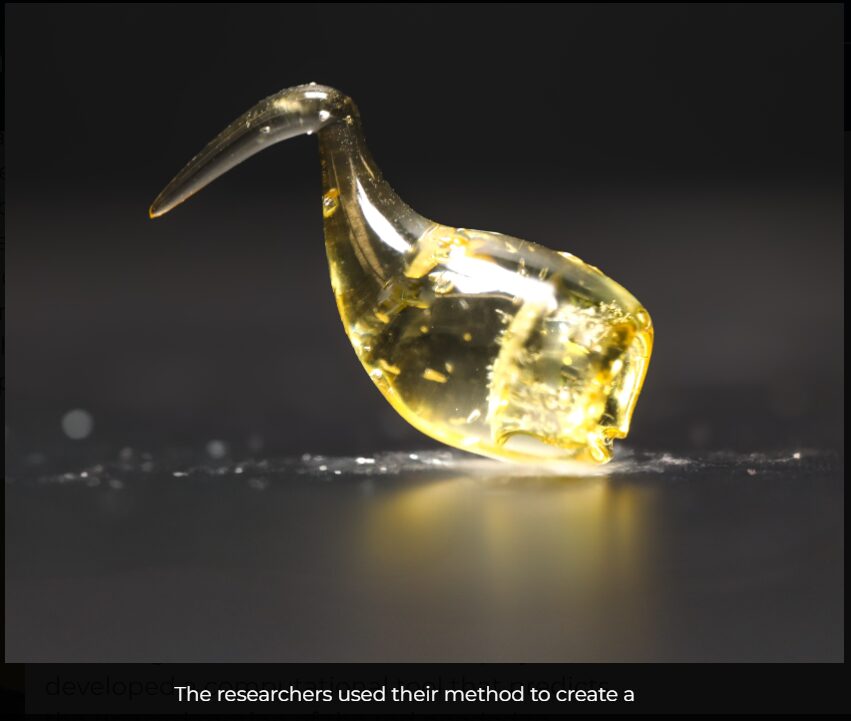
HDSP concept and printed objects. Credit: Nature Communications (2024). DOI: 10.1038/s41467-024-50923-8

A pioneering technique shows how sound can be used to create entire objects quickly and at once. Researchers at Concordia have developed a novel method of 3D printing that uses acoustic holograms. And they say it’s quicker than existing methods and capable of making more complex objects.

The process, called holographic direct sound printing (HDSP), is described in a recent article in the journal Nature Communications. It builds on a method introduced in 2022 that described how sonochemical reactions in microscopic cavitations regions — tiny bubbles — create extremely high temperatures and pressure for trillionths of a second to harden resin into complex patterns.

Now, by embe...

Read More

New Insights into how Mars became Uninhabitable

Artist concept image of an early wet Mars.
This is an artist’s concept of an early Mars with liquid water (blue areas) on its surface. Ancient regions on Mars bear signs of abundant water – such as features resembling valleys and deltas, and minerals that only form in the presence of liquid water. Scientists think that billions of years ago, the atmosphere of Mars was much denser and warm enough to form rivers, lakes, and perhaps even oceans of water. As the planet cooled and lost its global magnetic field, the solar wind and solar storms eroded away to space a significant amount of the planet’s atmosphere, turning Mars into the cold, arid desert we see today.
NASA/MAVEN/The Lunar and Planetary Institute

NASA’s Curiosity rover, currently exploring Gale crater on Mars, is providing new details about how the ancient Martian clim...

Read More

Scientists Discover a Secret to Regulating our Body Clock, Offering New Approach to End Jet Lag

A peptide (shown in mesh) with attached phosphate tags (red and orange spheres) blocks the active site of CK1δ. Tagging the tail end of CK1δ, a process known as auto-phosphorylation, makes the protein less active, and with that less able to fine-tune the body’s internal clocks. // Credit: Jon Philpott, Rajesh Narasimamurthy and David Virshup

Scientists from Duke-NUS Medical School and the University of California, Santa Cruz, have discovered the secret to regulating our internal clock. They identified that this regulator sits right at the tail end of Casein Kinase 1 delta (CK1δ), a protein which acts as a pacesetter for our internal biological clock or the natural 24-hour cycles that control sleep-wake patterns and other daily functions, known as circadian rhythm.

Published in ...

Read More

A Novel Method to Split Water to Create Hydrogen – a Clean Source of Fuel

Researchers have developed a novel method using facet-selective, ultrafine cocatalysts to efficiently split water to create hydrogen – a clean source of fuel. Scientists are urgently searching for clean fuel sources – such as hydrogen – to move towards carbon neutrality. A breakthrough for improving the efficiency of the photocatalytic reaction that splits water into hydrogen has been made by a team of researchers from Tohoku University, Tokyo University of Science and Mitsubishi Materials Corporation.

“Water-splitting photocatalysts can produce hydrogen (H2) from only sunlight and water,” explains Professor Yuichi Negishi, the lead researcher of this project (Tohoku University), “However, the process hasn’t been optimized sufficiently for practical applications...

Read More