Study Offers New Detail on how COVID-19 Affects the Lungs

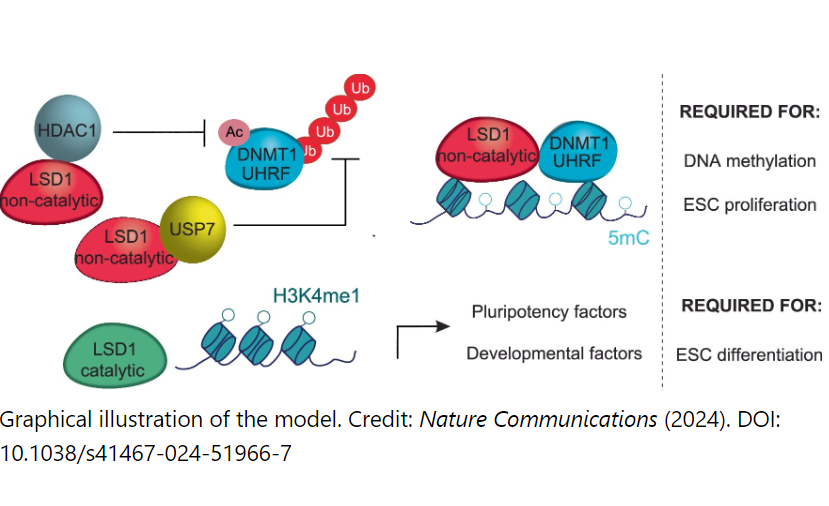
An illustration of ferroptosis in the lungs of a COVID-19 patient.
In some severe cases of COVID-19, the lungs undergo extreme damage, resulting in a range of life-threatening conditions like pneumonia, inflammation, and acute respiratory distress syndrome. The root cause of those wide-ranging reactions in the lungs has until now remained unclear.

New research shows that ferroptosis, a form of cell death, occurs in severe COVID-19 patient lungs. Stopping it improves outcomes. In some severe cases of COVID-19, the lungs undergo extreme damage, resulting in a range of life-threatening conditions like pneumonia, inflammation, and acute respiratory distress syndrome. The root cause of those wide-ranging reactions in the lungs has until now remained unclear.

A new study by researchers at Columbia and the Columbia University Irving Medical Center sheds l...

Read More

‘Fossilizing’ Cracks in Infrastructure creates Sealing that can even Survive Earthquakes

YoshidaSensei_2.png
Flow-path fractures in rock sealed by calcite, promoted by the researchers’ ‘concretion-forming resin’. (credit: Hidekazu Yoshida)

In a new study, a team of researchers used research on fossilizing techniques to create a new method for sealing cracks and fractures in rocks and bedrock using a ‘concretion-forming resin’. This innovative technique has applications in a wide range of industries, from tunnel construction to long-term underground storage of hazardous materials.

Various forms of underground activity, such as deep wells or the disposal of hazardous materials, require the long-term sealing of rocks. A team of researchers has developed an innovative method based on fossilization processes to seal cracks and fractures in rock using a “concretion-forming resin...

Read More

The Habitable Worlds Observatory could See Lunar and Solar ‘Exo-Eclipses’

Exo-moon
An artist’s conception of an exoplanet with a large orbiting exomoon. Credit: University of Columbia/Helena Valenzuela Widerström

A future space observatory could use exo-eclipses to tease out exomoon populations.

If you’re like us, you’re still coming down from the celestial euphoria that was last month’s total solar eclipse. The spectacle of the moon blocking out the sun has also provided astronomers with unique scientific opportunities in the past, from the discovery of helium to proof for general relativity. Now, eclipses in remote exoplanetary systems could aid in the hunt for elusive exomoons.

A recent study out of the University of Michigan in partnership with Johns Hopkins APL and the Department of Physics and the Kavli Institute for Astrophysics and Space Research at th...

Read More

New Device Helps Paraplegics Regain Partial Use of Hands

New device helps paraplegics regain partial use of hands
ARC-EX device. Credit: ONWARD Medical N.V.

More than 40 people suffering from paralysis from the neck down regained partial control of their arms and hands thanks to a relatively simple to use device, a large study said Monday.

The trial raised hopes that the non-invasive device could be help people with spinal injuries get back the all-important use of their hands.

The device, developed by Swiss medical technology firm Onward, delivers an electrical current through electrodes placed on the skin of paralyzed patients near where their spinal cord was damaged.

After two months of therapy, 43 of the 60 people participating in the trial regained strength and ability to use their arms and hands, according to the study in the journal Nature Medicine.

“I think it could be life-cha...

Read More