To raise new questions, new possibilities, to regard old problems from a new angle, requires creative imagination and marks real advance in science.
~Albert Einstein
Read More
Old Newtonian physics claimed that things have an objective reality separate from our perception of them. Quantum physics, and particularly Heisenberg's Uncertainty Principle, reveal that, as our perception of an object changes, the object itself literally changes.
~Marianne Williamson
Read More
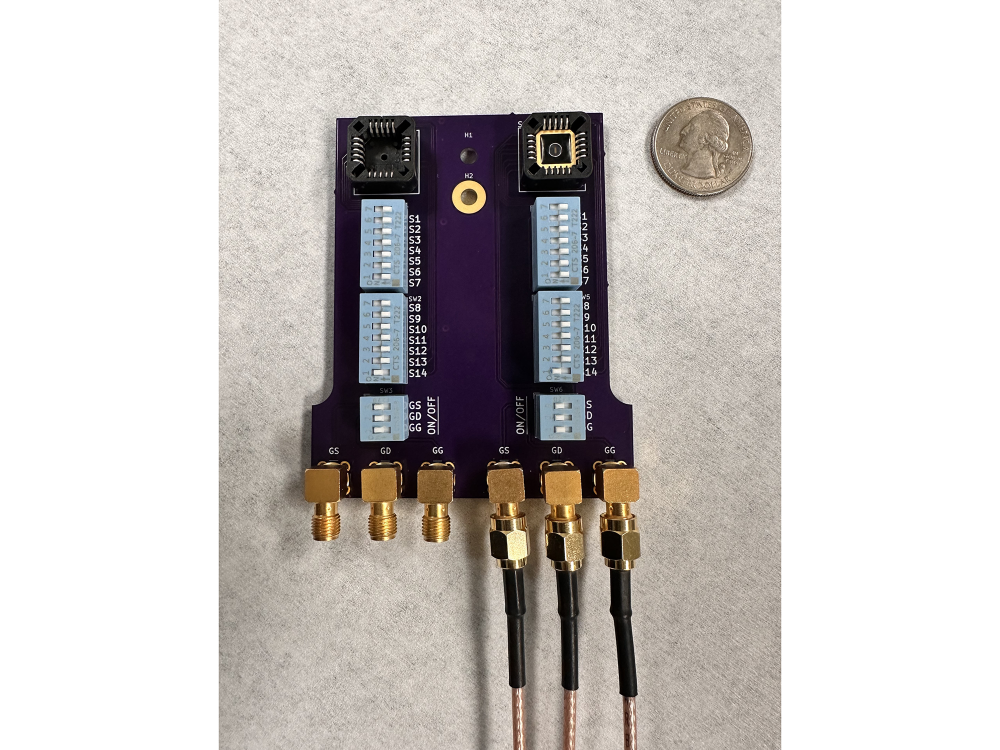
The electronic tongue comprises a graphene-based ion-sensitive field-effect transistor, or a conductive device that can detect chemical ions, linked to an artificial neural network, trained on various datasets. This is located in the top right of the device. Credit: Provided by the Das Lab. All Rights Reserved.
A recently developed electronic tongue is capable of identifying differences in similar liquids, such as milk with varying water content; diverse products, including soda types and coffee blends; signs of spoilage in fruit juices; and instances of food safety concerns...
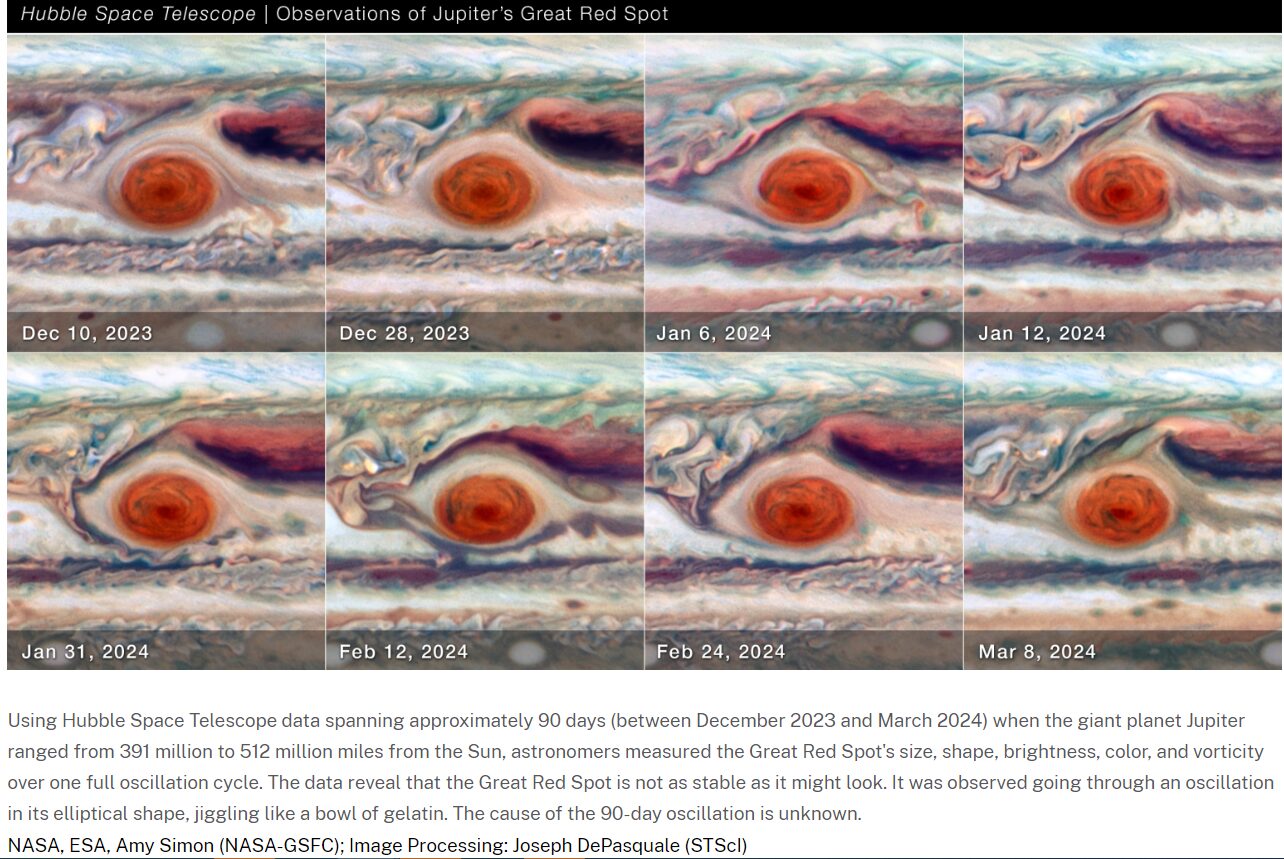
Astronomers have observed Jupiter’s legendary Great Red Spot (GRS), an anticyclone large enough to swallow Earth, for at least 150 years. But there are always new surprises — especially when NASA’s Hubble Space Telescope takes a close-up look at it.
Hubble’s new observations of the famous red storm, collected 90 days between December 2023 to March 2024, reveal that the GRS is not as stable as it might look. The recent data show the GRS jiggling like a bowl of gelatin. The combined Hubble images allowed astronomers to assemble a time-lapse movie of the squiggly behavior of the GRS.
“While we knew its motion varies slightly in its longitude, we didn’t expect to see the size oscillate...
“This is just the beginning,” says John Chaput, UC Irvine professor of pharmaceutical sciences. “We’re not just improving on existing drugs. We’re developing a whole new platform for creating therapies that aren’t possible with current technology.” Steve Zylius / UC Irvine
Discovery advances development of new therapeutic options for cancer and other diseases. A research team led by the University of California, Irvine has engineered an efficient new enzyme that can produce a synthetic genetic material called threose nucleic acid. The ability to synthesize artificial chains of TNA, which is inherently more stable than DNA, advances the discovery of potentially more powerful, precise therapeutic options to treat cancer and autoimmune, metabolic and infectious diseases.
A pioneering technique shows how sound can be used to create entire objects quickly and at once. Researchers at Concordia have developed a novel method of 3D printing that uses acoustic holograms. And they say it’s quicker than existing methods and capable of making more complex objects.
The process, called holographic direct sound printing (HDSP), is described in a recent article in the journal Nature Communications. It builds on a method introduced in 2022 that described how sonochemical reactions in microscopic cavitations regions — tiny bubbles — create extremely high temperatures and pressure for trillionths of a second to harden resin into complex patterns.













Recent Comments