Nanosurgical Tool could be Key to Cancer Breakthrough

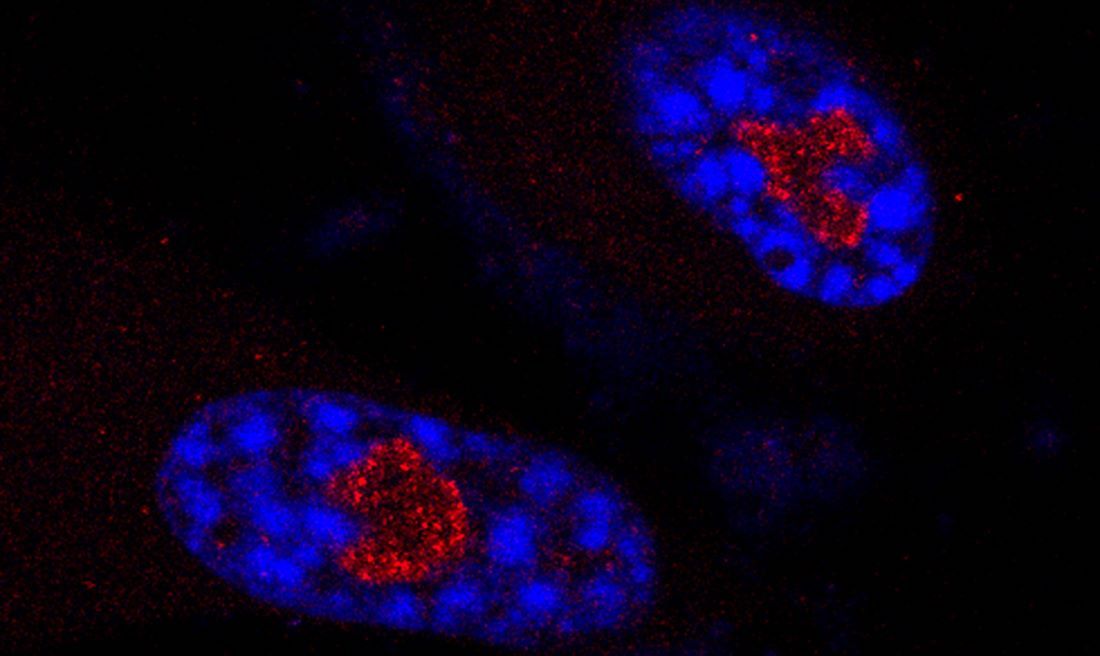
A groundbreaking nanosurgical tool — about 500 times thinner than a human hair — could be transformative for cancer research and give insights into treatment resistance that no other technology has been able to do, according to a new study.

The high-tech double-barrel nanopipette, developed by University of Leeds scientists, and applied to the global medical challenge of cancer, has — for the first time — enabled researchers to see how individual living cancer cells react to treatment and change over time — providing vital understanding that could help doctors develop more effective cancer medication.

The tool has two nanoscopic needles, meaning it can simultaneously inject and extract a sample from the same cell, expanding its potential uses...

Read More

‘Like a Lab in your Pocket’ — new test strips raise game in gene-based diagnostics

The new testing strips will make rapid antigen testing as powerful as PCR testing.
Photo: Getty Images

Biosensing technology developed by engineers has made it possible to create gene test strips that rival conventional lab-based tests in quality. When the pandemic started, people who felt unwell had to join long queues for lab-based PCR tests and then wait for two days to learn if they had the COVID-19 virus or not.

In addition to significant inconvenience, a major drawback was the substantial and expensive logistics needed for such laboratory tests, while testing delays increased the risk of disease spread.

Now a team of bio]medical engineers at UNSW Sydney have developed a new technology offering test strips which are just as accurate as the lab-based detection...

Read More

Discovery Tests Theory on Cooling of White Dwarf Stars

The stars of the Milky Way galaxy.
All sky view of the Milky Way taken by the European Space Agency’s Gaia space observatory. Credit: ESA/Gaia/DPAC, CC BY SA 3.0 IGO

Open any astronomy textbook to the section on white dwarf stars and you’ll likely learn that they are “dead stars” that continuously cool down over time. New research published in Nature is challenging this theory, with the University of Victoria (UVic) and its partners using data from the European Space Agency’s Gaia satellite to reveal why a population of white dwarf stars stopped cooling for more than eight billion years.

“We discovered the classical picture of all white dwarfs being dead stars is incomplete,” says Simon Blouin, co-principal investigator and Canadian Institute of Theoretical Astrophysics National Fellow at UVic.

“For these white dw...

Read More

World-first Trial of Regenerative Hearing Drug is Successfully Completed

World-first trial of regenerative hearing drug is successfully completed
Mean pure-tone air-conduction thresholds in the treated ear of all patients that completed 12 weeks follow-up (N = 42). Presented timepoints are baseline (black), 6 (blue) and 12 (red) weeks, error bars indicate standard deviations. Pure-tone thresholds are displayed in decibel hearing level (dB HL), frequency in kilohertz (kHz). Credit: Nature Communications (2024). DOI: 10.1038/s41467-024-45784-0

Researchers at UCL and UCLH have successfully completed the first trial of a therapy designed to restore hearing loss. The REGAIN trial, the results of which were published in Nature Communications, was the first study of a treatment aimed at restoring lost hearing, focusing on a drug with the technical name gamma-secretase inhibitor LY3056480.

The researchers found that while the t...

Read More