To raise new questions, new possibilities, to regard old problems from a new angle, requires creative imagination and marks real advance in science.
~Albert Einstein
Read More
Old Newtonian physics claimed that things have an objective reality separate from our perception of them. Quantum physics, and particularly Heisenberg's Uncertainty Principle, reveal that, as our perception of an object changes, the object itself literally changes.
~Marianne Williamson
Read More
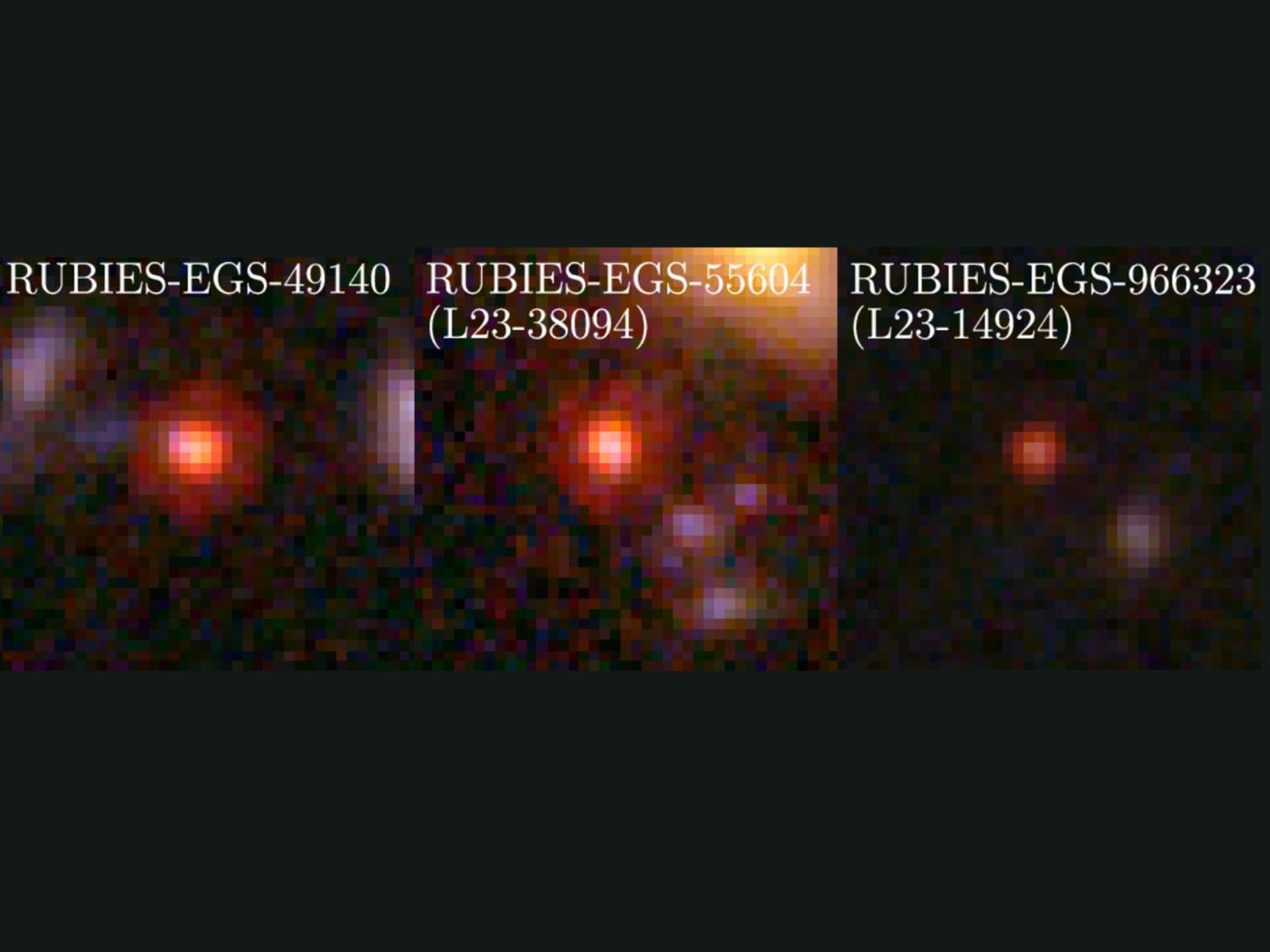
Researchers investigated three mysterious objects in the early universe. Shown here are their color images, composited from three NIRCam filter bands onboard the James Webb Space Telescope. They are remarkably compact at red wavelengths (earning them the term “little red dots”) with some evidence for spatial structure at blue wavelengths. Credit: Provided by researchers / Penn State. All Rights Reserved.
A recent discovery by NASA’s James Webb Space Telescope (JWST) confirmed that luminous, very red objects previously detected in the early universe upend conventional thinking about the origins and evolution of galaxies and their supermassive black holes.
An international team, led by Penn State researchers, using the NIRSpec instrument aboard JWST as part of the RUBIES survey...
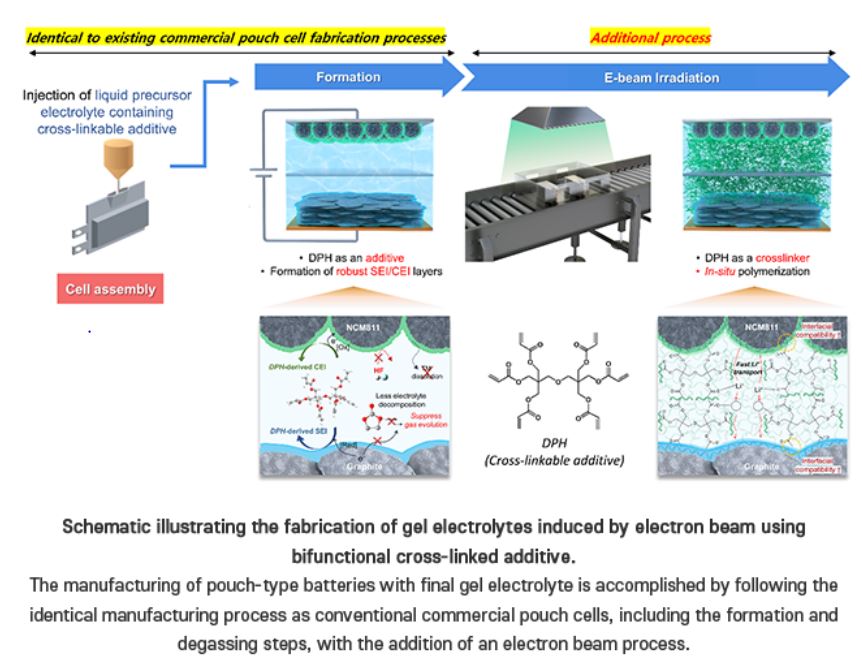
Team develops a commercially viable and safe gel electrolyte for lithium batteries. Professor Soojin Park, Seoha Nam, a PhD candidate, and Dr. Hye Bin Son from the Department of Chemistry at Pohang University of Science and Technology (POSTECH) have achieved a breakthrough in creating a gel electrolyte-based battery that is both stable and commercially viable. Their research was recently published in the international journal Small.
Lithium-ion batteries are extensively utilized in portable electronics and energy storage including electric vehicles. However, the liquid electrolytes used in these batteries pose a significant risk of fire and explosion, prompting ongoing research efforts to find safer alternatives...
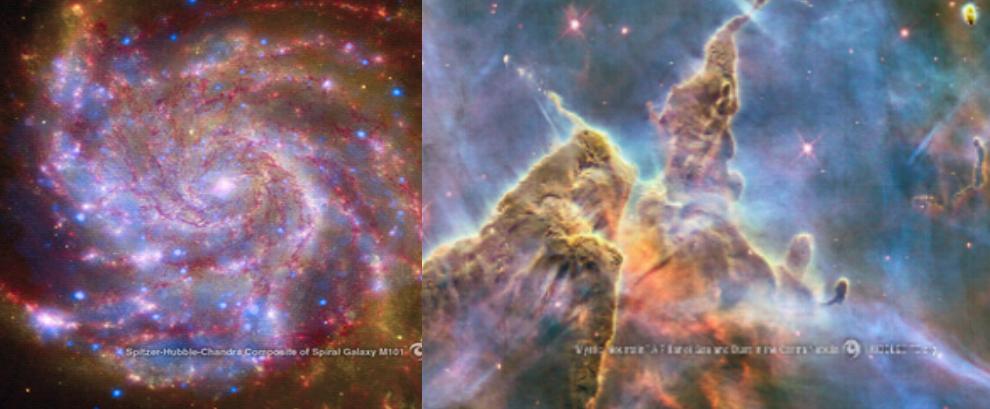
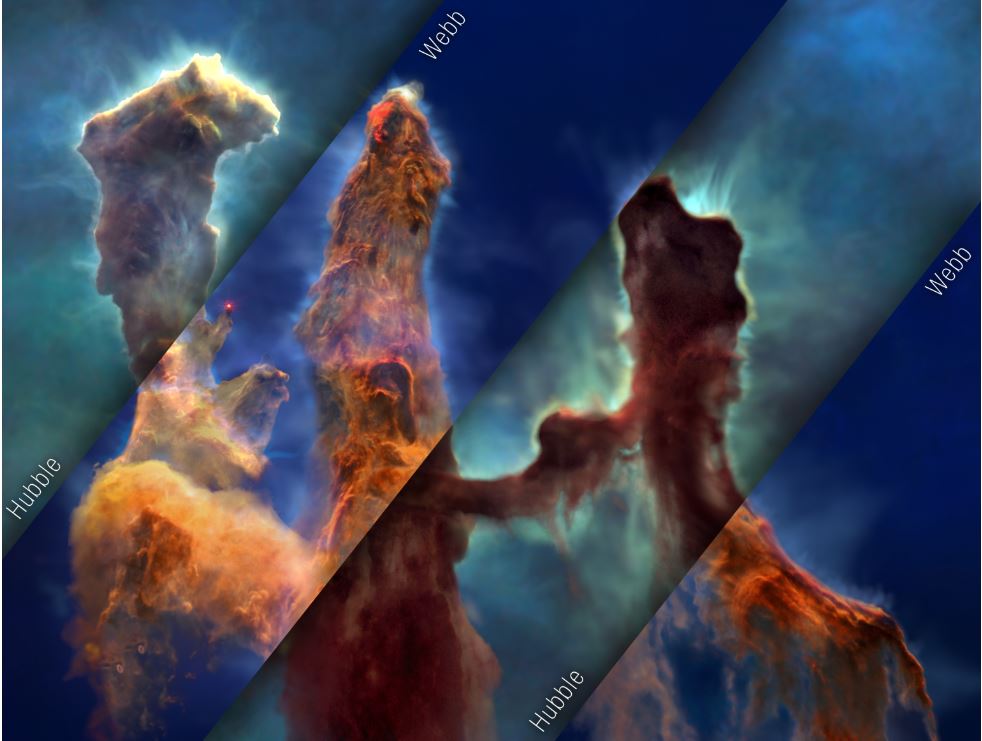
A mosaic of visible-light (Hubble) and infrared-light (Webb) views of the same frame from the Pillars of Creation visualization. The visualization sequence fades back and forth between these two models as the camera flies past and amongst the pillars. These contrasting views illustrate how observations from the two telescopes complement each other. Greg Bacon, Ralf Crawford, Joseph DePasquale, Leah Hustak, Christian Nieves, Joseph Olmsted, Alyssa Pagan, and Frank Summers (STScI), NASA’s Universe of Learning
Made famous in 1995 by NASA’s Hubble Space Telescope, the Pillars of Creation in the heart of the Eagle Nebula have captured imaginations worldwide with their arresting, ethereal beauty.
Now, NASA has released a new 3D visualization of these towering celestial structures using dat...
A study of 17 commonly used synthetic ‘forever chemicals’ has shown that these toxic substances can readily be absorbed through human skin.
New research, published today in Environment International proves for the first time that a wide range of PFAS (perfluoroalkyl substances) — chemicals which do not break down in nature – can permeate the skin barrier and reach the body’s bloodstream.
PFAS are used widely in industries and consumer products from school uniforms to personal care products because of their water and stain repellent properties. While some substances have been banned by government regulation, others are still widely used and their toxic effects have not yet been fully investigated.
PFAS are already known to enter the body through other routes, for example being...









Recent Comments