New Discoveries about Jupiter’s Magnetosphere

New discoveries about Jupiter could lead to a better understanding of Earth’s own space environment and influence a long-running scientific debate about the solar system’s largest planet.
“By exploring a larger space such as Jupiter, we can better understand the fundamental physics governing Earth’s magnetosphere and thereby improve our space weather forecasting,” said Peter Delamere, a professor at the UAF Geophysical Institute and the UAF College of Natural Science and Mathematics.

“We are one big space weather event from losing communication satellites, our power grid assets, or both,” he said.

Space weather refers to disturbances in the Earth’s magnetosphere caused by interactions between the solar wind and the Earth’s magnetic field...

Read More

A Common Type of Fiber may Trigger Bowel Inflammation

Micrograph showing inflammation of the large bowel in a case of inflammatory bowel disease. Colonic biopsy. Credit: Wikipedia/CC BY-SA 3.0

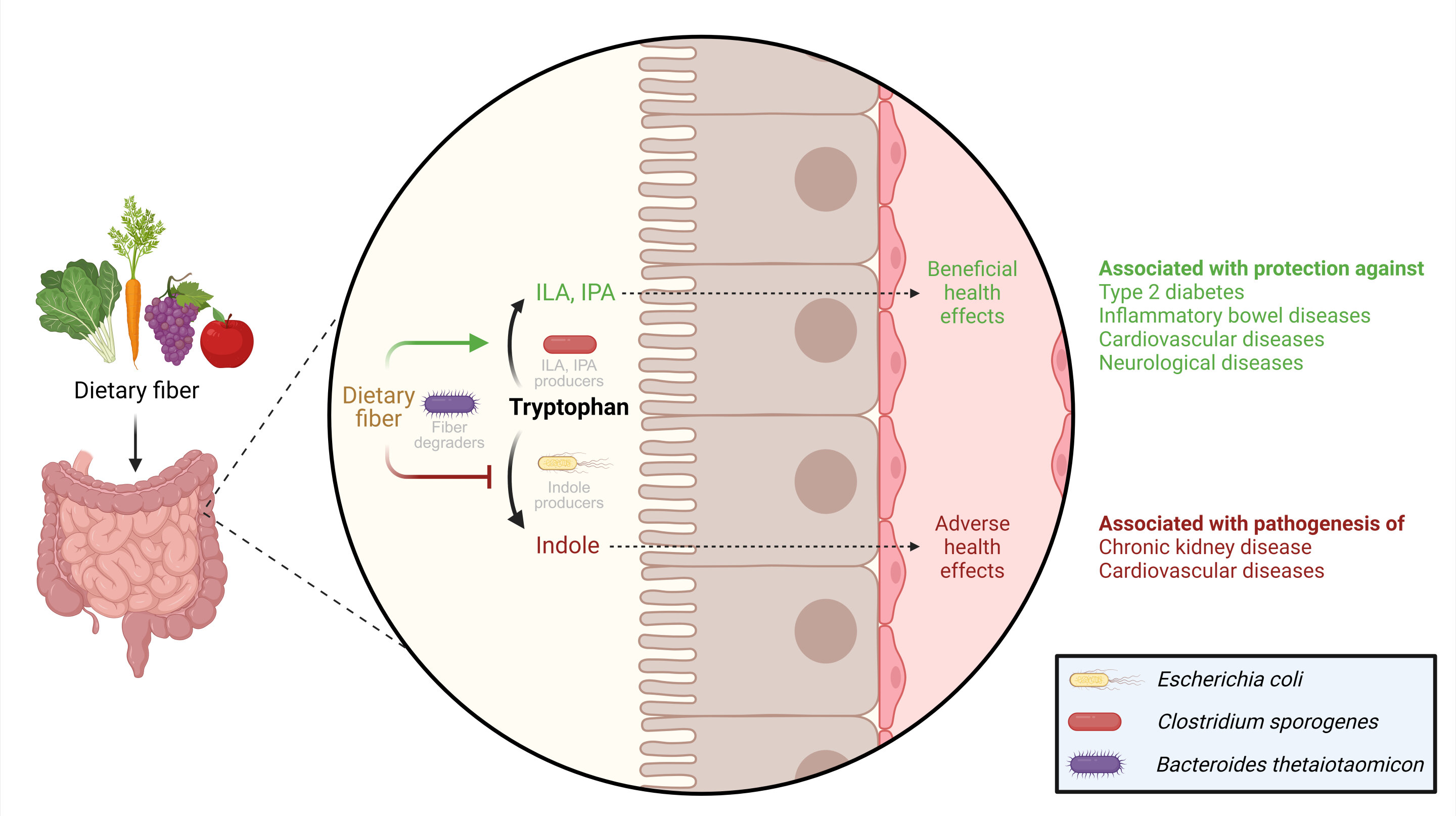
Inulin, a type of fiber found in certain plant-based foods and fiber supplements, causes inflammation in the gut and exacerbates inflammatory bowel disease in a preclinical model, according to a new study by Weill Cornell Medicine investigators. The surprising findings could pave the way for therapeutic diets that may help ease symptoms and promote gut health.

The study, published March 20 in the Journal of Experimental Medicine, shows that inulin, which is found in foods such as garlic, leeks and sunchoke, as well as commonly used fiber supplements and foods with added fiber, stimulates microbes in the gut to release bile acids that increase the...

Read More

First Experimental Proof for Brain-like Computer with Water and Salt

First experimental proof for brain-like computer with water and salt
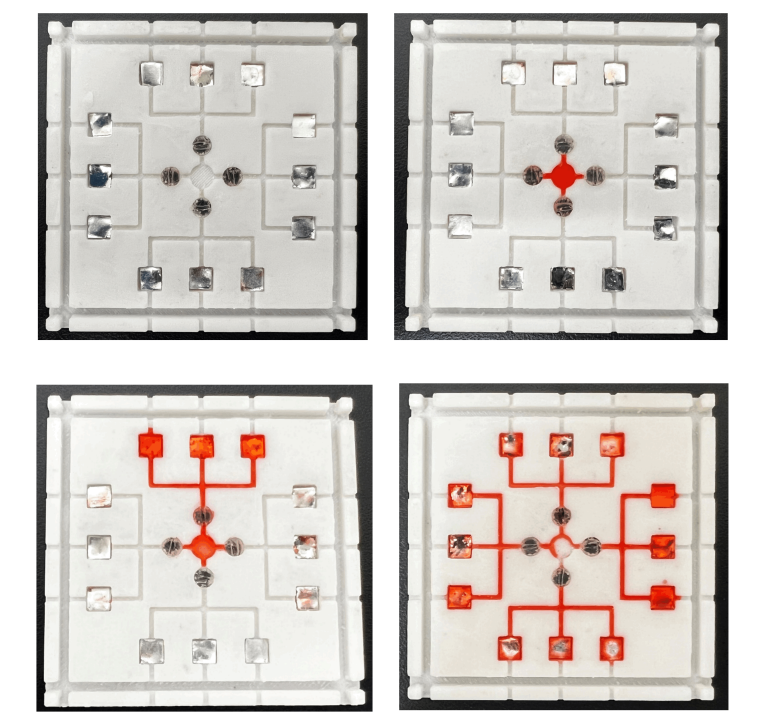
Below shows a graphical representation of the synapse. The synapse consists of colloidal spheres with nano-channels between them. Credit: Utrecht University

Theoretical physicists at Utrecht University, together with experimental physicists at Sogang University in South Korea, have succeeded in building an artificial synapse. This synapse works with water and salt and provides the first evidence that a system using the same medium as our brains can process complex information.

The results appear in the journal Proceedings of the National Academy of Sciences.

In the pursuit of enhancing the energy efficiency of conventional computers, scientists have long turned to the human brain for inspiration. They aim to emulate its extraordinary capacity in various ways.

These efforts hav...

Read More

Hungry, Hungry White Dwarfs: Solving the Puzzle of Stellar Metal Pollution

Planetesimal orbits around a white dwarf. Initially, every planetesimal has a circular, prograde orbit. The kick forms an eccentric debris disk which with prograde (blue) and retrograde orbits (orange).
Image Credit
Steven Burrows/Madigan group

Dead stars known as white dwarfs, have a mass like the sun while being similar in size to Earth. They are common in our galaxy, as 97% of stars are white dwarfs. As stars reach the end of their lives, their cores collapse into the dense ball of a white dwarf, making our galaxy seem like an ethereal graveyard.

Despite their prevalence, the chemical makeup of these stellar remnants has been a conundrum for astronomers for years...

Read More