
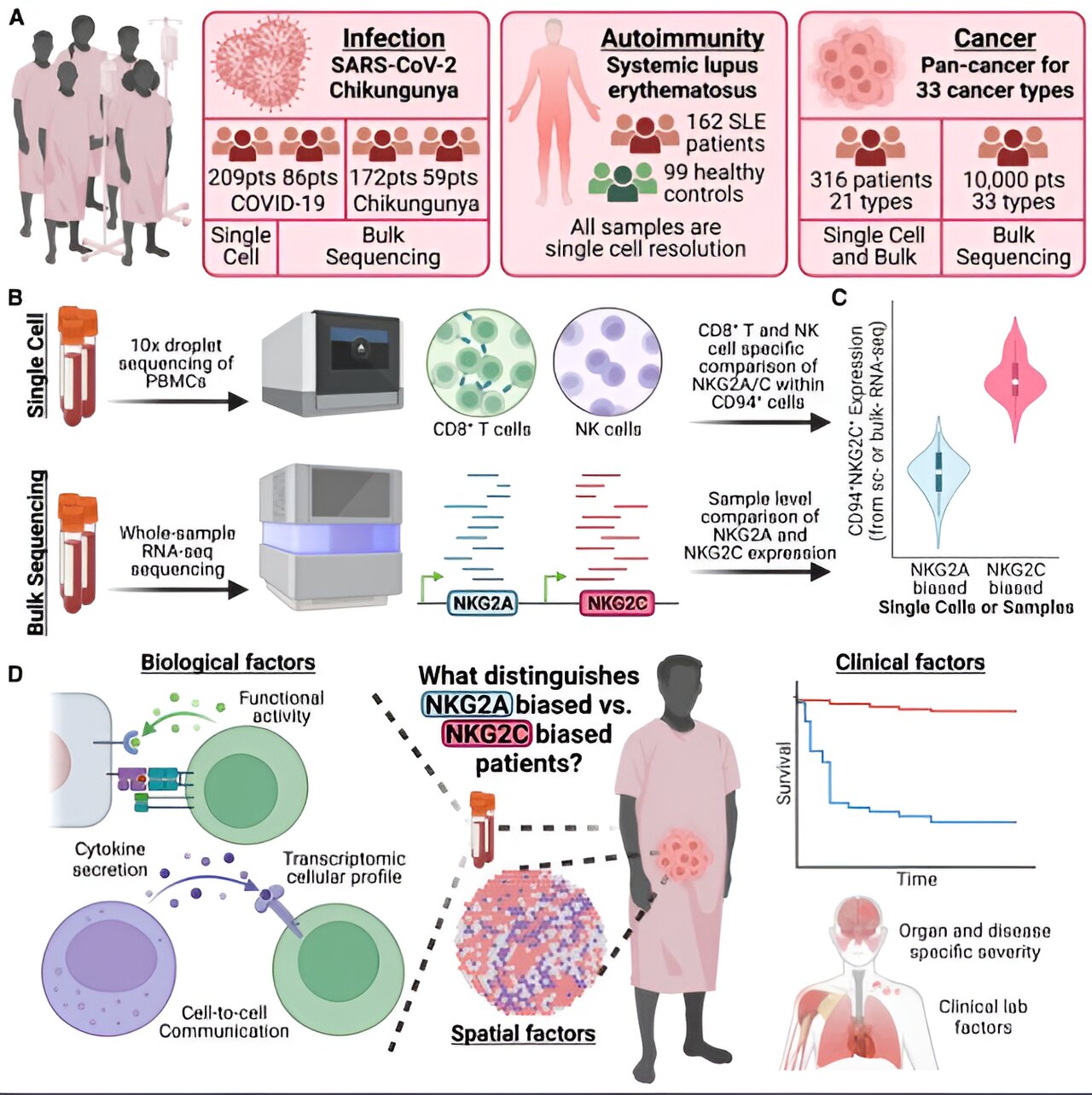
Combined, infection, autoimmunity and cancer account for 4 out of every 10 deaths worldwide, and represent major global health challenges...
Read More


Until we recognize the essential role of biology, our attempts to truly unify the universe will remain a train to nowhere. ~Robert Lanza Read More

Good health is not something we can buy. However, it can be an extremely valuable savings account. ~Anne Wilson Schaef Read More

The only way forward, if we are going to improve the quality of the environment, is to get everybody involved. ~Richard Rogers Read More

To raise new questions, new possibilities, to regard old problems from a new angle, requires creative imagination and marks real advance in science. ~Albert Einstein Read More

Old Newtonian physics claimed that things have an objective reality separate from our perception of them. Quantum physics, and particularly Heisenberg's Uncertainty Principle, reveal that, as our perception of an object changes, the object itself literally changes. ~Marianne Williamson Read More

Astronomy compels the soul to look upwards and leads us from this world to another. ~ Read More
March 5, 2024,
 Health/Medical, Biology/Biotechnology
Combined, infection, autoimmunity and cancer account for 4 out of every 10 deaths worldwide, and represent major global health challenges...
Read More
As silicon-based computer chips approach their physical limitations in the quest for faster and smaller designs, the search for alternative materials that remain functional at atomic scales is one of science’s biggest challenges. In a groundbreaking development, researchers have engineered a protective film that shields quantum semiconductor layers just one atom thick from environmental influences without compromising their revolutionary quantum properties...
Read More
Up to a certain point, very luminous stars can have a positive effect on the formation of planets, but from that point on the radiation they emit can cause the material in protoplanetary discs to disperse.
To find out how planetary systems such as our Solar System form, an international research team including scientists from the University of Cologne studied a stellar nursery, the Orion Nebula, using the James Webb Space Telescope (JWST). By observing a protoplanetary disc named d203-506, they discovered the key role massive stars play in the formation of planetary systems that are less than a million years old...
Read More
March 5, 2024,
Health/Medical, Biology/Biotechnology
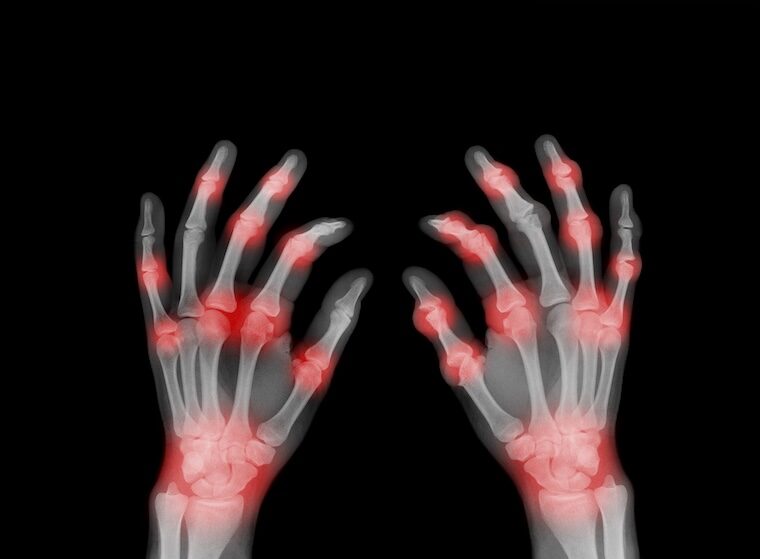
The new findings could lead to better treatments for rheumatoid arthritis, lupus and other inflammatory diseases – and may even help us slow aging.
Researchers have discovered how “leaky” mitochondria can drive harmful inflammation responsible for diseases such as lupus and rheumatoid arthritis. Scientists may be able to leverage the findings to develop better treatments for those diseases, improve our ability to fight off viruses and even slow aging.
The new discovery reveals how genetic material can escape from our cellular batteries, known as mitochondria, and prompt the body to launch a damaging immune response...
Read More
Recent Comments