Bioengineered E. coli Generates Electricity from Wastewater

Bacteria generate electricity from wastewater
Flasks containing the electricity-producing E. coli. Credit: Jamani Caillet (EPFL)

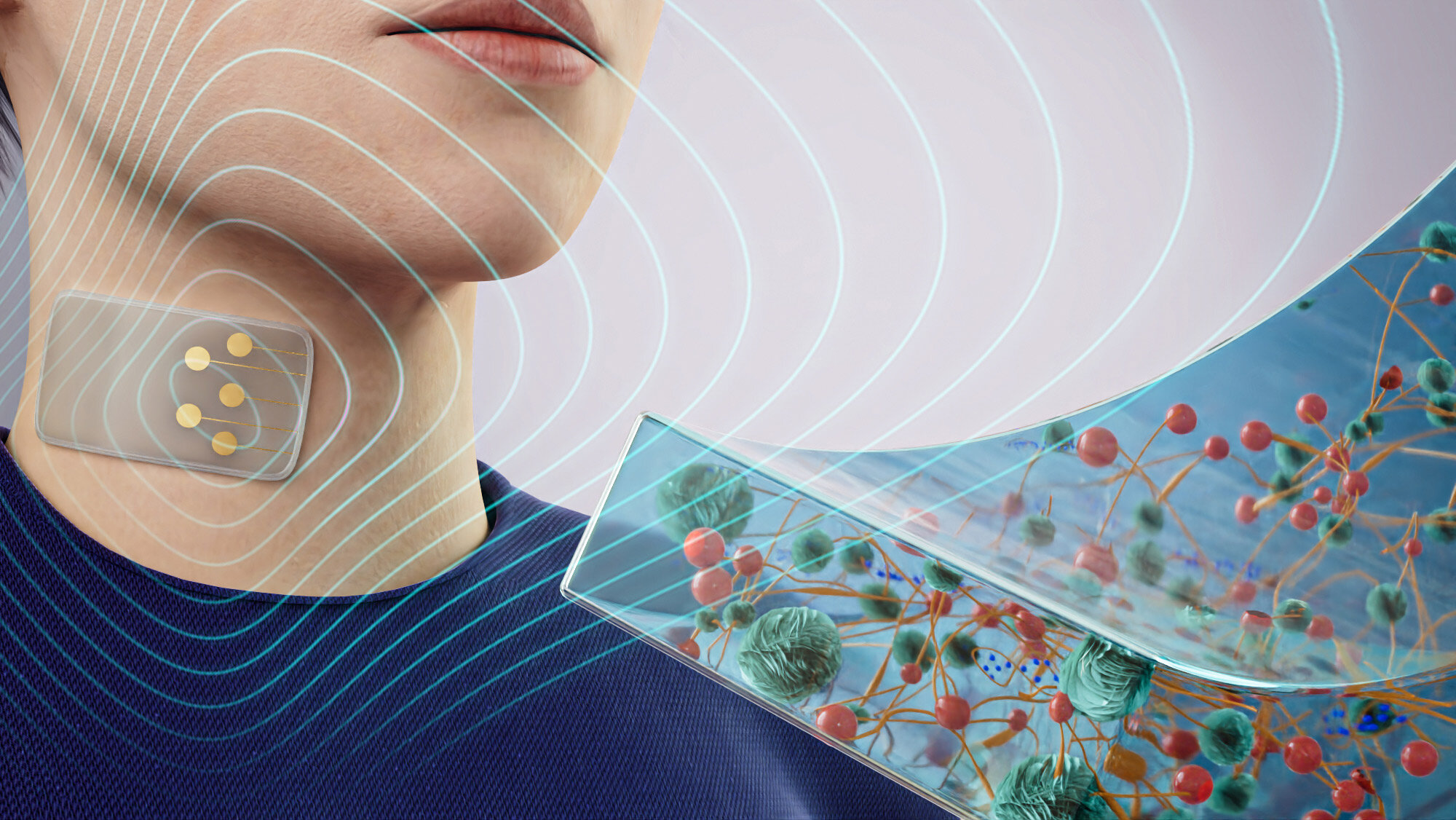
In a breakthrough for the field of bioelectronics, researchers at EPFL have enhanced the ability of E. coli bacteria to generate electricity. The innovative approach offers a sustainable solution for organic waste processing while outperforming previous state-of-the-art technologies, opening new horizons for versatile microbial electricity production.

“We engineered E. coli bacteria, the most widely studied microbe, to generate electricity,” says Professor Ardemis Boghossian at EPFL. “Though there are exotic microbes that naturally produce electricity, they can only do so in the presence of specific chemicals. E...

Read More

Billion-light-year-wide ‘Bubble of Galaxies’ Discovered

An artist's representation of the 'bubble of galaxies' Ho'oleilana, which spans a billion light years
An artist’s representation of the ‘bubble of galaxies’ Ho’oleilana, which spans a billion light years.

Astronomers have discovered the first “bubble of galaxies,” an almost unimaginably huge cosmic structure thought to be a fossilized remnant from just after the Big Bang sitting in our galactic backyard.

The bubble spans a billion light years, making it 10,000 times wider than the Milky Way galaxy.

Yet this giant bubble, which cannot be seen by the naked eye, is a relatively close 820 million light years away from our home galaxy, in what astronomers call the nearby universe.

The bubble can be thought of as “a spherical shell with a heart,” Daniel Pomarede, an astrophysicist at France’s Atomic Energy Commission, told AFP.

Inside that heart is the Bootes supercluster of gala...

Read More

Study hints at the Existence of the Closest Black Holes to Earth in the Hyades Star Cluster

Image of the Hyades star cluster. Image: Jose Mtanous

Black holes are one of the most mysterious and fascinating phenomena in the Universe. A paper published in the journal Monthly Notices of the Royal Astronomical Society hints at the existence of several black holes in the Hyades cluster – the closest open cluster to our solar system – which would make them the closest black holes to Earth ever detected...

Read More

Machine Learning Contributes to Better Quantum Error Correction

ai-generated image
An AI-generated image illustrating the work

Researchers from the RIKEN Center for Quantum Computing have used machine learning to perform error correction for quantum computers—a crucial step for making these devices practical—using an autonomous correction system that despite being approximate, can efficiently determine how best to make the necessary corrections.

In contrast to classical computers, which operate on bits that can only take the basic values 0 and 1, quantum computers operate on “qubits”, which can assume any superposition of the computational basis states...

Read More