A ‘Jupiter’ Hotter than the Sun

An aerial view of the European Southern Observatory’s Very Large Telescope in Paranal, Chile (Photo: J. L. Dauvergne & G. Hüdepohl, atacamaphoto.com/ESO)

The search for exoplanets—planets that orbit stars located beyond the borders of our solar system—is a hot topic in astrophysics. Of the various types of exoplanets, one is hot in the literal sense: hot Jupiters, a class of exoplanets that are physically similar to the gas giant planet Jupiter from our own neighborhood.

Unlike “our” Jupiter, hot Jupiters orbit very close to their stars, complete a full orbit in just a few days or even hours, and—as their name suggests—have extremely high surface temperatures. They hold great fascination for the astrophysics community...

Read More

Dopamine control: Turning off One Ion Channel made Mice Smarter. Turning Off another made them more Motivated.

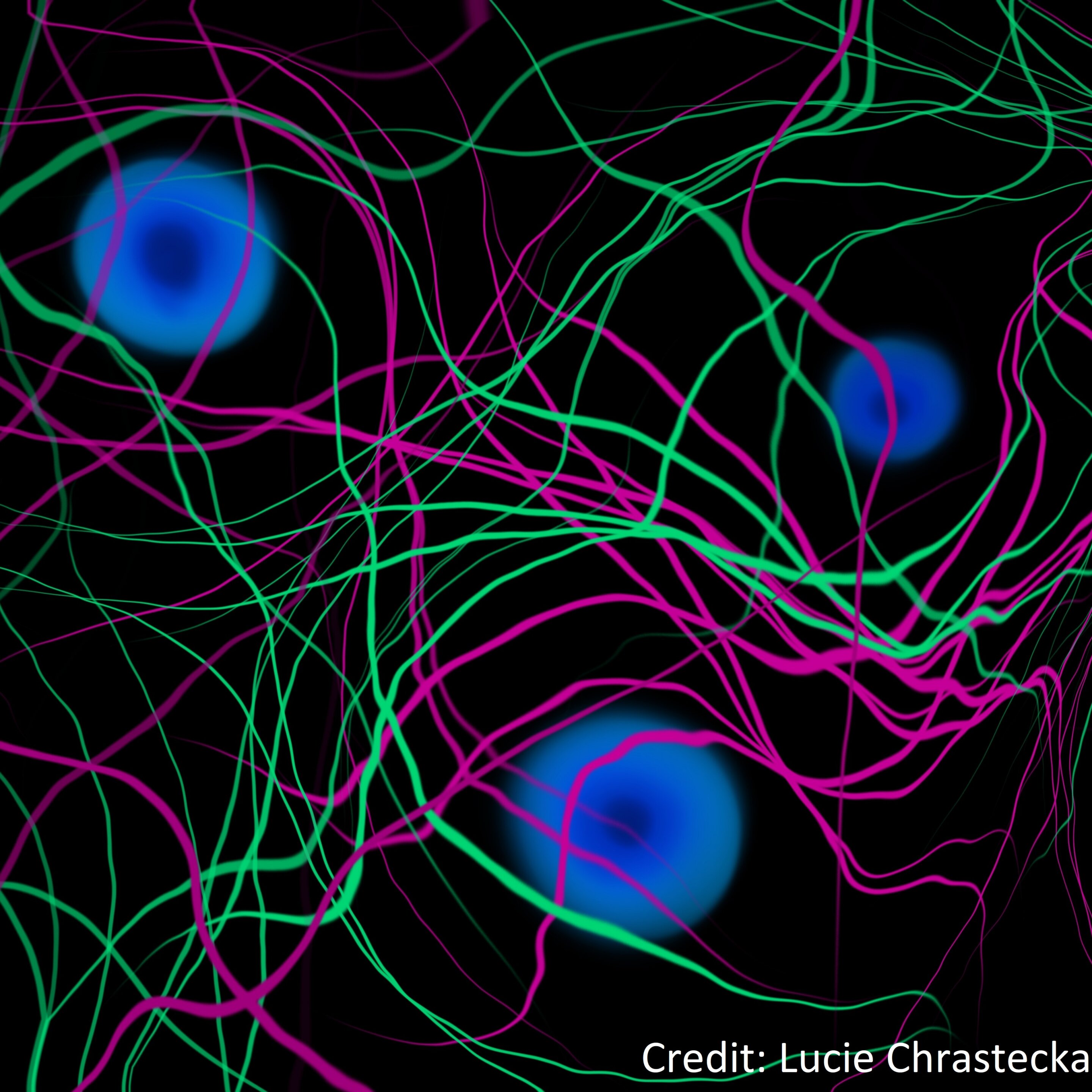
A graphic illustration of two ion channels in the brain that control dopamine release.

A mosaic expression of two ion channels in dopamine neurons of a mouse’s brain. Researchers have found a way to control dopamine release. Larry Zweifel

Researchers have identified two ion channel switches that regulate the release of dopamine in the brain, a first step that might one day lead to therapeutics for a wide range of diseases and disorders that currently have few solutions.

The switches help regulate learning and motivational state in mice. Humans also have hundreds of these channels, which govern many chemical and hormonal processes that influence behavior and mood. The University of Washington School of Medicine research team hopes to identify drugs to target these channels. Those drug candidates could then be tested in clinical trials.

“The ability to precisely mani...

Read More

Arrays of Quantum Rods could Enhance TVs or Virtual Reality devices

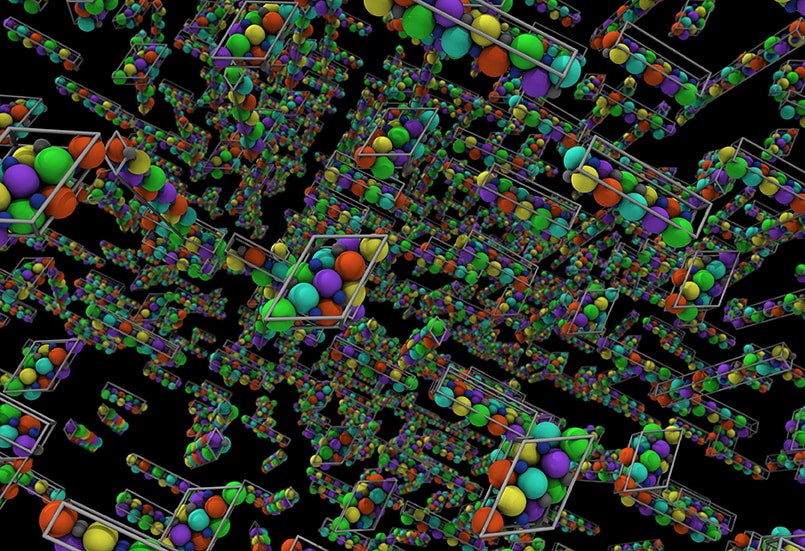
A blue squiggle-like DNA graphic points down in the center emitting light downwards. Two red DNA graphics are pointed up beside it. A structured array composed of triangular rods lie flat on dark gray surface, while the top rows of the arrays contain pieces resembling red pills.

MIT engineers developed a new way to create these arrays, by scaffolding quantum rods onto patterned DNA. Using scaffolds of folded DNA, engineers assembled arrays of quantum rods with desirable photonic properties that could enable them to be used as highly efficient micro-LEDs for televisions or virtual reality devices.

Flat screen TVs that incorporate quantum dots are now commercially available, but it has been more difficult to create arrays of their elongated cousins, quantum rods, for commercial devices. Quantum rods can control both the polarization and color of light, to generate 3D images for virtual reality devices.

Using scaffolds made of folded DNA, MIT engineers have come up with a new way to precisely assemble arrays of quantum rods...

Read More

Hundred-Year Storms? That’s how long they last on Saturn

closeup of beige planet with stormy swirls at top and shadow of rings at middle
A huge storm dominates the rather featureless surface of Saturn in an image taken by the Cassini spacecraft on Feb. 25, 2011, about 12 weeks after the powerful storm was first detected in the planet’s northern hemisphere. The megastorm is seen overtaking itself as it encircles the entire planet. Astronomers have found deep in the atmosphere the aftereffects of megastorms that occurred hundreds of years ago. The dark stripes are the shadows of Saturn’s rings.
NASA/JPL/Space Science Institute

Megastorms leave marks on Saturn’s atmosphere for centuries. They regularly appear on Saturn, marring the relatively bland surface before disappearing. But radio observations show that the storms have long-lasting effects deeper in the atmosphere, in particular in the distribution of ammonia...

Read More