Planting Ideas in a Computer’s Head: Researchers find New Attack on AMD Computer Chips

Planting ideas in a computer's head
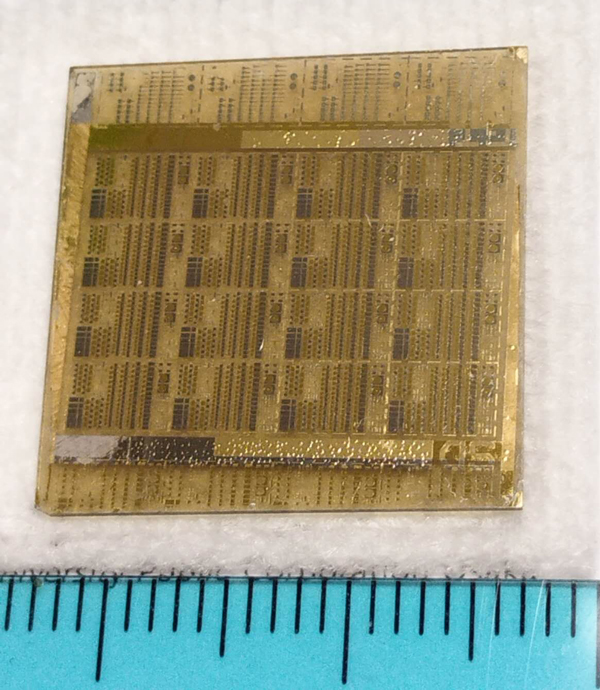
The hardware used by the ETH researchers with one of the computer chips that are susceptible to the Inception attack. Credit: Kaveh Razavi / ETH Zurich

Everyone has, at one time or another, experienced how dreams can influence our moods and actions. However, putting an idea in somebody else’s head while they are dreaming in order to make them do something specific once they wake up is still the stuff of science fiction. In the 2010 movie “Inception,” Leonardo di Caprio’s character tries to get the heir of a wealthy businessman to break up his father’s empire. To do so, he shares a dream with the heir, in which through clever manipulation, the heir’s convictions about his father are subtly altered, leading him to abandon his late father’s business.

While sharing dreams and planting s...

Read More

New Research Points to Possible Seasonal Climate Patterns on Early Mars

Research suggests seasonal climate patterns on early mars
Patterns in mud cracks show that Mars may have had cyclical moisture patterns. Left: the terrain in the Gale Crater where Curiosity is currently exploring. Right: mud cracks on Earth, where wet-dry cycling has occurred, creating Y-shaped patterns. Credit: Nature (2023). DOI: 10.1038/s41586-023-06220-3

Scientists aren’t entirely sure how life began on Earth, but one prevailing theory posits that persistent cycles of wet and dry conditions on land helped assemble the complex chemical building blocks necessary for microbial life. This is why a patchwork of well-preserved ancient mud cracks found by NASA’s Curiosity Mars rover is so exciting to the mission’s team.

A new paper in Nature details how the distinctive hexagonal pattern of these mud cracks offers the first evidence of wet-d...

Read More

Quantum Material Exhibits ‘Non-Local’ Behavior that Mimics Brain Function

Illustration of brain with color energy waves traveling through it.
Creating brain-like computers with minimal energy requirements, known as neuromorphic computing, would revolutionize nearly every aspect of modern life. (cr: iStock)

We often believe computers are more efficient than humans. After all, computers can complete a complex math equation in a moment and can also recall the name of that one actor we keep forgetting. However, human brains can process complicated layers of information quickly, accurately, and with almost no energy input: recognizing a face after only seeing it once or instantly knowing the difference between a mountain and the ocean. These simple human tasks require enormous processing and energy input from computers, and even then, with varying degrees of accuracy.

Creating brain-like computers with minimal energy requireme...

Read More

Webb Reveals Colors of Earendel, most Distant Star ever Detected

A black background is scattered with hundreds of small galaxies of different shapes, ranging in color from white to yellow to red. Just a bit above the center, there is a bright source of light, a star, with 8 bright diffraction spikes extending out.
This image from NASA’s James Webb Space Telescope of a massive galaxy cluster called WHL0137-08 contains the most strongly magnified galaxy known in the universe’s first billion years: the Sunrise Arc, and within that galaxy, the most distant star ever detected. In this image, the Sunrise Arc appears as a red streak just below the diffraction spike at the 5 o’clock position.
Credits: Image: NASA, ESA, CSA, D. Coe (STScI/AURA for ESA; Johns Hopkins University), B. Welch (NASA’s Goddard Space Flight Center; University of Maryland, College Park). Image processing: Z. Levay.

NASA’s James Webb Space Telescope has followed up on observations by the Hubble Space Telescope of the farthest star ever detected in the very distant universe, within the first billion years after the big bang...

Read More