To raise new questions, new possibilities, to regard old problems from a new angle, requires creative imagination and marks real advance in science.
~Albert Einstein
Read More
Old Newtonian physics claimed that things have an objective reality separate from our perception of them. Quantum physics, and particularly Heisenberg's Uncertainty Principle, reveal that, as our perception of an object changes, the object itself literally changes.
~Marianne Williamson
Read More
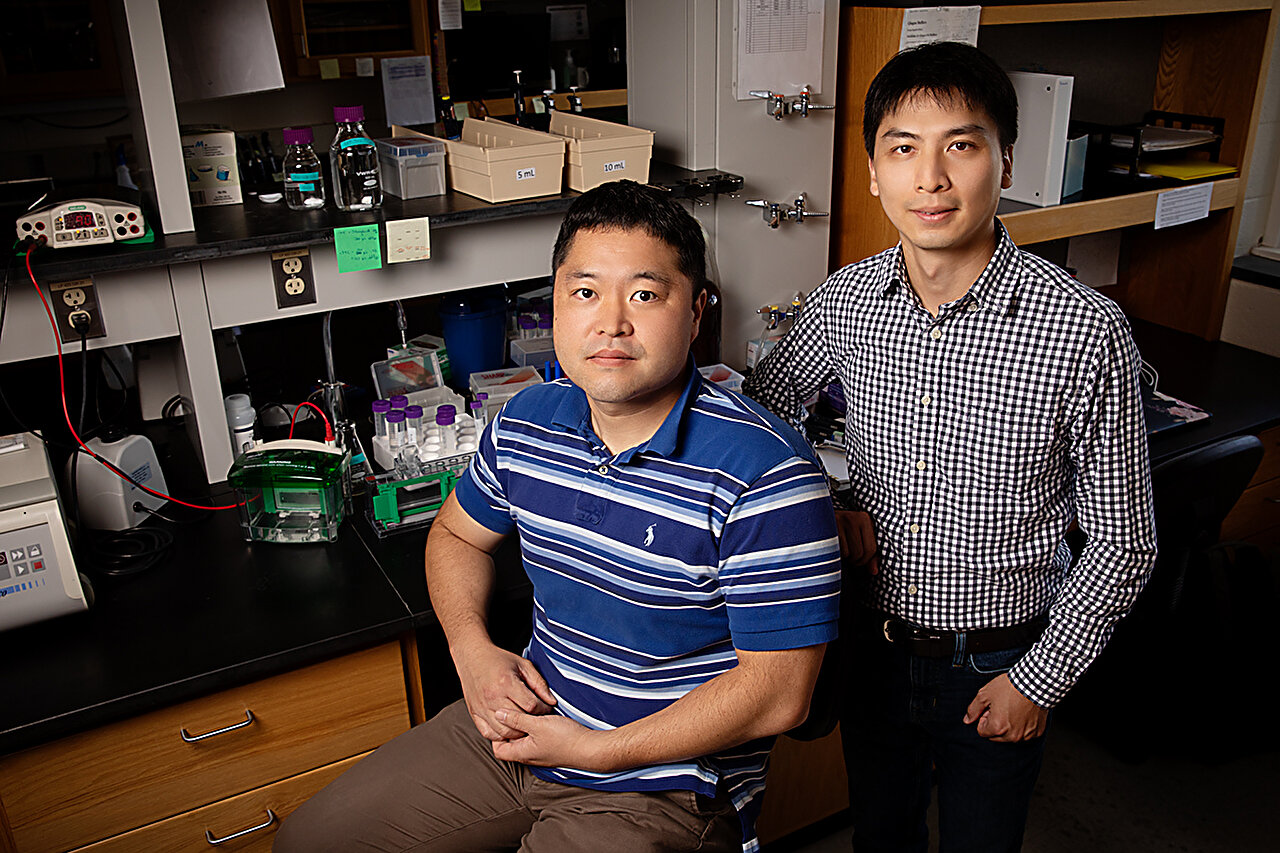
Researchers at the University of Illinois Urbana-Champaign’s Beckman Institute for Advanced Science and Technology led by Professor Nien-Pei Tsai (right) and Kwan Young Lee have established the protein p53 as critical for regulating sociability, repetitive behavior, and hippocampus-related learning and memory in mice, illuminating the relationship between the protein-coding gene TP53 and neurodevelopmental and psychiatric disorders like autism spectrum disorder. Credit: University of Illinois/L. Brian Stauffer
Researchers have established the protein p53 as critical for regulating sociability, repetitive behavior, and hippocampus-related learning and memory in mice, illuminating the relationship between the protein-coding gene TP53 and neurodevelopmental and psychiatric disorders like ...
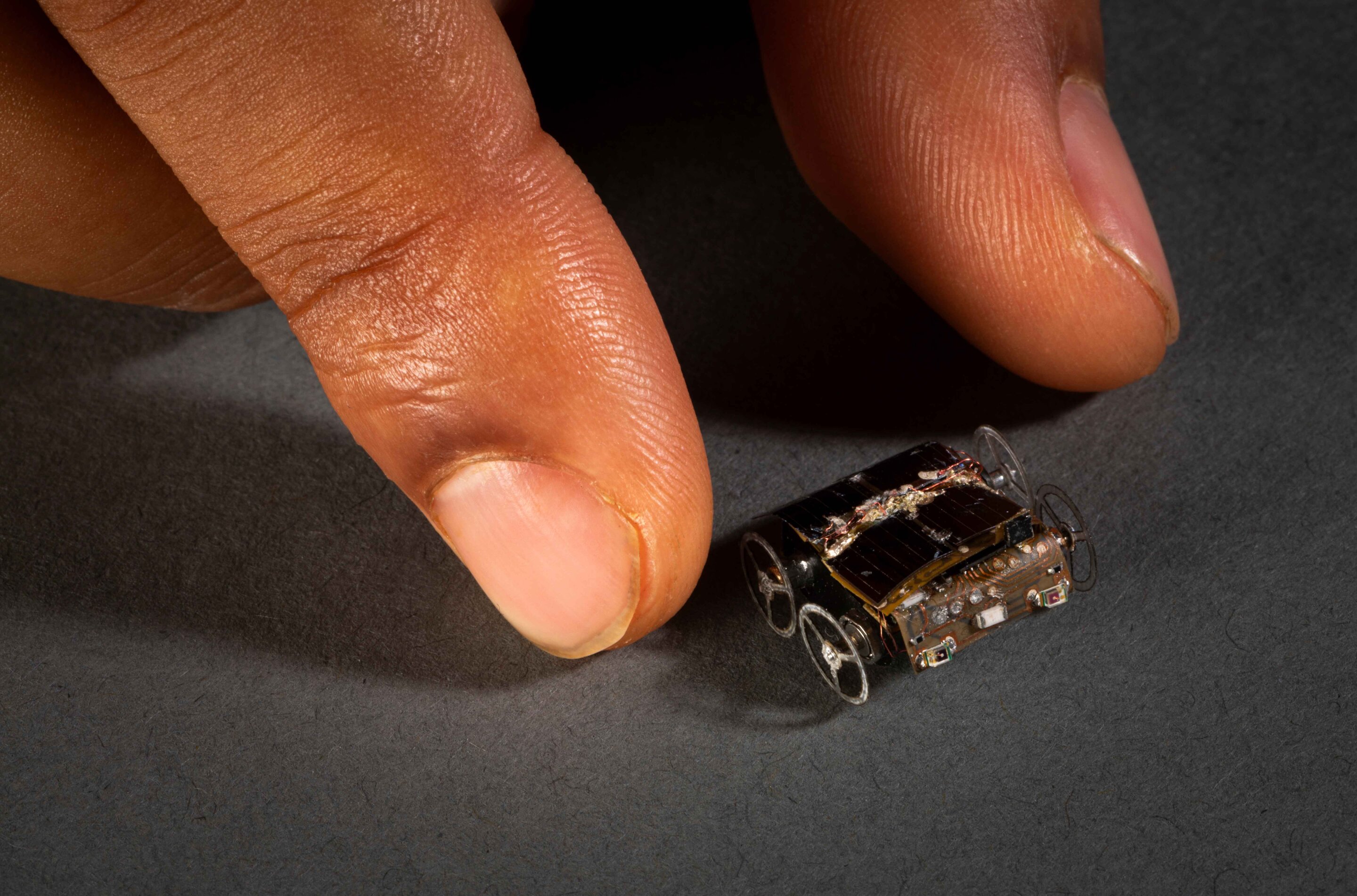
Researchers at the University of Washington have created MilliMobile, a tiny, self-driving robot powered only by surrounding light or radio waves. It’s about the size of a penny and can run indefinitely on harvested energy. Credit: Mark Stone/University of Washington
Small mobile robots carrying sensors could perform tasks like catching gas leaks or tracking warehouse inventory. But moving robots demands a lot of energy, and batteries, the typical power source, limit lifetime and raise environmental concerns. Researchers have explored various alternatives: affixing sensors to insects, keeping charging mats nearby, or powering the robots with lasers. Each has drawbacks: Insects roam, chargers limit range, and lasers can burn people’s eyes.
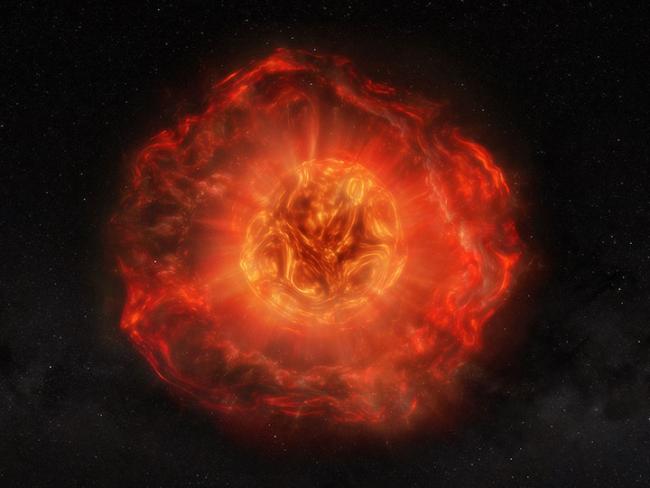
A newly discovered nearby supernova whose star ejected up to a full solar mass of material in the year prior to its explosion is challenging the standard theory of stellar evolution. The new observations are giving astronomers insight into what happens in the final year prior to a star’s death and explosion.
SN 2023ixf is a new Type II supernova discovered in May 2023 by amateur astronomer Kōichi Itagaki of Yamagata, Japan shortly after its progenitor, or origin star, exploded. Located about 20 million light-years away in the Pinwheel Galaxy, SN 2023ixf’s proximity to Earth, the supernova’s extreme brightness, and its young age make it a treasure trove of observable data for scientists studying the death of massive stars in supernova explosions.
Scientists have discovered a simple and reliable test for signs of past or present life on other planets — “the holy grail of Astrobiology.”
In the journal Proceedings of the National Academy of Sciences, a seven-member team, funded by the John Templeton Foundation and led by Jim Cleaves and Robert Hazen of the Carnegie Institution for Science, reports that, with 90% accuracy, their artificial intelligence-based method distinguished modern and ancient biological samples from those of abiotic origin.
“This routine analytical method has the potential to revolutionize the search for extraterrestrial life and deepen our understanding of both the origin and chemistry of the earliest life on Earth,” says Dr. Hazen...











Recent Comments