To Stick or to Bounce: Size determines the Stickiness of Cosmic Dust Aggregates

Micrometer-scale dust particles from protoplanetary disks, or sites around stars with particles and hydrogen and/or other gasses, aggregate to form planetesimals, or kilometer-scale building blocks of planets. Planetesimals, in turn, merge due to mutual gravity. ©JAMSTEC

Microparticle dust aggregates, which are thought to play a role in the formation of new planets, are less likely to stick together after a collision when the aggregates are larger.

Current evidence suggests that microparticles of cosmic dust collide and stick together to form larger dust aggregates that may eventually combine and develop into planets...

Read More

Comparing Superagers to Typical Older Adults Reveals Significant Lifestyle and Brain Structure Differences

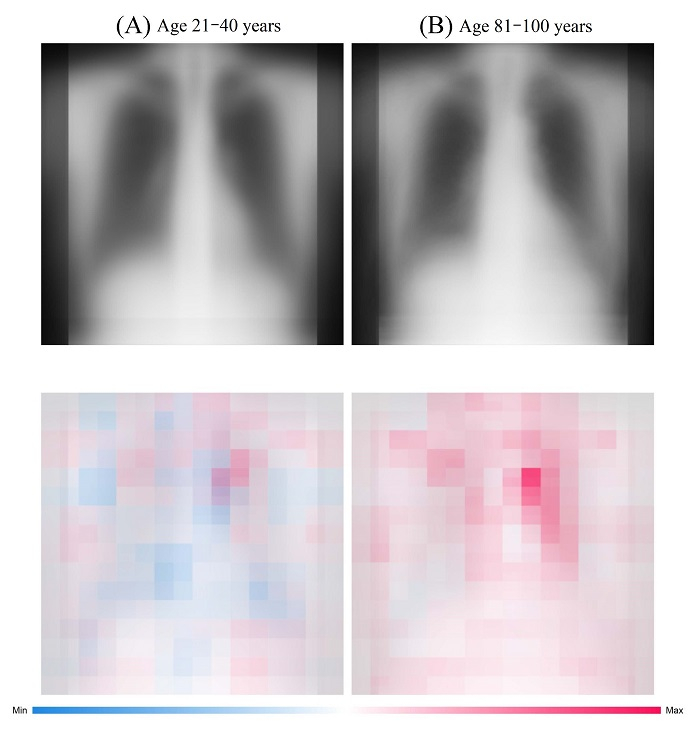
Research led by the Center for Biomedical Technology, Universidad Politécnica de Madrid, Spain, has compared the brains of superagers with those of normal cognitive aged abilities in a paper, “Brain structure and phenotypic profile of superagers compared with age-matched older adults: a longitudinal analysis from the Vallecas Project,” published in The Lancet Healthy Longevity. A Comment published in the same journal issue discusses the work by the team.

Episodic memory, the memory of personal life experiences, is vulnerable to age-related deterioration. Neurodegenerative diseases like Alzheimer’s often lead to severe episodic memory decline.

Some older adults, called superagers, somehow resist age-related memory decline, maintaining episodic memory comparable to healthy indivi...

Read More

Engineers use Radiation Suppression to Develop Better Wireless Charging

Going the distance for better wireless charging
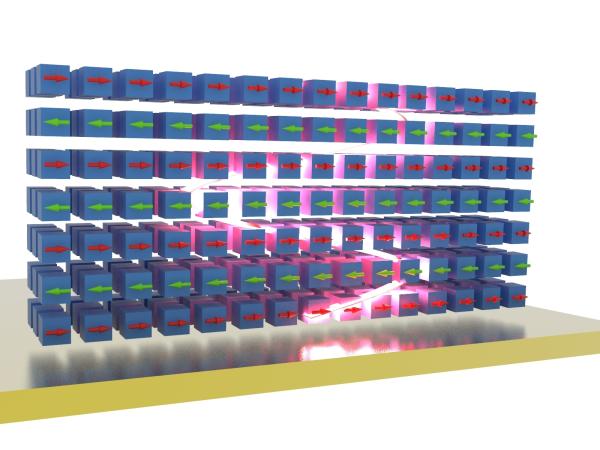
Two loop antennas (radius: 3.6 centimeters) can transfer power between each other from 18 centimeters apart. Credit: Nam Ha-Van/Aalto University

A better way to wirelessly charge over long distances has been developed at Aalto University. Engineers have optimized the way antennas transmitting and receiving power interact with each other, making use of the phenomenon of “radiation suppression.” The result is a better theoretical understanding of wireless power transfer compared to the conventional inductive approach, a significant advancement in the field.

Charging over short distances, such as through induction pads, uses magnetic near fields to transfer power with high efficiency, but at longer distances the efficiency dramatically drops...

Read More

Ancient, High-Energy Impacts could have Fueled Venus Volcanism

Model showing Venus' high-energy impacts
An SwRI-led team compared the early impact history of Venus and Earth, determining that Venus experienced higher-energy impacts creating a superheated core. Models show these conditions could create Venus’ extended volcanism and younger surface.

Models show Venus’ superheated core could produce extended volcanism, long-lived resurfacing. A Southwest Research Institute-led team has modeled the early impact history of Venus to explain how Earth’s sister planet has maintained a youthful surface despite lacking plate tectonics. The team compared the early collision histories of the two bodies and determined that Venus likely experienced higher-speed, higher-energy impacts creating a superheated core that promoted extended volcanism and resurfaced the planet.

“One of the mysteries of t...

Read More