Patient-specific Cells Generated from Thymus Organoids

Figure thumbnail gr1
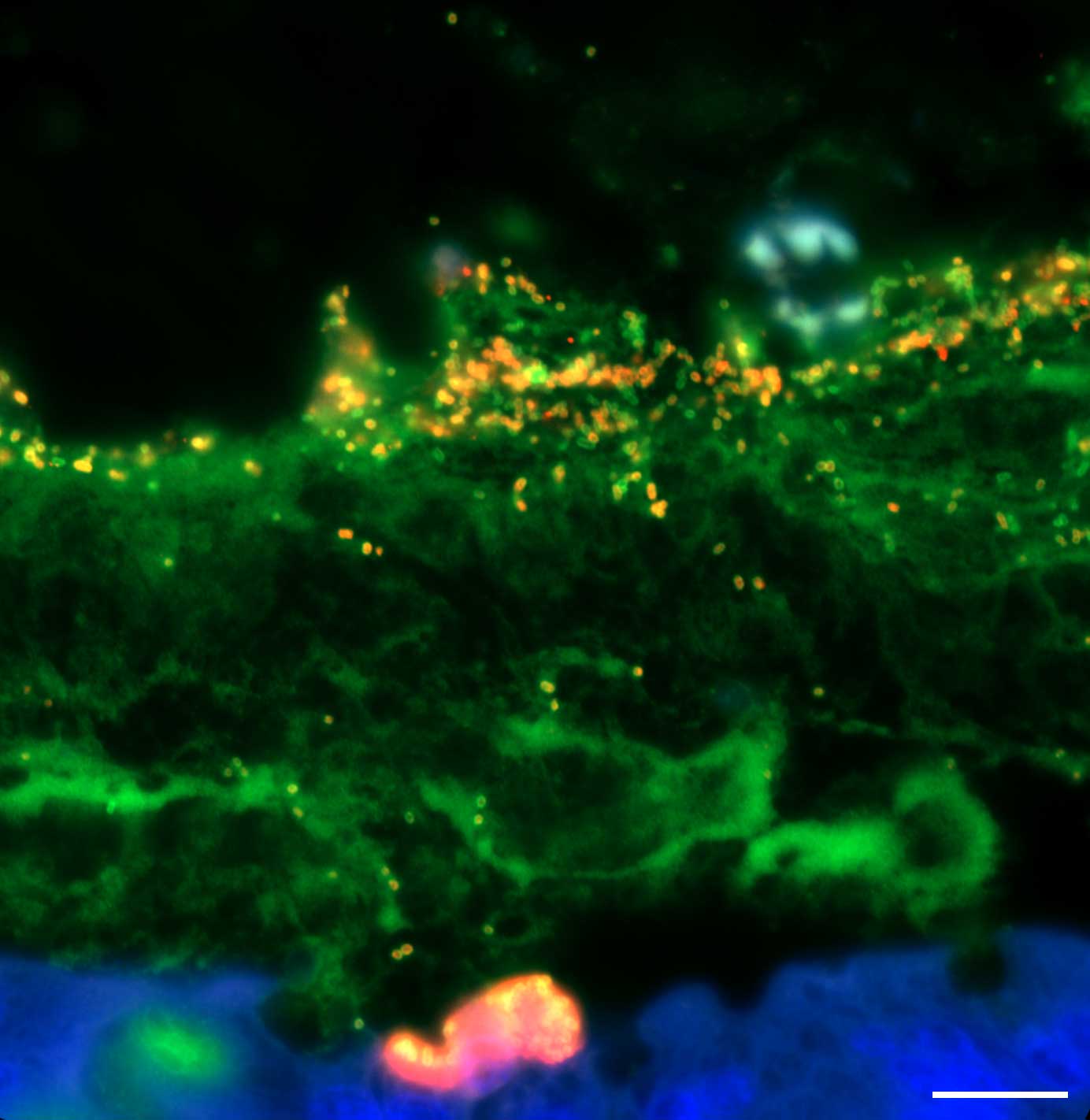
Generation of hPSC-derived TECs in vitro
(A) Schematic of TEP-only sTOs.
(B) Representative IF images of KRT8 (green) and KRT5 (magenta) in day 16–22 TEPs and week 2 TEP-only sTOs (TEPs, n = 2 indepdendent experiment (ind. exp.), 2 hPSC lines; sTOs, n = 3 ind. exp., 2 hPSC lines).
(C–H) FC plots and quantification of EPCAM/HLA-DR (C and D), EPCAM/CD205 (E and F), and EPCAM/GFP (G and H) expression in day 16–22 TEPs and week 2 TEP-only sTOs.
(I) tSNE plots of EPCAM, HLA-DR, CD205, and GFP expression in 16–22 TEPs and week 2 TEP-only sTOs, n = 3 ind. exp., 1 hPSC line.
Plots show percentage of the mean; data are shown as mean Â±
± SEM.

Researchers have used pluripotent stem cells to make thymus organoids that support the development of patient-specific T cells, researchers report Marc...

Read More

Brightest Gamma-Ray Burst ever observed reveals new Mysteries of Cosmic Explosions

This illustration shows the ingredients of a long gamma-ray burst, the most common type.
Credit: NASA’s Goddard Space Flight Center

Scientists believe the gamma-ray emission, which lasted over 300 seconds, is the birth cry of a black hole, formed as the core of a massive and rapidly spinning star collapses under its own weight.

On October 9, 2022, an intense pulse of gamma-ray radiation swept through our solar system, overwhelming gamma-ray detectors on numerous orbiting satellites, and sending astronomers on a chase to study the event using the most powerful telescopes in the world.

The new source, dubbed GRB 221009A for its discovery date, turned out to be the brightest gamma-ray burst (GRB) ever recorded.

In a new study that appears today in the Astrophysical Journal Letters, observations of GRB 221009A spanning from radio waves to gamma-rays, including critica...

Read More

A New Integrated Solar Battery based on Carbon Nitride Photoanodes

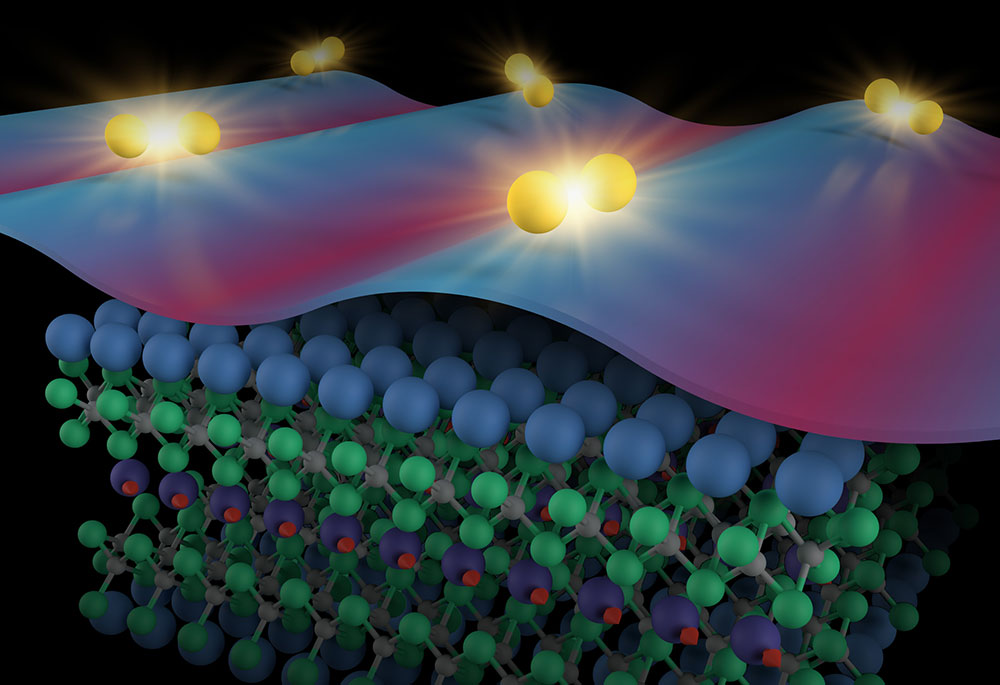
A new integrated solar battery based on carbon nitride photoanodes

In recent years, researchers have been trying to create increasingly efficient solar technologies and more sustainable battery designs. Among emerging sustainable energy solutions are solar batteries, systems that can store the energy collected by solar cells or photovoltaic (PV) systems.

A research group at the Max Planck Institute for Solid State Research, supervised by Prof. Bettina Lotsch, recently introduced a sustainable integrated solar battery design based on materials that abundant on Earth. Their design, presented in a paper published in Energy & Environmental Science, is based on a bi-functional carbon nitride (K-PHI) photoanode that can both absorb light and store electric charge.

“The solar battery research field is still young and as such very diverse in concepts a...

Read More

JWST confirms Giant Planet Atmospheres Vary Widely

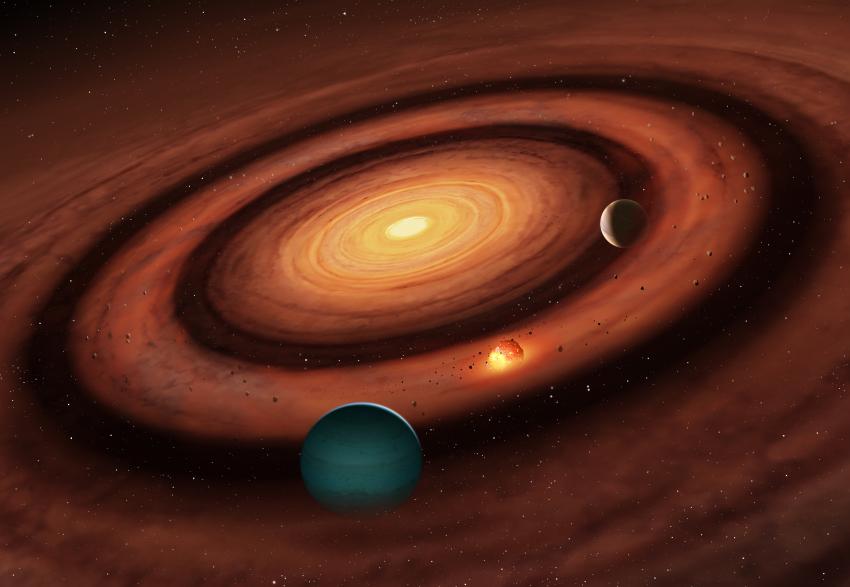
An international team of astronomers has found the atmospheric compositions of giant planets out in the galaxy do not fit our own solar system trend.

Using NASA’s James Webb Space Telescope (JWST), the researchers discovered that the atmosphere of exoplanet HD149026b, a ‘hot Jupiter’ orbiting a star comparable to our sun, is super-abundant in the heavier elements carbon and oxygen — far above what scientists would expect for a planet of its mass.

These findings, published in “High atmospheric metal enrichment for a Saturn-mass planet” in Nature on March 27, provide insight into planet formation.

“It appears that every giant planet is different, and we’re starting to see those differences thanks to JWST,” said Jonathan Lunine, professor in the physical sciences at Cornell Univ...

Read More